New Jersey Executive Branch Fractures as Governor Sherrill Demands Resignation of Lieutenant Governor Caldwell
New Jersey Governor Mikie Sherrill has formally requested the resignation of Lieutenant Governor Dale Caldwell, citing the imperative to protect the best interests of state residents. The escalating executive crisis has triggered intensive debates across the political landscape regarding administrative stability and governance integrity.
Choseno Civic News Desk September 25, 2026Updated September 28, 2026 3 min read DC, US
What do you think of the people in this story? Rate them anonymously — tap a face below.
A profound political rift has opened within the New Jersey executive branch following an extraordinary public intervention by Governor Mikie Sherrill, who formally called upon Lieutenant Governor Dale Caldwell to step down from his post immediately. In statements released through official administrative channels, Governor Sherrill emphasized that the departure of her second-in-command had become strictly necessary and served the overarching best interests of the citizens of New Jersey. This high-stakes development marks a critical juncture in current state politics, thrusting the administration into an unexpected leadership crisis that immediately reverberated across Trenton and captured widespread national media attention. While the precise catalysts prompting the governor to demand the resignation remain the subject of intense scrutiny, administration insiders have pointed to mounting operational friction and irreconcilable differences concerning executive oversight as foundational factors in the sudden breakdown of the working relationship between the state's two highest-ranking elected officials.
The unfolding political drama carries substantial implications for the state legislative agenda and the ongoing management of vital taxpayer-funded programs across New Jersey. Observers of state governance note that public fractures at the executive level frequently complicate the passage of critical budgetary measures and stall administrative reforms aimed at addressing property taxes, infrastructure modernization, and public education funding. Business leaders and civic organizations have expressed growing concern that prolonged uncertainty within the executive branch could stall momentum on legislative priorities designed to stimulate regional economic growth and improve state service delivery. Furthermore, constitutional scholars and political analysts are actively examining the precise legal and statutory mechanisms governing the vacancy of the lieutenant governorship, raising important questions about the appointment and confirmation processes that would follow any formal departure by Lieutenant Governor Caldwell.
Public reaction throughout communities across New Jersey has been swift and sharply divided, reflecting broader ideological tensions within the state electorate. Grassroots political organizations and taxpayer advocacy groups have begun mobilizing public forums to debate the broader ramifications of the executive dispute, weighing the potential disruptions of a protracted political battle against the administrative necessity of governmental accountability. Local municipal leaders have voiced apprehension that the distraction at the state capital might divert vital attention and resources away from pressing regional challenges, including ongoing transit system overhauls and municipal aid distributions. As community stakeholders and political commentators continue to parse the evolving situation, public pressure mounts on both officials to clarify their positions and outline a constructive path forward that minimizes disruption to essential state services and preserves public trust in executive leadership.
As the political landscape digests the governor's unexpected ultimatum, attention has shifted decisively toward the response from Lieutenant Governor Caldwell and his legal or political advisors. Under New Jersey constitutional provisions, the lieutenant governor holds specific administrative responsibilities and potential succession duties, making any forced departure a matter of significant institutional weight. Legislative leaders from both major political parties have indicated they are monitoring the situation closely, with several key lawmakers signaling an intent to demand formal briefings to ensure that ongoing state operations remain insulated from executive turmoil. The coming days will undoubtedly prove critical in determining whether Lieutenant Governor Caldwell chooses to contest the governor's demand or negotiate an orderly exit, setting the stage for what promises to be a defining chapter in contemporary New Jersey governance and administrative politics.
Rate the people mentioned in this article
Related Coverage in Municipal
See all Municipal newsMunicipal
US Sep 27, 2026
‘Love Dogs But…’: Florida Gov Candidate Byron Donalds’ Shelter Video Sparks Skepticism on the Trail
‘Love Dogs But…’: Florida Gov Candidate Byron Donalds’ Shelter Video Sparks Skepticism on the Trail The Nerd Stash
Read full article

Municipal
US Sep 27, 2026
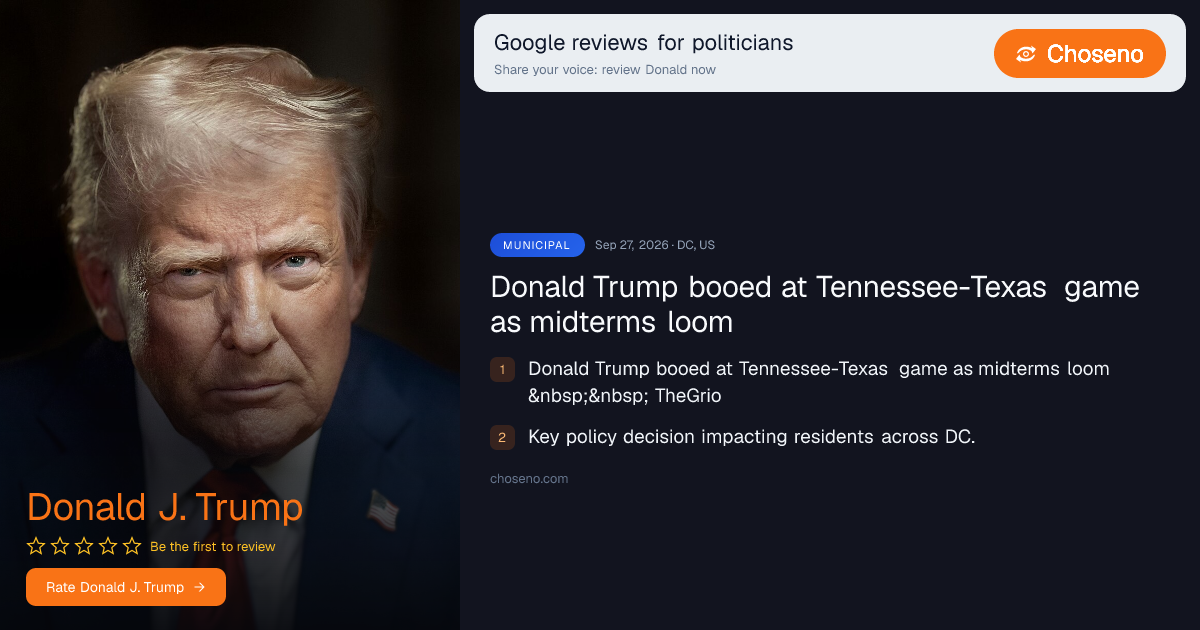
Donald Trump booed at Tennessee-Texas game as midterms loom
Donald Trump booed at Tennessee-Texas game as midterms loom TheGrio
Read full article
Municipal
US Sep 27, 2026
President Donald Trump Attends Presidents Cup in Democratic Stronghold
President Donald Trump Attends Presidents Cup in Democratic Stronghold 조선일보
Read full article