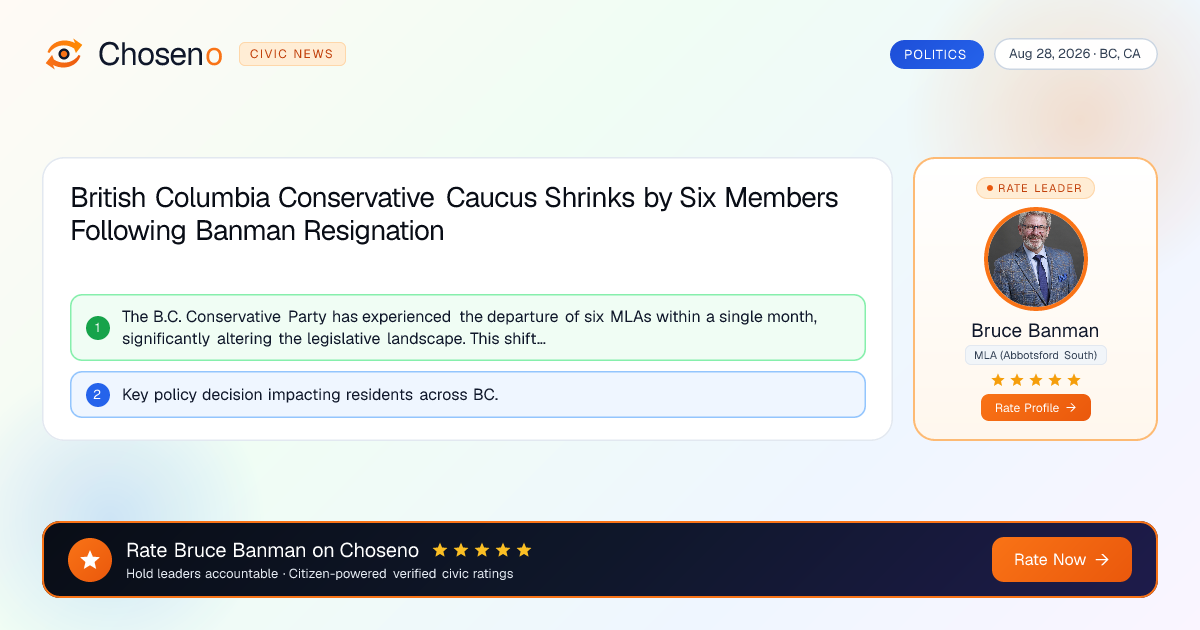
British Columbia Conservative Caucus Shrinks by Six Members Following Banman Resignation
The B.C. Conservative Party has experienced the departure of six MLAs within a single month, significantly altering the legislative landscape. This shift raises questions regarding party stability and the potential impact on upcoming provincial political operations.
Choseno Civic News Desk August 28, 2026 1 min read BC, CA
Legislative Shift in British Columbia
The British Columbia Conservative caucus has undergone a rapid transformation throughout August, recording the departure of its sixth Member of the Legislative Assembly. The latest resignation comes from Bruce Banman, who formally exited the party ranks following a period of internal friction.
Political and Fiscal Implications
The loss of six MLAs in a single month represents a substantial reduction in the party's legislative footprint. While the direct fiscal impact on the provincial treasury remains tied to standard administrative adjustments for caucus funding, the political instability creates uncertainty regarding the party's ability to maintain its legislative agenda and resource allocation for the remainder of the session.
Leadership and Electability Concerns
The resignation of Banman was accompanied by pointed criticism regarding the party's current direction. Banman explicitly stated that he considers John Findlay "unelectable," highlighting a deep-seated divide within the party's leadership structure. This public assessment underscores a fundamental disagreement regarding the party's viability in future electoral contests.
The Debate: Internal Perspectives
Proponents of the current party leadership maintain that the caucus remains focused on its core policy objectives despite the departures. Conversely, critics and departing members argue that the current leadership trajectory is fundamentally flawed, suggesting that the party's internal governance is failing to meet the standards required to secure public trust and electoral success.
Public Accountability Context
For the citizens of British Columbia, these developments signal a period of volatility within the official opposition. As the caucus continues to shrink, voters are left to evaluate whether the remaining leadership can effectively represent their interests or if the ongoing internal conflict will continue to impede the party's capacity to function as a cohesive legislative body.
Rate the people mentioned in this article

Related Coverage in Politics
See all Politics newsPolitics
CA Aug 28, 2026
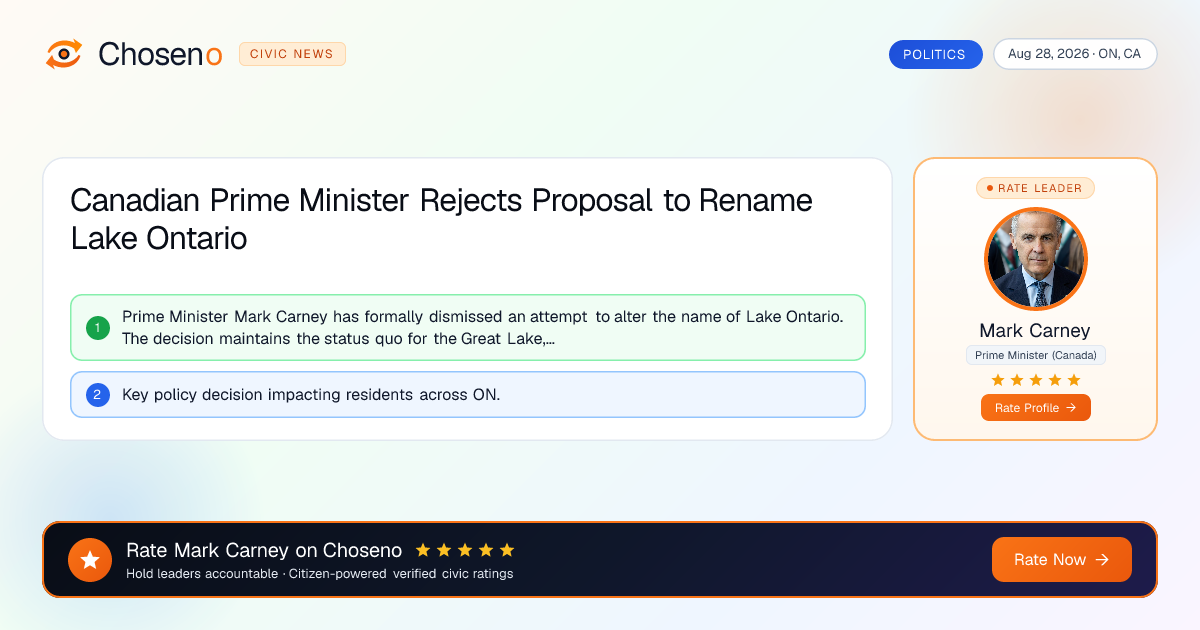
Canadian Prime Minister Rejects Proposal to Rename Lake Ontario
Prime Minister Mark Carney has formally dismissed an attempt to alter the name of Lake Ontario. The decision maintains the status quo for the Great Lake, avoiding potential administrative costs associated with a geographic renaming process.
Read full article
Politics
US Aug 28, 2026
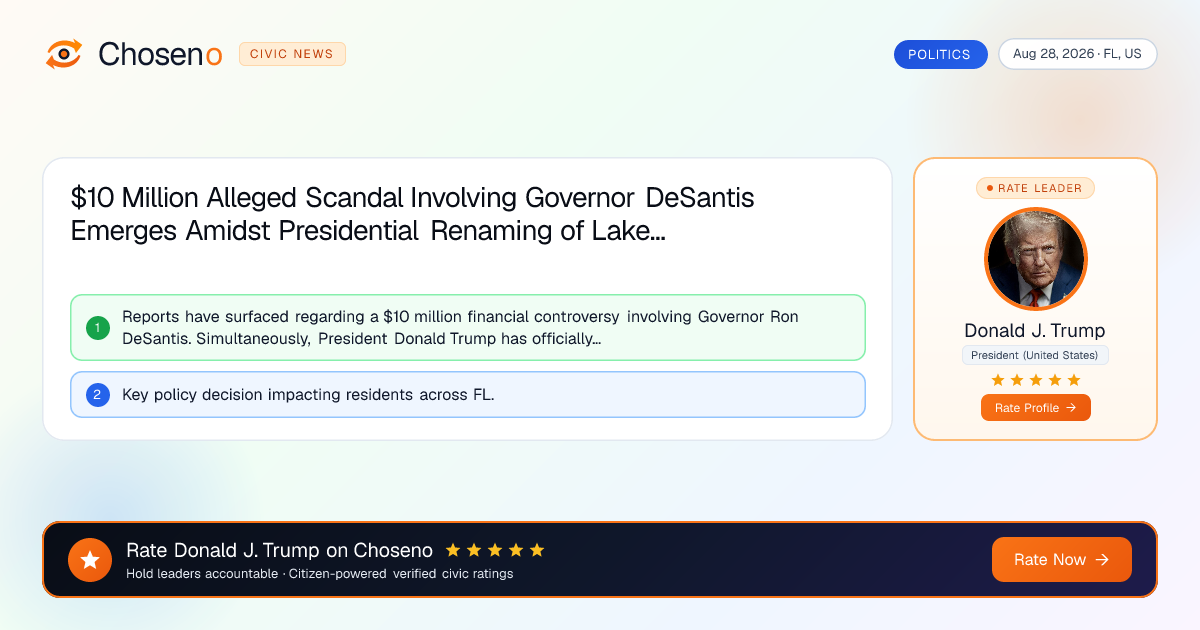
$10 Million Alleged Scandal Involving Governor DeSantis Emerges Amidst Presidential Renaming of Lake Ontario
Reports have surfaced regarding a $10 million financial controversy involving Governor Ron DeSantis. Simultaneously, President Donald Trump has officially announced the renaming of Lake Ontario.
Read full article
Politics
US Aug 28, 2026
California Legalizes Plug-in Balcony Solar Systems to Expand Renewable Access
California has enacted legislation permitting the use of plug-in or balcony solar systems for residents. This policy change aims to lower barriers to renewable energy adoption for tenants and homeowners living in smaller residential units.
Read full article