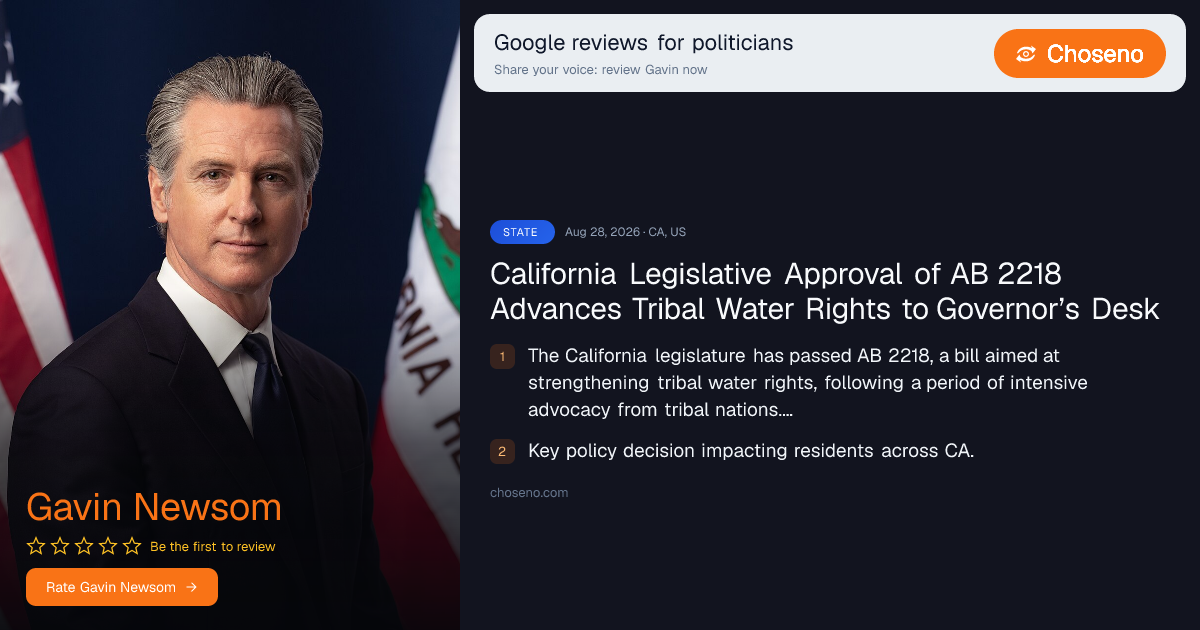
California Legislative Approval of AB 2218 Advances Tribal Water Rights to Governor’s Desk
The California legislature has passed AB 2218, a bill aimed at strengthening tribal water rights, following a period of intensive advocacy from tribal nations. The legislation now awaits final action from Governor Gavin Newsom.
Choseno Civic News Desk August 28, 2026 1 min read CA, US
The California state legislature has officially passed AB 2218, a bill centered on the recognition and protection of tribal water rights. The measure reached this stage following a sustained period of advocacy from tribal nations across the state, who have sought to codify and clarify their legal standing regarding water access and management.
With the bill now successfully cleared by both chambers of the legislature, it has been transmitted to the desk of Governor Gavin Newsom. The Governor must now decide whether to sign the legislation into law or exercise his veto power. The progression of AB 2218 represents a notable development in the ongoing dialogue between the state government and tribal authorities regarding the stewardship of California’s water resources.
While the legislative process for this bill has concluded, the focus now shifts to the executive branch. Proponents of the bill have emphasized that the legislation is a necessary step toward addressing historical inequities and ensuring that tribal governments have a more robust role in water-related decision-making processes. The outcome of the Governor’s review will determine the future implementation of these provisions and the extent to which they will alter the current regulatory landscape for water rights in California.
Rate the people mentioned in this article

Related Coverage in State
See all State newsState
US Aug 28, 2026
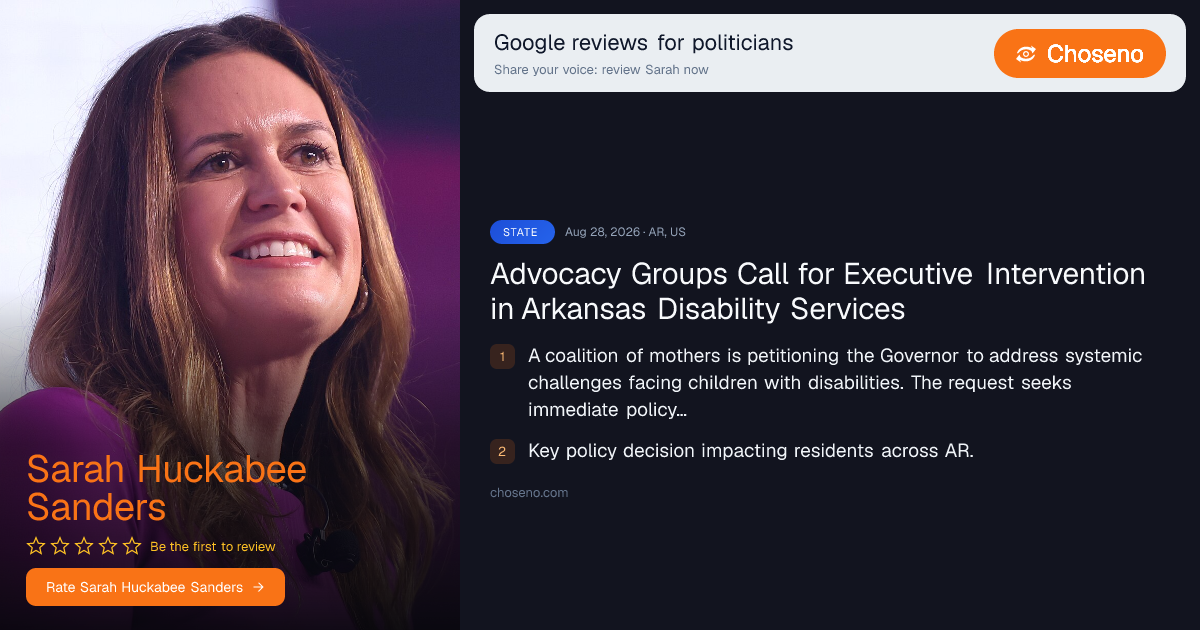
Advocacy Groups Call for Executive Intervention in Arkansas Disability Services
A coalition of mothers is petitioning the Governor to address systemic challenges facing children with disabilities. The request seeks immediate policy adjustments to improve support services for families across the state.
Read full article
State
US Aug 28, 2026
Virginia Governor Addresses Ongoing Security Threats Amid Public Safety Concerns
Governor Glenn Youngkin has characterized recent security incidents as a deliberate attempt to incite public alarm. The administration is currently evaluating the broader implications of these threats on state-level security protocols.
Read full article
State
US Aug 28, 2026
$14.8 Billion General Fund Projection Sets New Fiscal Record for New Mexico
New Mexico's general fund is projected to reach a record-breaking $14.8 billion. This fiscal milestone signals significant shifts in state revenue capacity and potential budgetary allocations for taxpayers.
Read full article