Congressional Hemp Regulation Faces Legislative Hurdle Following Recess
House Republicans are preparing to address hemp-related provisions within upcoming stopgap funding legislation as Congress reconvenes. This policy debate carries significant implications for the agricultural and retail sectors, as lawmakers attempt to reconcile regulatory frameworks with federal budget deadlines.
Choseno Civic News Desk August 28, 2026 2 min read DC, US
Dateline: Washington, D.C.
As federal lawmakers prepare to return from the August recess, the legislative agenda is dominated by the necessity of passing stopgap funding measures to maintain government operations. Among the primary challenges facing House Republicans is the inclusion of specific hemp-related provisions that previously created significant friction during Senate deliberations.
Policy & Taxpayer Impact
The potential implementation of a hemp ban or stricter regulatory oversight carries direct consequences for the national agricultural economy and the burgeoning hemp-derived product market. Taxpayers are affected by the legislative process as these policy debates are currently tethered to must-pass funding bills, which could influence the efficiency of government operations and the allocation of federal resources toward agricultural enforcement and oversight.
Political & Legal Stakes
The political stakes are high, as the hemp issue has proven to be a legislative minefield capable of stalling broader budget negotiations. Lawmakers are tasked with balancing the need for timely government funding with the contentious debate over the legal status and regulation of hemp products, which has become a focal point for partisan disagreement.
The Debate: Proponent vs. Critic
Proponents of stricter hemp regulations often argue that current market conditions require enhanced federal oversight to ensure consumer safety and product consistency. Conversely, critics of such measures contend that restrictive policies could stifle an emerging industry, negatively impact farmers who have invested in hemp cultivation, and create unnecessary barriers for businesses operating within the legal framework established by previous agricultural legislation.
Public Accountability Context
As the legislative session resumes, citizens are encouraged to monitor how their representatives approach the intersection of agricultural policy and fiscal responsibility. The outcome of these negotiations will determine the regulatory environment for the hemp industry and reflect the priorities of Congress regarding the balance between market regulation and economic growth.
Related Coverage in Politics
See all Politics newsPolitics
US Aug 28, 2026
Wisconsin politicians joke about Lake Michigan name change
Wisconsin politicians made jokes out of President Trump’s executive order aiming to rename Lake Ontario, jesting about the renaming of Lake Michigan, another Great Lake. On Thursday, the president put his signature on an executive order formally changing the name of Lake Ontario to “Lake America” amid U.S.-Canadian trade tensions. “We’re going to be changing...
Read full article
Politics
US Aug 27, 2026
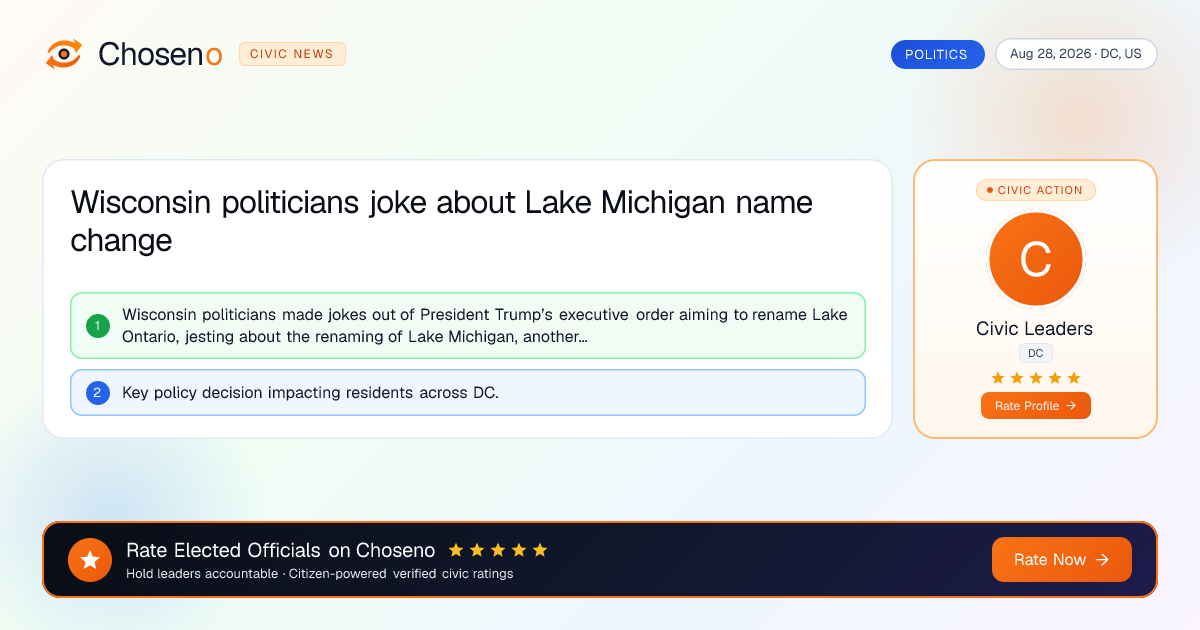
President Trump Navigates GOP Internal Friction Over Data Center Expansion
President Trump is managing internal Republican skepticism regarding the rapid expansion of data centers as the midterm elections approach. This political tension forces a reevaluation of federal support for the industry against growing concerns from within his own party.
Read full article
Politics
US Aug 27, 2026
FDA Authorizes Updated COVID-19 Vaccines for High-Risk Populations
The Food and Drug Administration has authorized new mRNA and non-mRNA COVID-19 vaccine formulations for individuals at higher risk of severe illness. This regulatory action initiates the distribution process to healthcare providers across the country.
Read full article