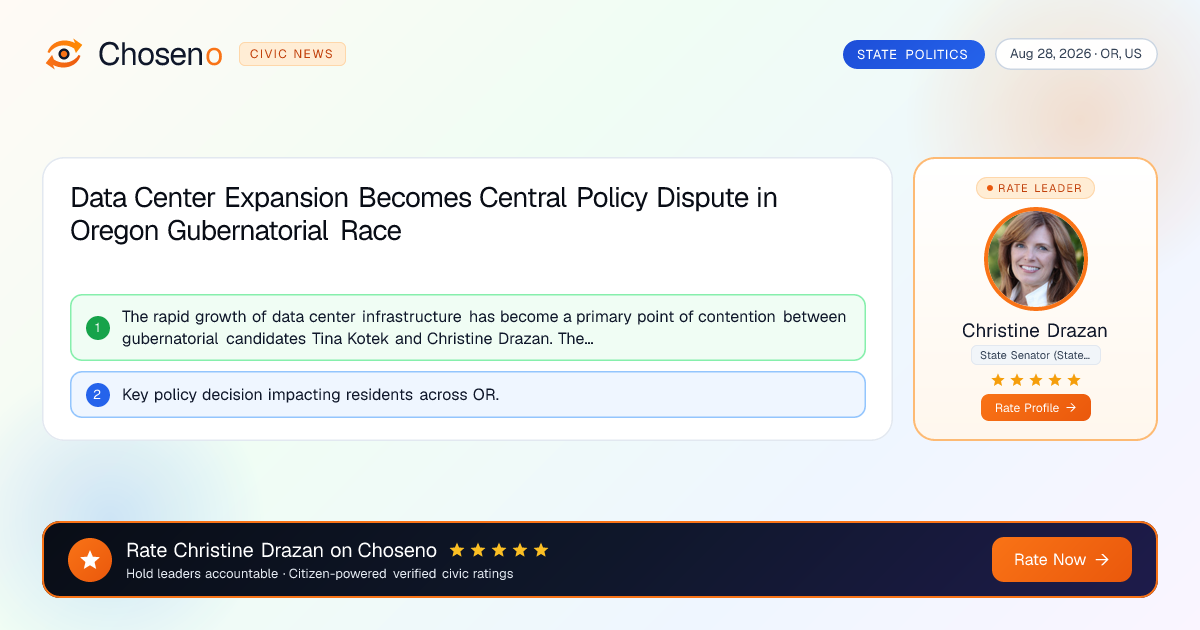
Data Center Expansion Becomes Central Policy Dispute in Oregon Gubernatorial Race
The rapid growth of data center infrastructure has become a primary point of contention between gubernatorial candidates Tina Kotek and Christine Drazan. The debate centers on balancing the economic benefits of tech investment against the strain on local power grids and water resources.
Choseno Civic News Desk August 28, 2026 1 min read OR, US
The expansion of data center infrastructure has surfaced as a significant point of disagreement between the two primary candidates in the Oregon gubernatorial race, Tina Kotek and Christine Drazan. As the state navigates the demands of a growing technology sector, the candidates have presented diverging views on how to manage the industrial footprint of these facilities.
According to reporting by the Oregon Capital Chronicle, the debate highlights the tension between attracting high-tech investment and managing the practical limitations of the state's infrastructure. Data centers, which require substantial amounts of electricity and water for cooling, have become a focal point for discussions regarding the long-term sustainability of Oregon's utility grids.
Proponents of aggressive data center development often emphasize the potential for job creation and the expansion of the state's tax base. Supporters argue that positioning Oregon as a hub for digital infrastructure is essential for maintaining a competitive edge in the regional economy. Conversely, critics of the current trajectory point to the potential for these facilities to overwhelm local power supplies and place undue pressure on water resources, particularly in regions already facing drought or conservation challenges.
The disagreement between Kotek and Drazan reflects broader concerns among Oregonians regarding how the state should prioritize industrial growth. While the candidates have not yet detailed specific legislative overhauls, the emergence of this issue suggests that the regulatory framework governing utility usage and land-use planning for large-scale tech projects will be a defining theme in the lead-up to the election. Voters are now being asked to consider whether the economic benefits of these centers justify the potential strain on public resources and the long-term environmental implications for the state.
Rate the people mentioned in this article


Related Coverage in State Politics
See all State Politics newsState Politics
US Aug 28, 2026
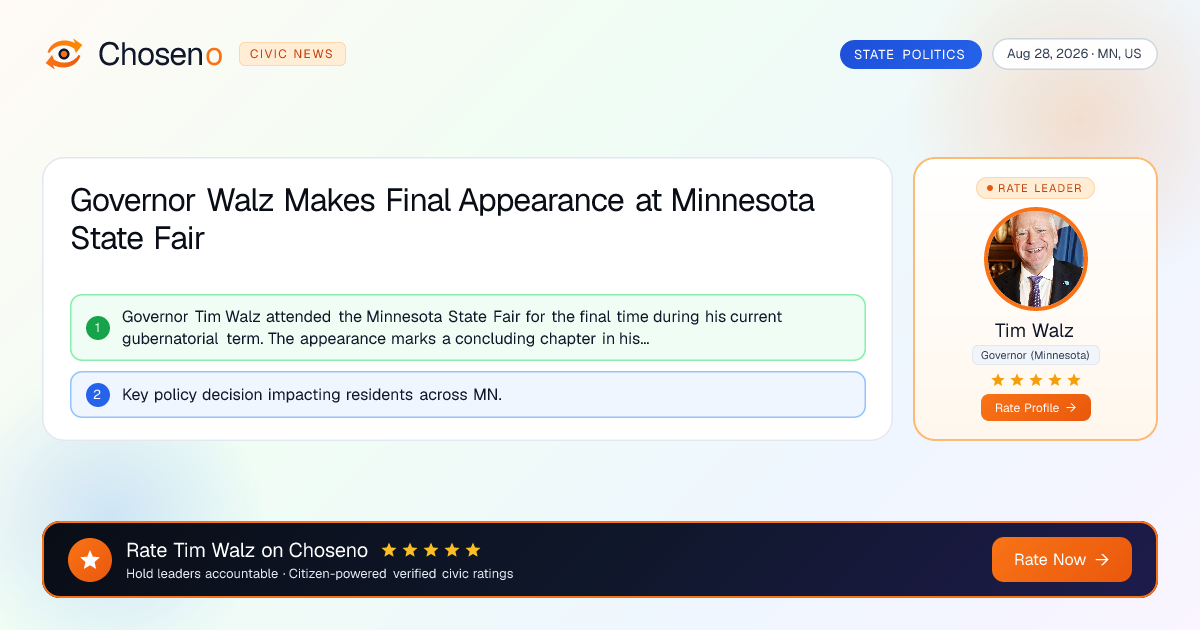
Governor Walz Makes Final Appearance at Minnesota State Fair
Governor Tim Walz attended the Minnesota State Fair for the final time during his current gubernatorial term. The appearance marks a concluding chapter in his administration's engagement with the annual state event.
Read full article
State Politics
US Aug 28, 2026
Cook Political Report Shifts Florida Gubernatorial Race Outlook
The Cook Political Report has updated its electoral assessment for the Florida gubernatorial race, signaling a shift in favor of Democratic candidates. This adjustment reflects evolving polling data and campaign momentum that could influence future state-level policy priorities.
Read full article
State Politics
US Aug 28, 2026
Flock Camera Deployment Becomes Central Point of Contention in Texas Gubernatorial Campaign
The integration of Flock automated license plate recognition technology has transitioned into a significant policy debate within the Texas governor's race. The discourse centers on the balance between enhanced law enforcement surveillance capabilities and the preservation of individual privacy rights.
Read full article