Debate Intensifies Over Regulation of the U.S. Reproductive Tourism Industry
The reproductive tourism industry in the United States is facing increased scrutiny regarding the ethical implications of commercialized childbearing services. This discourse highlights potential legislative shifts that could impact the regulatory framework governing domestic fertility and surrogacy markets.
Choseno Civic News Desk August 25, 2026 1 min read DC, US
★ Choseno Civic Briefing
Key Leaders
Dateline: Washington, D.C.
Reporting by The Hill Politics indicates that the United States is currently navigating a complex debate regarding its role in the global reproductive tourism market. The discussion centers on whether the nation should prioritize support for domestic family formation or address the commercialization of reproductive services.
Policy & Taxpayer Impact
While specific legislative proposals remain in the early stages of public discourse, the potential for federal oversight could significantly alter the current landscape of the fertility industry. Taxpayers are being asked to consider the long-term societal costs and the economic implications of maintaining a largely unregulated market for reproductive services that attracts international clientele.
Political & Legal Stakes
Legal experts and policymakers are evaluating the extent to which the federal government can or should intervene in reproductive contracts. The stakes involve balancing individual autonomy and reproductive freedom against the potential for exploitation within a market-driven system that treats childbearing as a commercial enterprise.
The Debate: Proponents vs. Critics
Proponents of the current system argue that the U.S. provides essential reproductive options for individuals who may face legal or medical barriers in their home countries. Conversely, critics argue that the industry has evolved into a system that prioritizes the design and sale of children to the highest bidder, raising significant moral and ethical concerns about the commodification of human life.
Public Accountability Context
As this issue gains traction, citizens are encouraged to monitor how their representatives approach the regulation of fertility services. The ongoing debate serves as a critical touchstone for understanding how national values regarding family, ethics, and commerce intersect in the modern American political landscape.
Related Coverage in Politics
See all Politics newsPolitics
US Aug 25, 2026
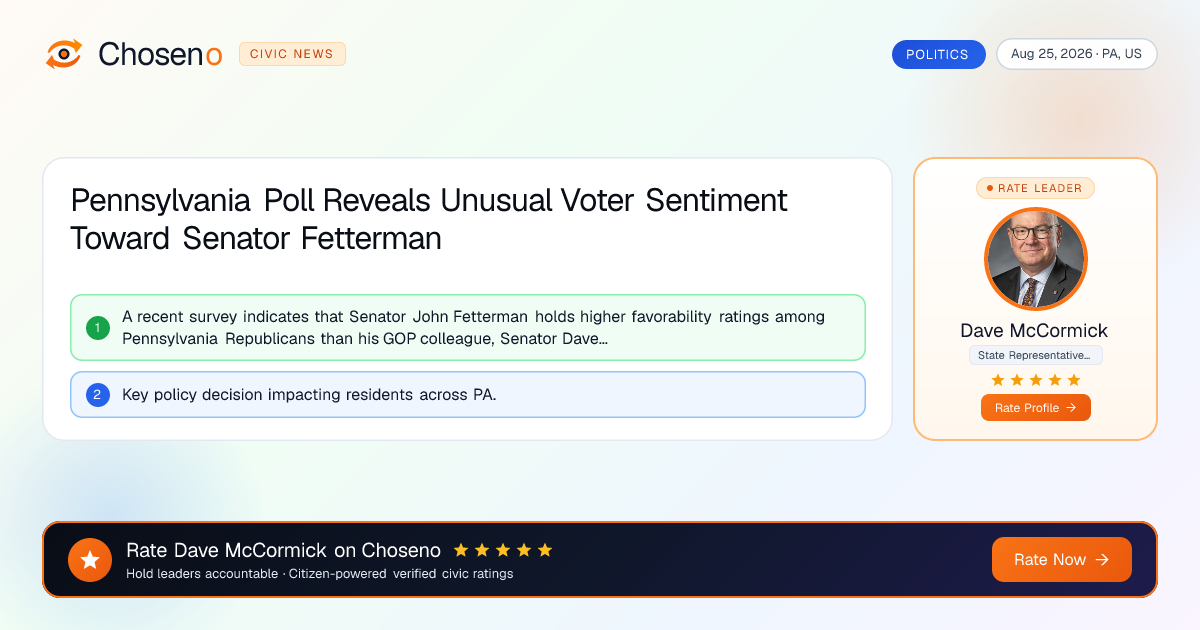
Pennsylvania Poll Reveals Unusual Voter Sentiment Toward Senator Fetterman
A recent survey indicates that Senator John Fetterman holds higher favorability ratings among Pennsylvania Republicans than his GOP colleague, Senator Dave McCormick. This shift in voter perception highlights evolving political alignments within the state's electorate.
Read full article
Politics
US Aug 25, 2026
Pennsylvania Reports First Measles-Related Fatalities in Lancaster County
The Pennsylvania Department of Health has confirmed two measles-related deaths involving unvaccinated individuals in Lancaster County. These fatalities mark a significant public health development that may necessitate increased state spending on immunization outreach and disease surveillance.
Read full article
Politics
US Aug 25, 2026
Former Governor Inslee Calls for State-Led Clean Energy Strategy
Former Washington Governor Jay Inslee is urging state governments to utilize their regulatory powers to bypass federal opposition to clean energy projects. This shift in strategy aims to maintain momentum for affordable energy initiatives at the state level despite current federal policy stances.
Read full article