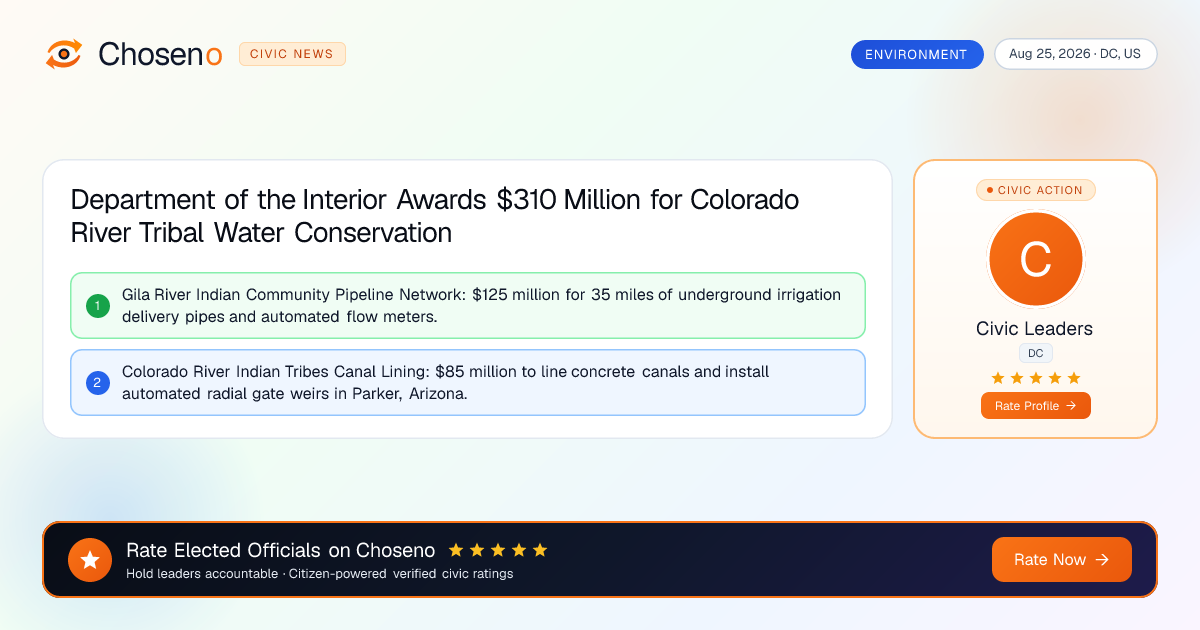
Department of the Interior Awards $310 Million for Colorado River Tribal Water Conservation
Interior Secretary Deb Haaland directs $310 million in Inflation Reduction Act funds to construct closed-pipe irrigation systems and groundwater storage facilities across five Colorado River Indian tribes in Arizona and California.
Choseno Western Water Desk August 25, 2026 2 min read DC, US
★ Choseno Civic Briefing
Key Leaders
WASHINGTON — Secretary of the Interior Deb Haaland announced on Monday the distribution of $310 million in federal water infrastructure investments from the Inflation Reduction Act to engineer and construct pressurized closed-pipe irrigation systems, canal linings, and managed aquifer recharge basins across five sovereign tribal nations in the Lower Colorado River Basin.
The capital funding, coordinated through the Bureau of Reclamation's Lower Colorado River System Conservation Program, enables the Colorado River Indian Tribes, Gila River Indian Community, Quechan Indian Tribe, Fort McDowell Yavapai Nation, and Tohono O'odham Nation to conserve over 400,000 acre-feet of water in Lake Mead through 2028.
Securing Tribal Water Sovereignty and Lake Mead Elevation Tribal nations hold senior, quantified water rights to over 25 percent of the water in the Colorado River Basin. For decades, however, lack of federal capital left tribal farmland reliant on unlined earthen canals with high evaporative and seepage losses.
"Tribal nations have been the original stewards of the Colorado River for centuries, and their leadership is essential to securing the future of the American Southwest," Secretary Deb Haaland said during an announcement on the Gila River Indian Reservation in Arizona. "This $310 million investment provides our tribal partners with the modern water delivery infrastructure needed to support productive tribal agriculture while voluntarily leaving hundreds of thousands of acre-feet in Lake Mead to protect the entire river system from catastrophic drought."
Funded Infrastructure Projects The $310 million package funds:
- Gila River Indian Community Pipeline Network: $125 million for 35 miles of underground irrigation delivery pipes and automated flow meters.
- Colorado River Indian Tribes Canal Lining: $85 million to line concrete canals and install automated radial gate weirs in Parker, Arizona.
- Quechan Tribe Subsurface Drip Conversion: $45 million to convert citrus and alfalfa acreage to automated micro-drip irrigation.
- Fort McDowell & Tohono O'odham Aquifer Recharge: $55 million for underground groundwater injection basins and riparian habitat restoration.
Tribal leaders, western governors, and municipal water authorities commended the historic partnership, emphasizing that collaborative conservation protects drinking water supplies for 40 million people across seven states.
Related Coverage in Environment
See all Environment newsEnvironment
CA Aug 25, 2026
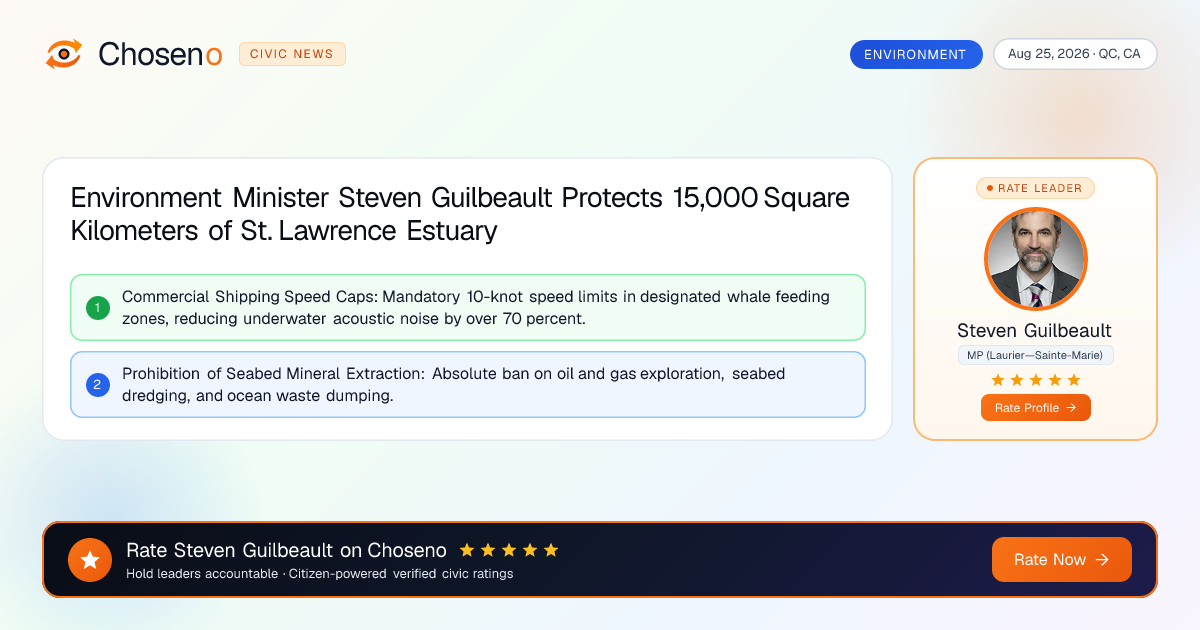
Environment Minister Steven Guilbeault Protects 15,000 Square Kilometers of St. Lawrence Estuary
Environment Minister Steven Guilbeault and Parks Canada designate three new Marine Protected Areas in the St. Lawrence Estuary and Saguenay Fjord, establishing strict commercial shipping speed caps to safeguard endangered beluga whales.
Read full article
Environment
US Aug 25, 2026
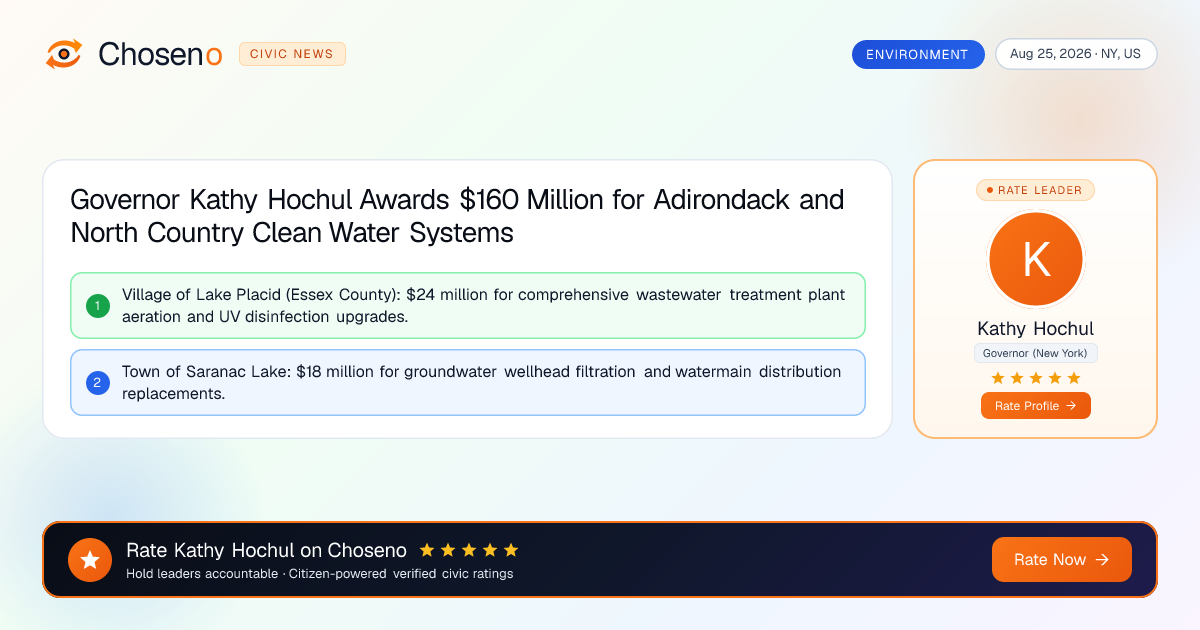
Governor Kathy Hochul Awards $160 Million for Adirondack and North Country Clean Water Systems
New York Governor Kathy Hochul directs $160 million in state clean water grants to construct advanced wastewater treatment plants and drinking water filtration facilities across twenty-two North Country and Adirondack communities.
Read full article
Environment
CA Aug 25, 2026
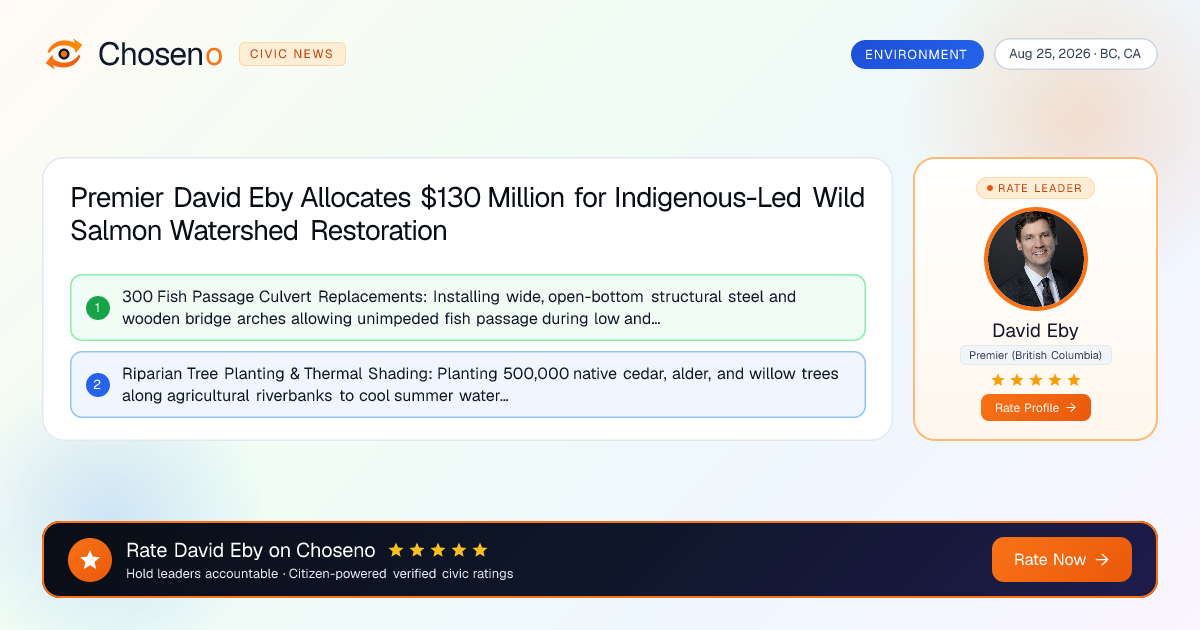
Premier David Eby Allocates $130 Million for Indigenous-Led Wild Salmon Watershed Restoration
British Columbia Premier David Eby and Water Minister Nathan Cullen announce $130 million from the BC Salmon Restoration and Innovation Fund to remove 300 fish passage barrier culverts and restore vital spawning rivers.
Read full article