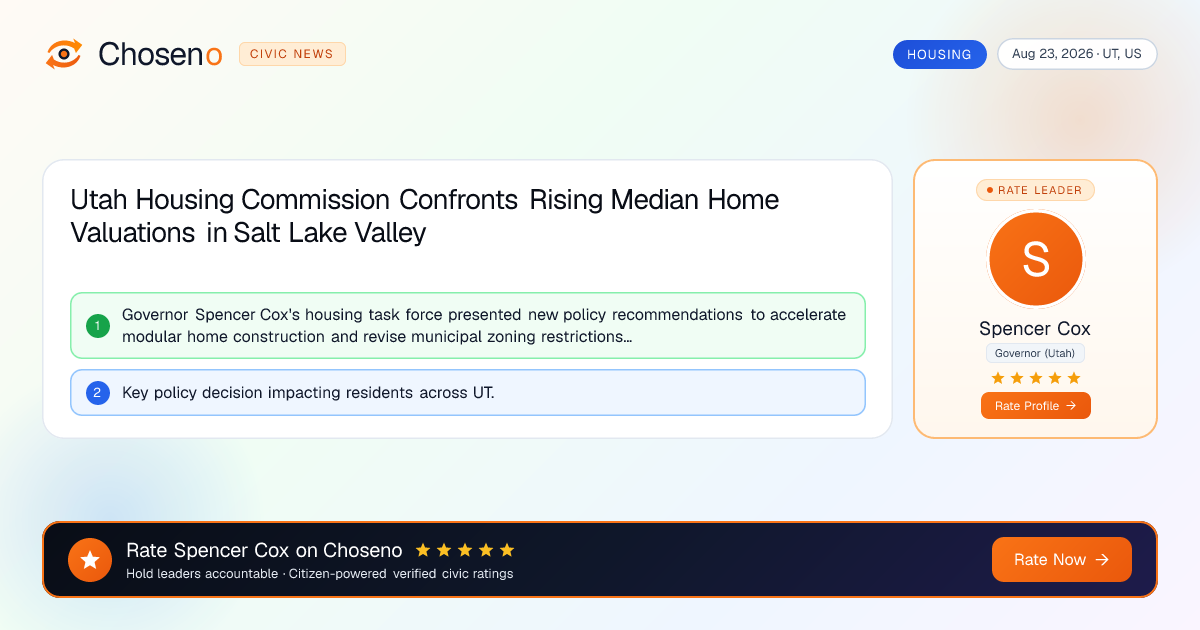
Edmonton City Council Authorizes $19M for Transitional Supportive Housing to Reduce Encampments
Edmonton approved capital and operational funding to open 240 supportive transitional shelter spaces equipped with wrap-around mental health and addictions recovery services.
Choseno Western Bureau August 23, 2026 1 min read AB, CA
★ Choseno Civic Briefing
Key Leaders
EDMONTON, AB — The Edmonton City Council approved an emergency $19-million transitional housing allocation on Sunday afternoon, partnering with provincial health agencies to create 240 new low-barrier supportive housing units across three retrofitted municipal facilities.
Supportive Housing Architecture and Clinical Services
The initiative, developed through the City of Edmonton Social Development Branch and Alberta Health Services (AHS), converts vacant commercial lodging properties in McCauley, Westmount, and Strathcona into permanent supportive transitional housing. Each facility will provide 24/7 on-site medical staff, peer support navigators, mental health counseling, and direct pathways to long-term independent social housing.
The program establishes a coordinated encampment transition protocol, offering unhoused individuals living in parkland encampments immediate indoor placement with secure storage for personal belongings.
"Ensuring our vulnerable neighbors have warm, dignified, supportive indoor housing saves lives and makes our parks and transit spaces safer for everyone," Edmonton municipal leadership stated.
Community Safety and Social Outcomes
Downtown Edmonton business associations and neighborhood community leagues expressed support for the wrap-around service model, noting that pairing shelter beds with clinical addictions and mental health support addresses the root causes of chronic street homelessness.
Homeless advocacy groups welcomed the low-barrier intake model while urging continued provincial capital investment in permanent deeply subsidized non-market housing.
Intake Schedule
The first 80 transitional supportive housing units will open for client intake on October 15, 2026, ahead of the winter freeze.
Sources
Related Coverage in Housing
See all Housing newsHousing
US Aug 23, 2026
Seattle City Council Advances Commercial Vacancy Tax to Incentivize Downtown Residential Conversions
Seattle formulated a tax penalty on prolonged vacant office towers, pairing fee revenues with regulatory streamlining for developers converting buildings into workforce housing.
Read full article
Housing
US Aug 23, 2026
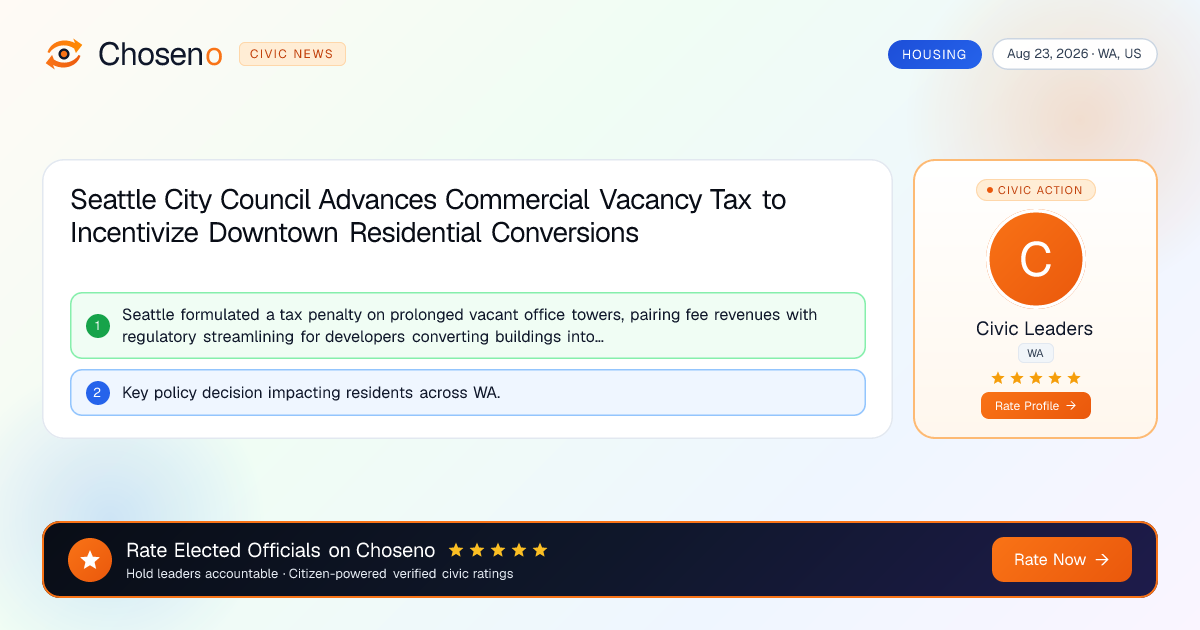
Connecticut Housing Finance Authority Expands First-Time Homebuyer Assistance as Entry Prices Top $300,000
State housing officials expanded down payment assistance grants to $35,000 as entry-level home valuations in Connecticut doubled historical averages, straining working families.
Read full article
Housing
US Aug 23, 2026
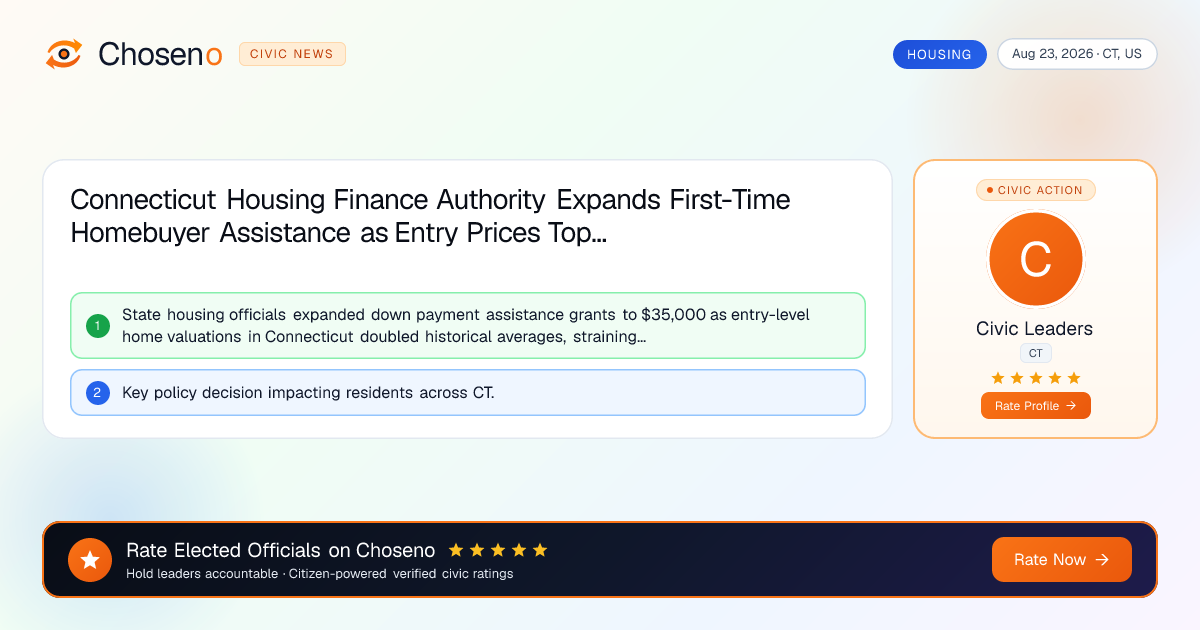
Utah Housing Commission Confronts Rising Median Home Valuations in Salt Lake Valley
Governor Spencer Cox's housing task force presented new policy recommendations to accelerate modular home construction and revise municipal zoning restrictions as entry prices climb.
Read full article