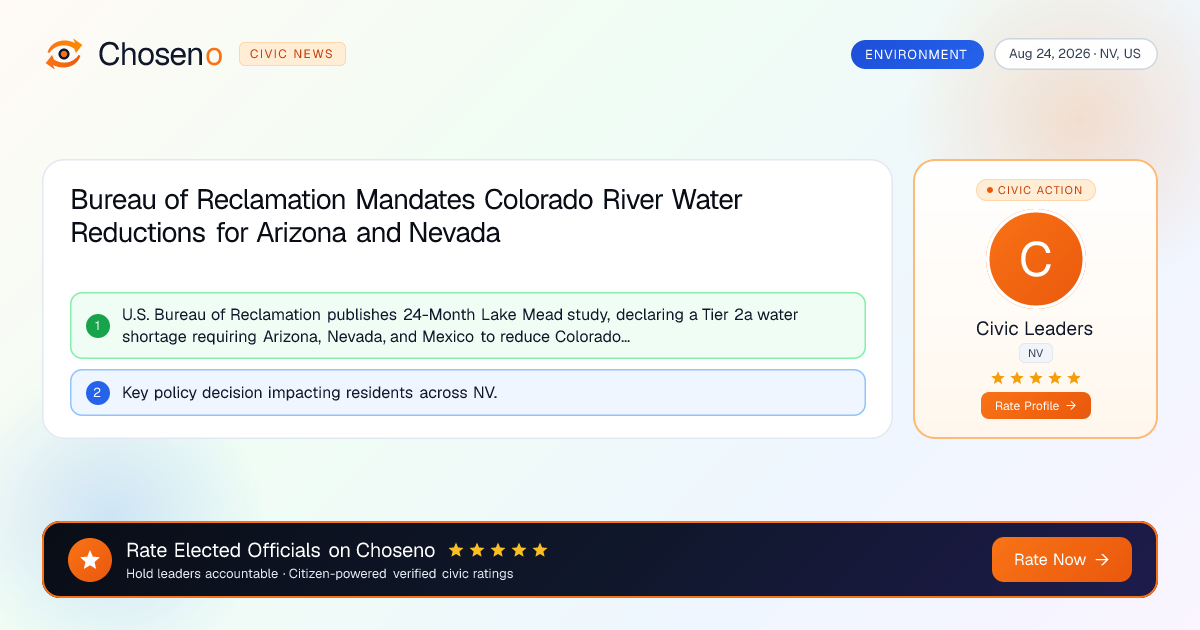
EPA Awards $130 Million to Clean Up and Redevelop 110 Contaminated Brownfield Sites
EPA Administrator Michael Regan announces $130 million in Brownfields Multipurpose, Assessment, and Cleanup grants, transforming abandoned industrial parcels into affordable housing and public parks.
Choseno Urban Environmental Remediation & Land Use Desk August 24, 2026 1 min read DC, US
★ Choseno Civic Briefing
Key Leaders
WASHINGTON, DC — The United States Environmental Protection Agency (EPA) announced the award of $130 million in competitive Brownfields Multipurpose, Assessment, and Cleanup grants, delivering direct environmental remediation funding to 110 municipal redevelopment agencies and non-profit coalitions across 34 states.
Transforming Contaminated Industrial Eyesores into Thriving Civic Hubs
The funding packages provide up to $2 million per site to excavate heavy metal-contaminated soil, remove industrial chemical residues, and remediate asbestos in abandoned rail yards, defunct textile mills, and former gas stations in Detroit, Philadelphia, St. Louis, and Birmingham. EPA brownfields assessments indicate that every federal grant dollar spent on cleanup leverages over $14 in private investment, clearing the path to build 5,000 new affordable apartments, community recreation centers, and urban parks.
EPA Administrator Michael Regan stated that brownfield cleanups remove toxic hazards from underserved neighborhoods and unlock new opportunities for economic development.
Mayors and Urban Planning Coalitions Praise
The U.S. Conference of Mayors praised the flexible assessment and cleanup grants for revitalizing downtown waterfronts and historic industrial quarters.
Environmental justice organizers commended the requirement for mandatory neighborhood community engagement panels.
Site Remediation Schedule
Environmental remediation engineering contracts will be awarded by recipient city agencies in October 2026.
Related Coverage in Environment
See all Environment newsEnvironment Breaking
US Aug 24, 2026
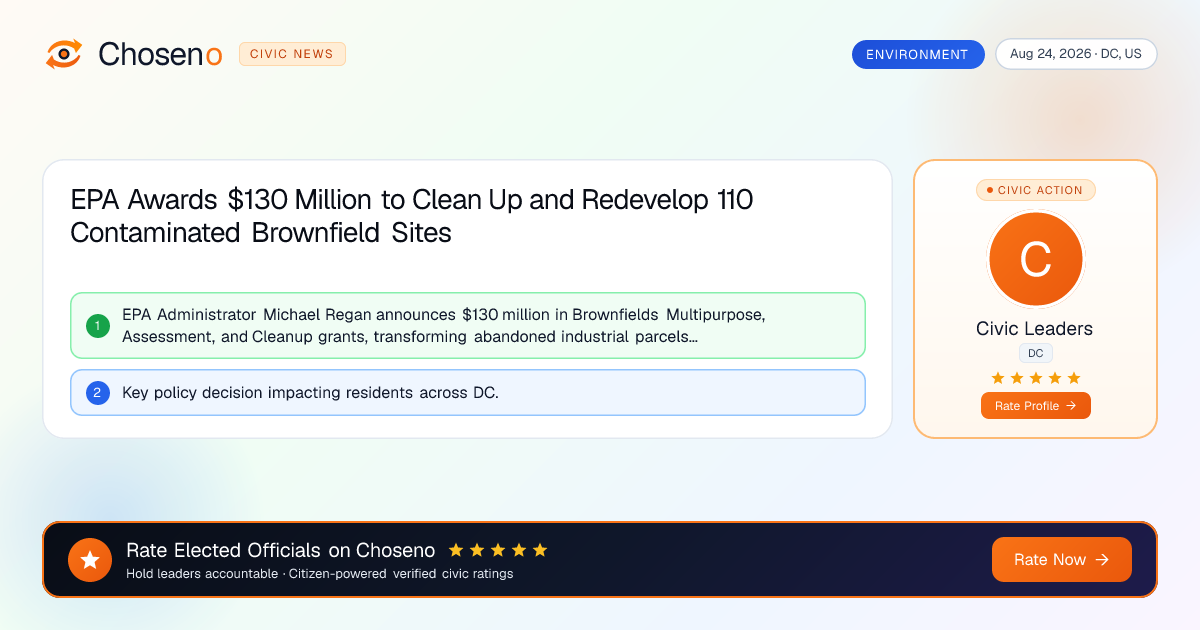
EPA Awards $200 Million to Install PFAS Water Filtration Systems in 150 Rural Communities
EPA Administrator Michael Regan announces $200 million in Emerging Contaminants grants, providing 100% principal forgiveness for rural and tribal water systems installing granular activated carbon filters.
Read full article
Environment
CA Aug 24, 2026
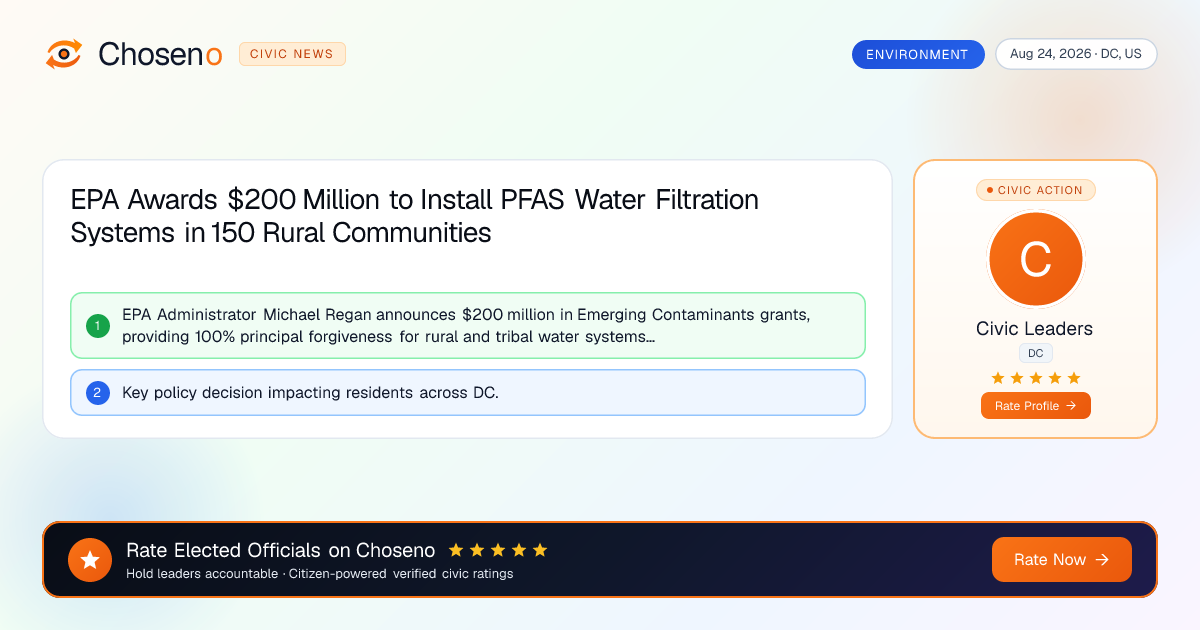
Premier David Eby Reaffirms Permanent Oil Tanker Ban on B.C.'s North Coast
B.C. Premier David Eby issues formal declaration upholding the federal Oil Tanker Moratorium Act, rejecting proposals to open North Coast waters to crude oil tankers.
Read full article
Environment
US Aug 24, 2026
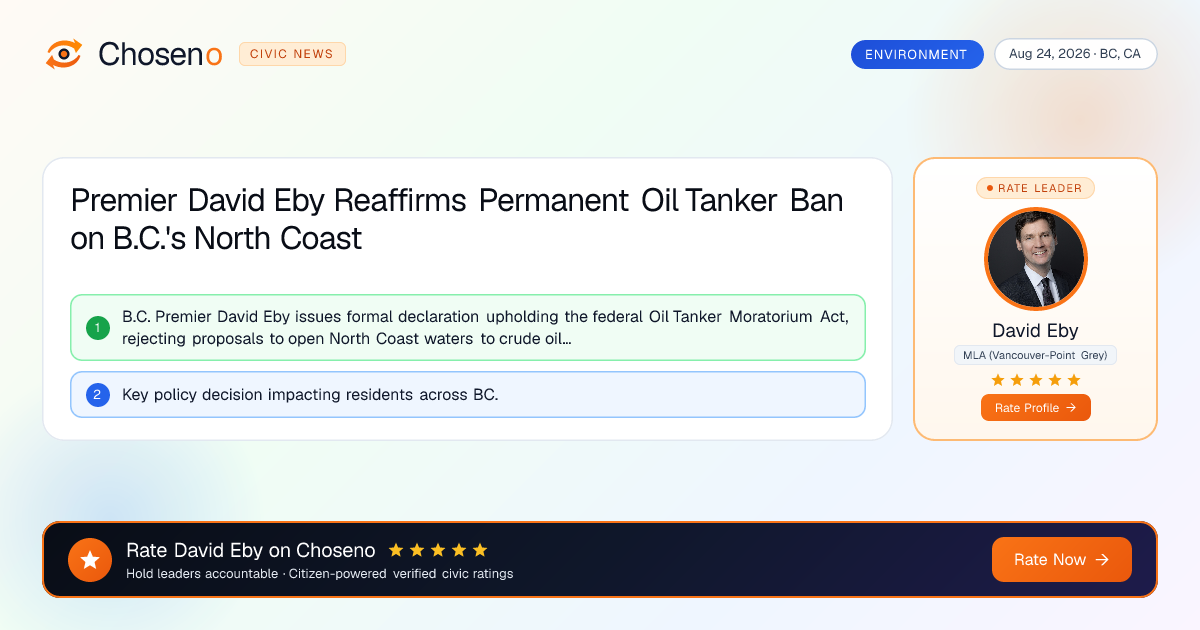
Bureau of Reclamation Mandates Colorado River Water Reductions for Arizona and Nevada
U.S. Bureau of Reclamation publishes 24-Month Lake Mead study, declaring a Tier 2a water shortage requiring Arizona, Nevada, and Mexico to reduce Colorado River diversions by 613,000 acre-feet in 2027.
Read full article