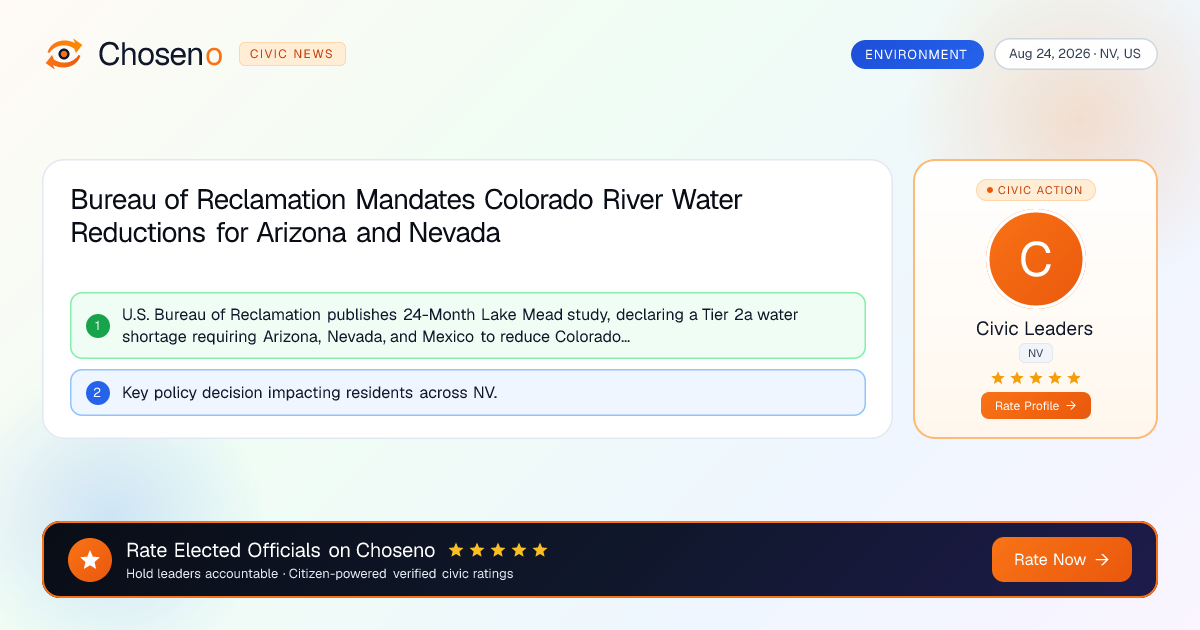
EPA Awards $150 Million to Reduce Gulf of Mexico Dead Zone and Restore Estuary Water Quality
EPA Gulf of Mexico Division announces $150 million in Gulf Hypoxia Program grants across 12 Mississippi River basin states to construct agricultural wetlands and eliminate nutrient dead zones.
Choseno Marine Ecology & Mississippi Watershed Bureau August 24, 2026 1 min read DC, US
★ Choseno Civic Briefing
Key Leaders
WASHINGTON, DC — The United States Environmental Protection Agency (EPA) announced $150 million in competitive grant funding through the Gulf Hypoxia Program and Bipartisan Infrastructure Law, delivering capital to 12 state environmental agencies throughout the Mississippi River and Ohio River watersheds.
Combating Agricultural Runoff and Restoring Marine Ecosystems
The funding packages provide direct grants to fund the construction of 400 edge-of-field saturated buffer wetlands, restore 25,000 acres of riparian floodplains, and install automated continuous nitrate sensors along the Mississippi, Illinois, and Missouri rivers. EPA marine modeling indicates the coordinated watershed projects will intercept 35,000 metric tons of agricultural nitrogen and phosphorus annually, shrinking the Gulf of Mexico hypoxic 'dead zone' to below historical five-year targets.
EPA Administrator Michael Regan emphasized that protecting the Gulf of Mexico requires upstream partnerships with American farmers to protect drinking water and marine fisheries.
Commercial Shrimpers and Agricultural Cooperatives Support
Gulf Coast commercial shrimping and fishing associations praised the nutrient reduction targets, citing vital improvements in coastal brown shrimp nursery grounds.
Midwest state departments of agriculture commended the 100% federal cost-share grants for voluntary farm conservation.
Watershed Project Implementation Schedule
Riparian wetland engineering and buffer construction will commence across all 12 Mississippi basin states in spring 2027.
Related Coverage in Environment
See all Environment newsEnvironment Breaking
US Aug 24, 2026
EPA Awards $200 Million to Install PFAS Water Filtration Systems in 150 Rural Communities
EPA Administrator Michael Regan announces $200 million in Emerging Contaminants grants, providing 100% principal forgiveness for rural and tribal water systems installing granular activated carbon filters.
Read full article
Environment Breaking
CA Aug 24, 2026
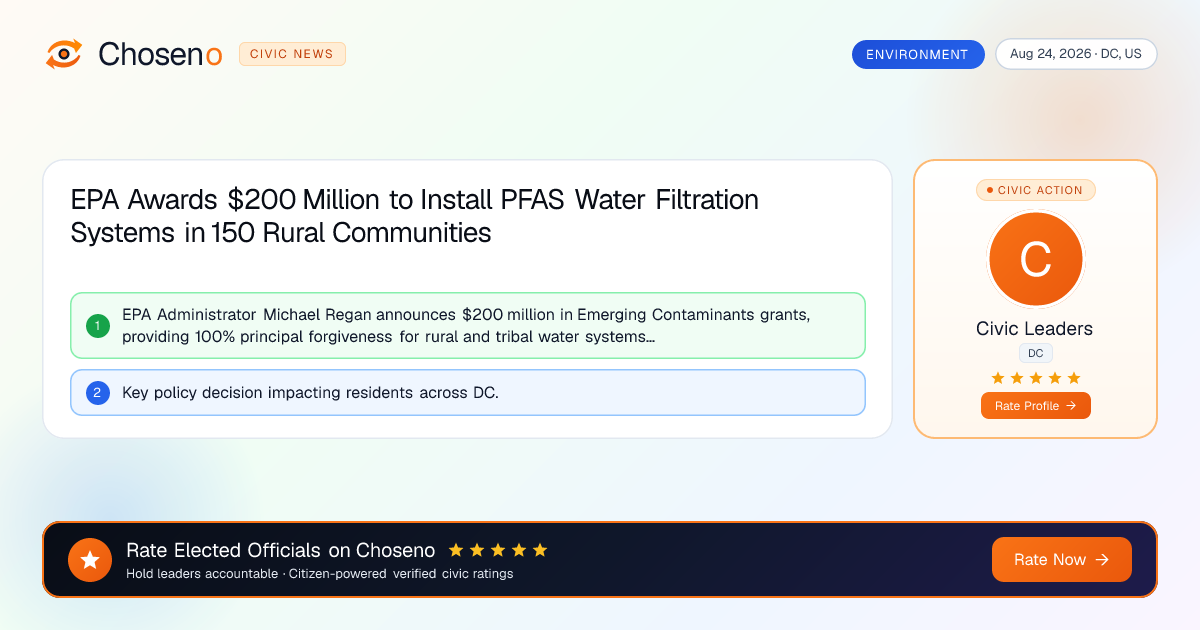
Premier David Eby Reaffirms Permanent Oil Tanker Ban on B.C.'s North Coast
B.C. Premier David Eby issues formal declaration upholding the federal Oil Tanker Moratorium Act, rejecting proposals to open North Coast waters to crude oil tankers.
Read full article
Environment Breaking
US Aug 24, 2026
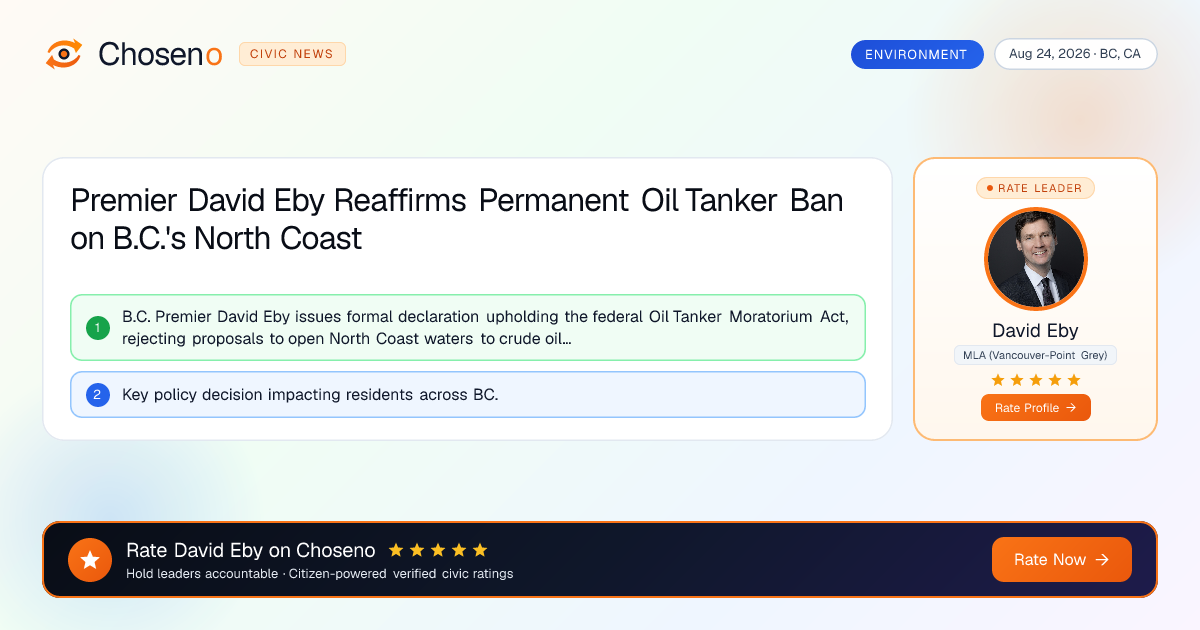
Bureau of Reclamation Mandates Colorado River Water Reductions for Arizona and Nevada
U.S. Bureau of Reclamation publishes 24-Month Lake Mead study, declaring a Tier 2a water shortage requiring Arizona, Nevada, and Mexico to reduce Colorado River diversions by 613,000 acre-feet in 2027.
Read full article