Evaluating Executive Paring: The Prospects of Wes Moore and Andy Beshear for National Office
Political analysts are increasingly examining the potential 2028 presidential ticket pairing of Maryland Governor Wes Moore and Kentucky Governor Andy Beshear. Both Democratic executives bring distinct executive credentials and state-level successes that could reshape the national political landscape.
Choseno Civic News Desk September 24, 2026 4 min read Kentucky, US
What do you think of the people in this story? Rate them anonymously — tap a face below.
As the American political landscape looks ahead to the 2028 presidential election, political strategists and civic analysts are evaluating potential executive pairings that could define the future of the Democratic Party, with particular attention centering on Maryland Governor Wes Moore and Kentucky Governor Andy Beshear. Both figures have garnered significant national attention by winning gubernatorial elections in states with complex political dynamics, demonstrating an ability to appeal to broader coalitions beyond traditional partisan strongholds. Governor Moore, a former combat veteran, author, and nonprofit CEO who assumed office in January 2023, has focused his tenure heavily on economic mobility, structural equity, and efficient state administration. His legislative and executive actions in Maryland have prioritized public safety, ambitious climate goals, and youth service initiatives, seeking to position the state as a laboratory for progressive governance packaged with pragmatic execution. Meanwhile, Governor Beshear has achieved notable electoral success in Kentucky, a predominantly conservative state where he secured a second term in November 2023 by emphasizing bipartisan infrastructure investments, job creation, and public education funding over polarizing culture war debates. This combined gubernatorial experience offers a compelling dual narrative for a hypothetical national ticket, merging Moore's emphasis on urban innovation and systemic reform with Beshear's proven track record of winning over rural and working-class voters in the American heartland.
From a structural and statutory perspective, evaluating a prospective Moore-Beshear ticket requires examining how their respective state policy agendas translate to the federal level, particularly regarding federal-state fiscal federalism, taxpayer stakes, and economic stewardship. Governor Moore has consistently championed strategic capital investments in Maryland's transit infrastructure, most notably addressing the aftermath of the Francis Scott Key Bridge collapse through rapid federal coordination, emergency economic relief for port workers, and disciplined state budgeting. His administration has navigated complex budgetary negotiations to maintain fiscal solvency while funding targeted tax credits for low-income families and expanding pre-kindergarten access. On the other side of the Ohio River, Governor Beshear has presided over an unprecedented economic boom in Kentucky, anchored by billions of dollars in private-sector investments in electric vehicle battery manufacturing and clean energy supply chains. Beshear has defended these industrial incentives as vital tools for modernizing the regional economy and generating stable middle-class employment, framing economic development not as a partisan endeavor but as a fundamental obligation to taxpayers. Political observers note that pairing an administrator from the Mid-Atlantic corridor with an executive from the Upper South could provide a balanced blueprint for addressing national economic anxieties, infrastructure modernization, and fiscal accountability.
Beyond economic metrics, community debates surrounding both governors highlight the nuances and potential vulnerabilities of their records as they contemplate broader national ambitions. In Maryland, community stakeholders and legislative watchdogs have engaged in rigorous discussions regarding Governor Moore's proposed state budget cuts, prioritization of capital projects, and the ongoing challenges of managing public education funding under the multi-year Blueprint for Maryland's Future. Critics from fiscal conservative groups have cautioned that ambitious programmatic expansions could strain state revenues over the long term, necessitating careful fiscal restraint to protect taxpayers from future liability. Concurrently, in Kentucky, Governor Beshear has frequently navigated intense legislative friction with a Republican supermajority in the state general assembly, leading to veto overrides on sensitive measures involving healthcare mandates, transgender rights, and educational policies. Despite these legislative standoffs, public opinion metrics have frequently placed Beshear among the more popular Democratic executives nationally, largely due to his crisis-management responses during catastrophic natural disasters such as tornadoes and devastating floods. Civic organizations and political analysts point out that while both governors have cultivated reputations as competent managers capable of governing through crises, translating those localized executive styles into a cohesive national campaign strategy will require careful navigation of deeply entrenched ideological divides within the broader electorate.
Ultimately, discussions regarding a potential Moore and Beshear ticket remain speculative as both executives focus intensely on fulfilling their current gubernatorial mandates and addressing pressing state-level concerns. State lawmakers, political commentators, and civic leaders emphasize that the viability of any future national partnership will depend heavily on the legislative outcomes achieved in Annapolis and Frankfort over the coming years, as well as the evolving priorities of the Democratic Party national base. Governor Moore has repeatedly stated his primary commitment remains serving the residents of Maryland and delivering tangible progress on poverty reduction, educational attainment, and economic competitiveness. Similarly, Governor Beshear has downplayed immediate presidential speculation, choosing instead to concentrate on finishing his final term by securing bipartisan compromises on economic diversification and infrastructure expansion. As the 2028 electoral cycle approaches, the political trajectories of these two rising Democratic leaders will continue to serve as a vital barometer for how executive competence, cross-partisan appeal, and pragmatic governance are valued by voters seeking stability and leadership on the national stage.
Rate the people mentioned in this article


Related Coverage in Municipal
See all Municipal newsMunicipal
US Sep 27, 2026
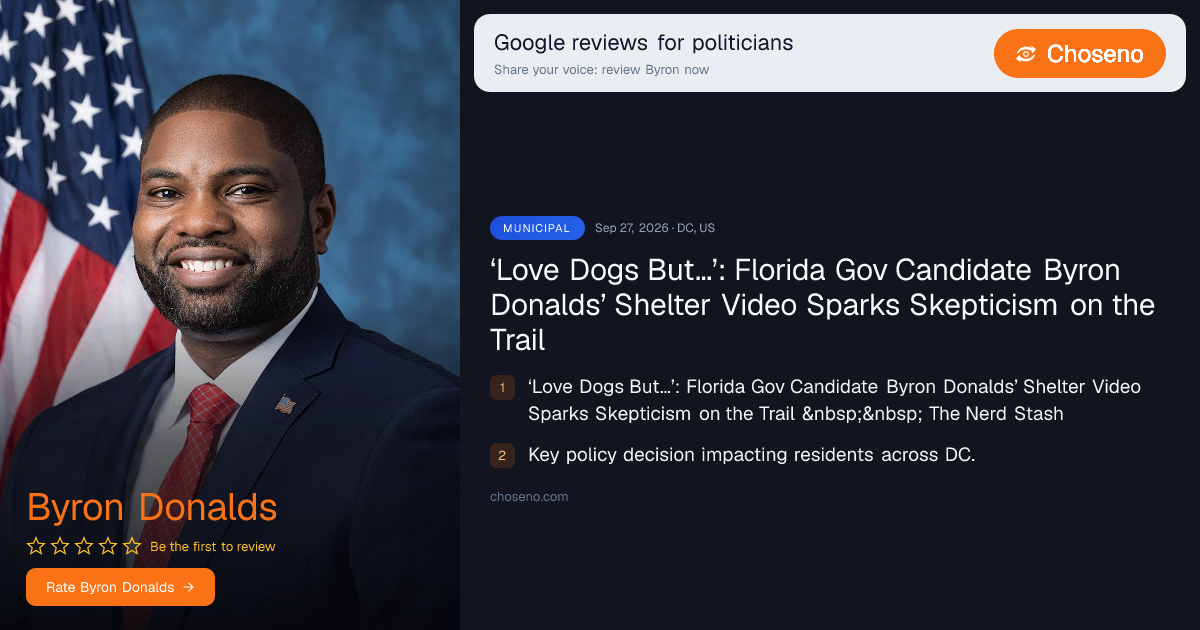
‘Love Dogs But…’: Florida Gov Candidate Byron Donalds’ Shelter Video Sparks Skepticism on the Trail
‘Love Dogs But…’: Florida Gov Candidate Byron Donalds’ Shelter Video Sparks Skepticism on the Trail The Nerd Stash
Read full article
Municipal
US Sep 27, 2026
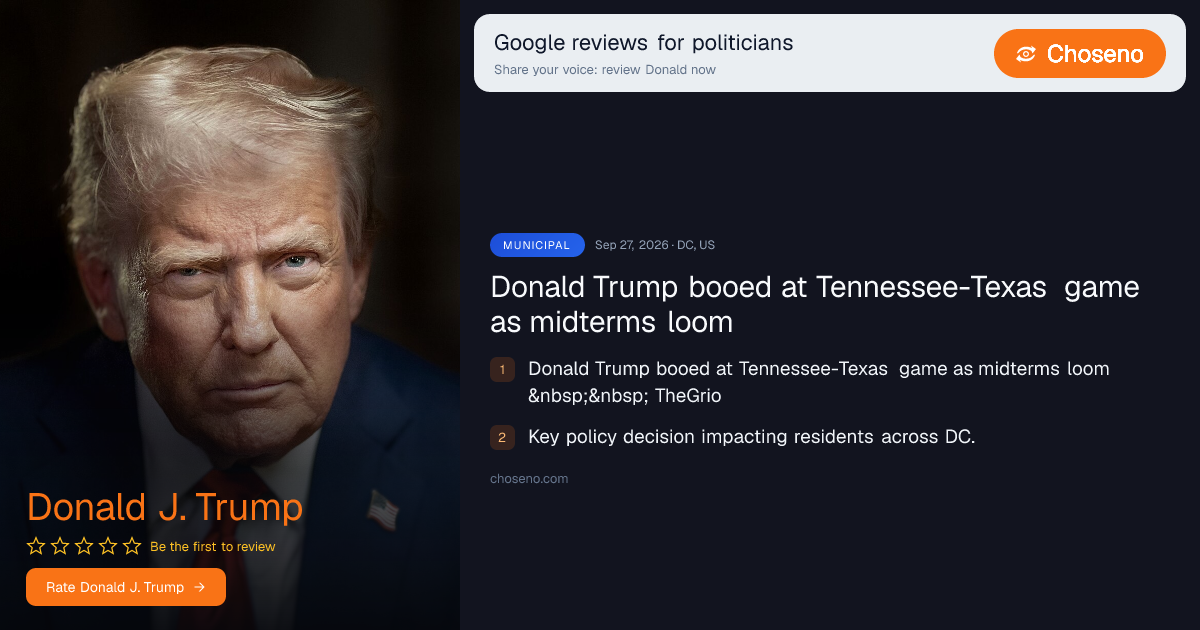
Donald Trump booed at Tennessee-Texas game as midterms loom
Donald Trump booed at Tennessee-Texas game as midterms loom TheGrio
Read full article
Municipal
US Sep 27, 2026
President Donald Trump Attends Presidents Cup in Democratic Stronghold
President Donald Trump Attends Presidents Cup in Democratic Stronghold 조선일보
Read full article