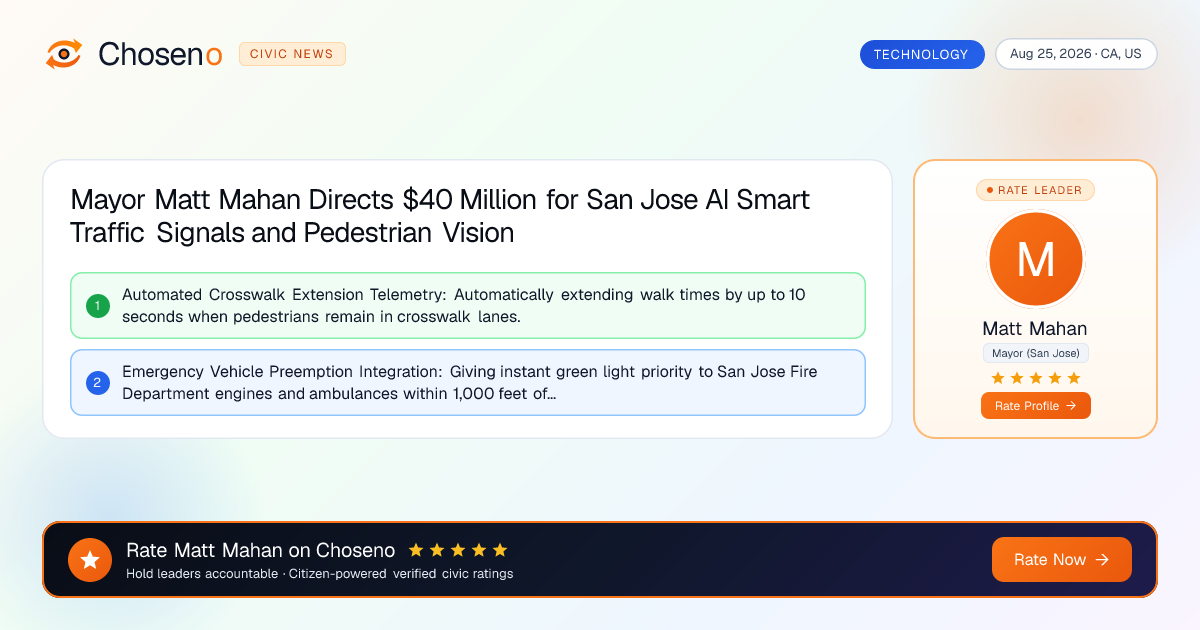
Federal Communications Commission Enacts Mandatory Carrier Blocking Rules to Eliminate AI Robotext Scams
The FCC enacts landmark regulations requiring wireless mobile carriers to block illegal robotext messages at the network level and authenticate commercial text messaging traffic.
Choseno National Tech Policy & Telecom Bureau August 25, 2026 1 min read DC, US
★ Choseno Civic Briefing
Key Leaders
WASHINGTON — The Federal Communications Commission adopted sweeping new rules on Tuesday establishing mandatory, network-level blocking requirements for wireless mobile providers, targeting the exponential rise in fraudulent robotexts, bank impersonation phishing scams, and automated commercial messaging.
The unanimous order expands the commission's anti-robocall enforcement framework to SMS and MMS messaging, closing regulatory loopholes that allowed offshore scam syndicates to flood American mobile devices with billions of deceptive text messages annually.
Key Regulatory Requirements for Wireless Carriers Under the new FCC operational standards:
- Mobile network operators must deploy automated algorithmic filtering at the network gateway to intercept and block messages originating from numbers on the Do-Not-Originate (DNO) list and non-geographic invalid number blocks.
- Commercial entities utilizing 10-digit long code (10DLC) numbers for mass marketing must complete mandatory identity verification and obtain separate, individual opt-in consent for each specific company contacting the consumer.
- Mobile carriers are required to establish transparent, rapid-redress processes to allow legitimate businesses to resolve false-positive message blocking within 24 hours.
"Scam robotexts are not just a nuisance; they are high-tech pickpockets designed to steal money and personal information from unsuspecting Americans," FCC leadership stated in the commission's final order. "By mandating that mobile carriers block suspicious traffic before it ever reaches a consumer's phone, we are shutting down the primary avenue used by scammers."
Industry Implementation and Consumer Protections Major telecommunications carriers confirmed they have begun deploying machine-learning anomaly detection across their messaging switches to comply with the order.
Consumer advocacy groups praised the closing of lead-generation loopholes, noting that a single online contest entry previously resulted in consumers receiving dozens of daily marketing texts from unrelated third parties.
Related Coverage in Technology
See all Technology newsTechnology
US Aug 25, 2026
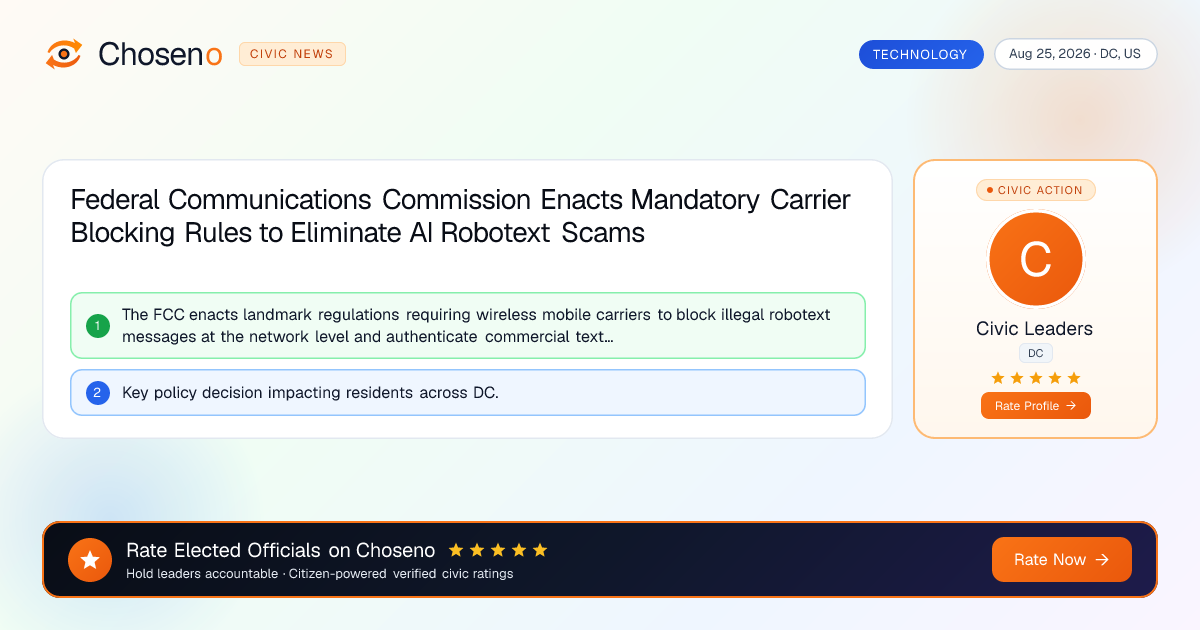
NTIA Allocates $320 Million for Rural Middle-Mile Open-Access Fiber Networks Across 8 States
Commerce Secretary Gina Raimondo and NTIA Administrator Alan Davidson award $320 million from the Enabling Middle Mile Broadband Infrastructure Program to construct 3,800 route-miles of open-access subterranean fiber optic backbones serving 45 rural and tribal communities.
Read full article
Technology
US Aug 25, 2026
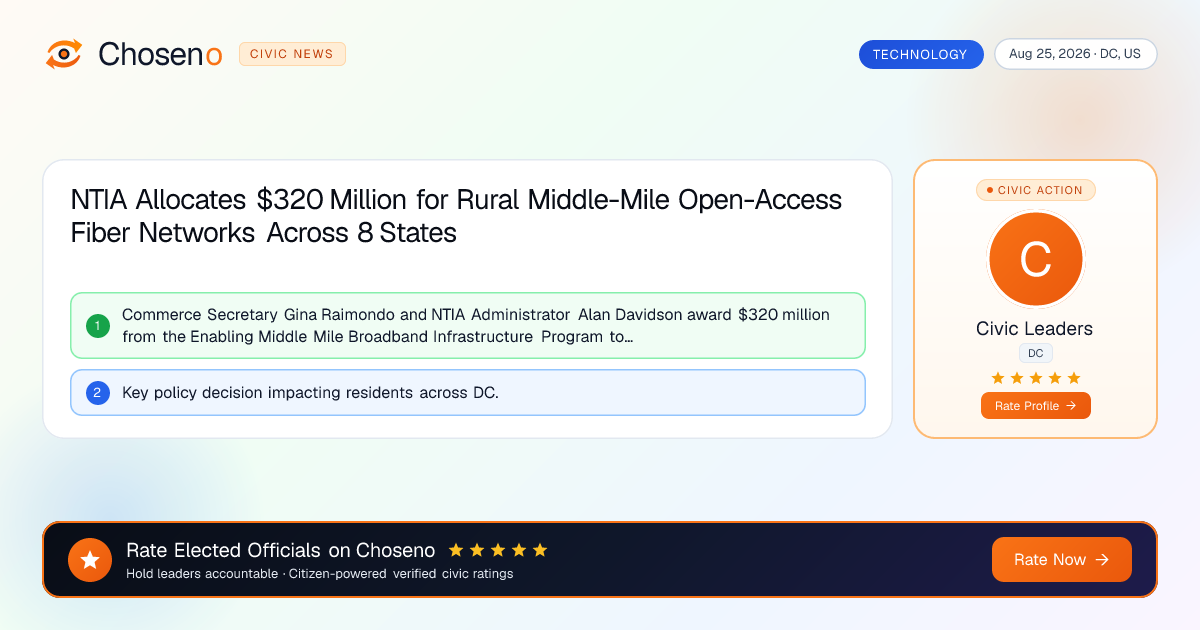
Governor JB Pritzker Directs $110 Million for Chicago Quantum Foundries and Cryogenic Testing
Illinois Governor JB Pritzker announces $110 million in state capital grants through the Rebuild Illinois program to construct cryogenic testing facilities and specialized quantum qubit fabrication cleanrooms on Chicago's South Side.
Read full article
Technology
US Aug 25, 2026
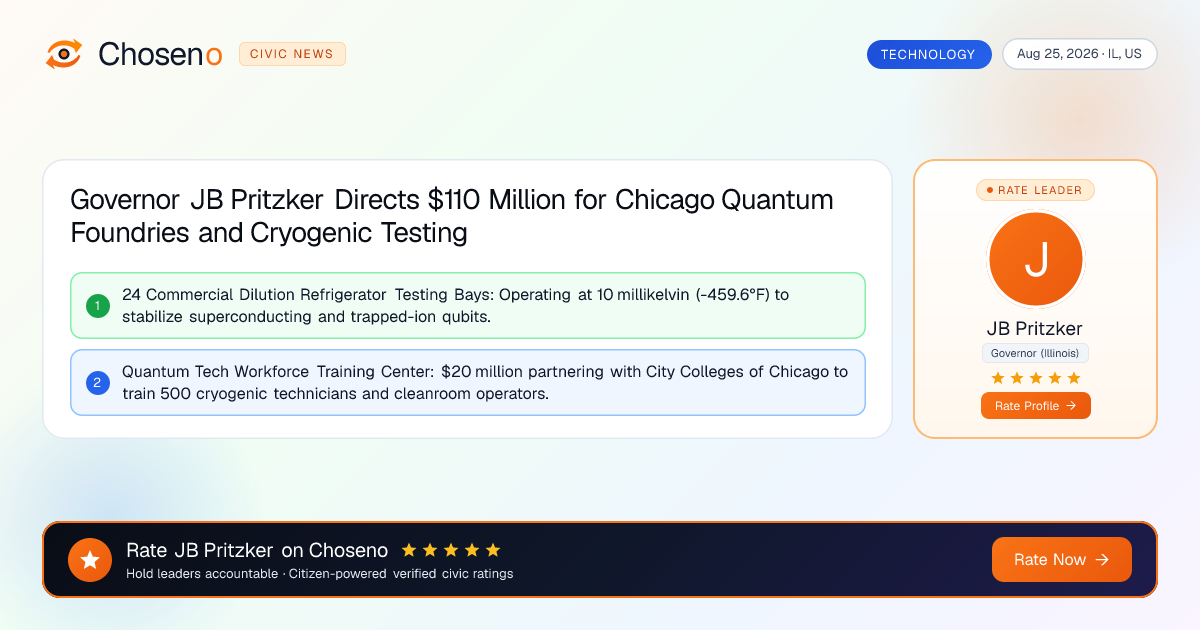
Mayor Matt Mahan Directs $40 Million for San Jose AI Smart Traffic Signals and Pedestrian Vision
San Jose Mayor Matt Mahan and the San Jose City Council authorize $40 million to install artificial-intelligence-enabled traffic signal controllers and automated pedestrian thermal sensors across 150 high-injury crash intersections.
Read full article