BREAKING
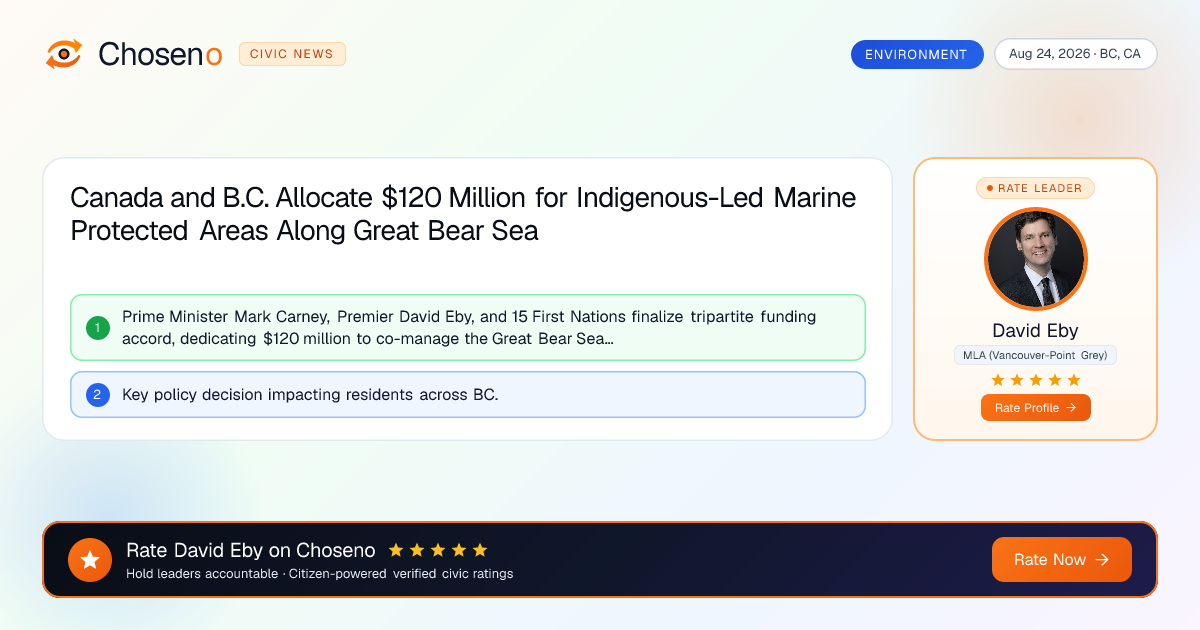
Canada and B.C. Allocate $120 Million for Indigenous-Led Marine Protected Areas Along Great Bear Sea
Prime Minister Mark Carney, Premier David Eby, and 15 First Nations finalize tripartite funding accord, dedicating $120 million to co-manage the Great Bear Sea Marine Protected Area Network.
Choseno Marine Conservation & Indigenous Governance Bureau August 24, 2026 1 min read BC, CA
★ Choseno Civic Briefing
Key Leaders
BELLA BELLA, BC — Prime Minister Mark Carney and British Columbia Premier David Eby joined leadership from 15 Coastal First Nations to announce the execution of a historic tripartite finance agreement, dedicating $120 million to establish and co-manage the Great Bear Sea Marine Protected Area (MPA) Network.
Protecting 100,000 Square Kilometers of Pristine Pacific Coastline
The funding agreement establishes permanent conservation endowments to support Indigenous Guardian watchmen patrol vessels, marine ecological research buoys, and sustainable fisheries management across 100,000 square kilometers of marine waters from Northern Vancouver Island to the Alaska border. The protected network safeguards critical kelp forest ecosystems, humpback whale migratory routes, and wild Pacific salmon estuaries while providing sustainable ecotourism and marine stewardship jobs for coastal Indigenous communities.
Prime Minister Carney and Premier Eby affirmed that Indigenous-led conservation represents the highest standard of environmental stewardship and true economic reconciliation.
Coastal First Nations and Marine Science Stance
Coastal First Nations President Christine Smith-Martin celebrated the agreement as a world-leading model of shared ocean governance.
Marine conservation organizations praised the permanent protection of ecologically vital glass sponge reefs.
Guardian Patrol Deployment Schedule
Expanded Indigenous Guardian marine patrol vessels and sensor stations will deploy across the Great Bear Sea network in October 2026.
Rate the people mentioned in this article


Related Coverage in Environment
See all Environment newsEnvironment Breaking
US Aug 24, 2026
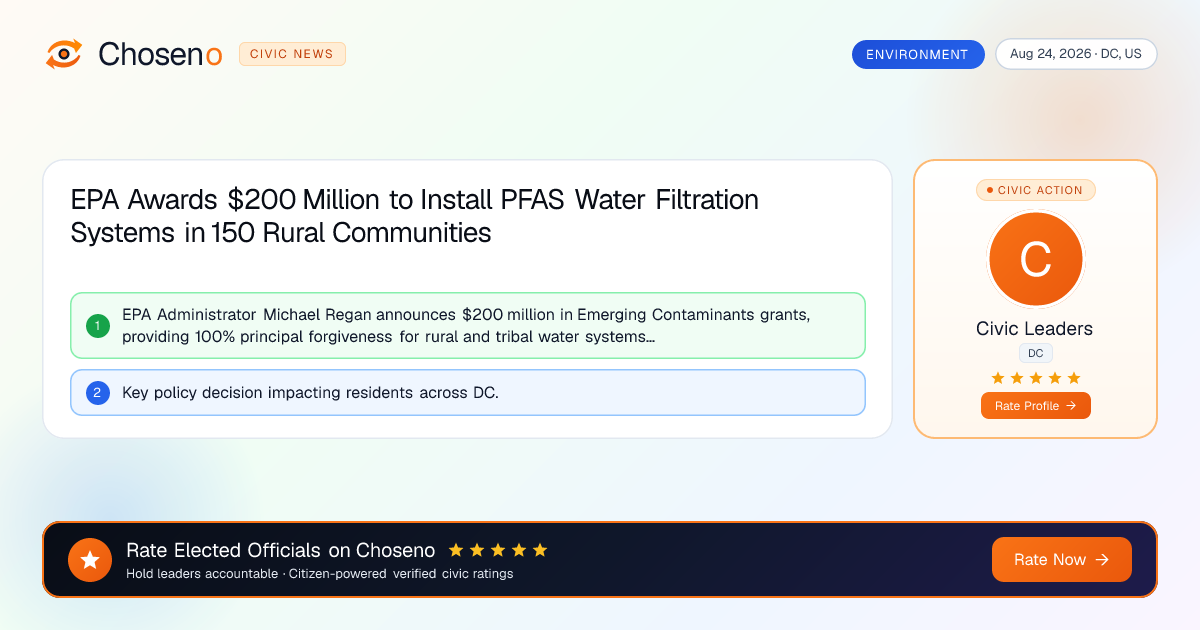
EPA Awards $200 Million to Install PFAS Water Filtration Systems in 150 Rural Communities
EPA Administrator Michael Regan announces $200 million in Emerging Contaminants grants, providing 100% principal forgiveness for rural and tribal water systems installing granular activated carbon filters.
Read full article
Environment Breaking
CA Aug 24, 2026
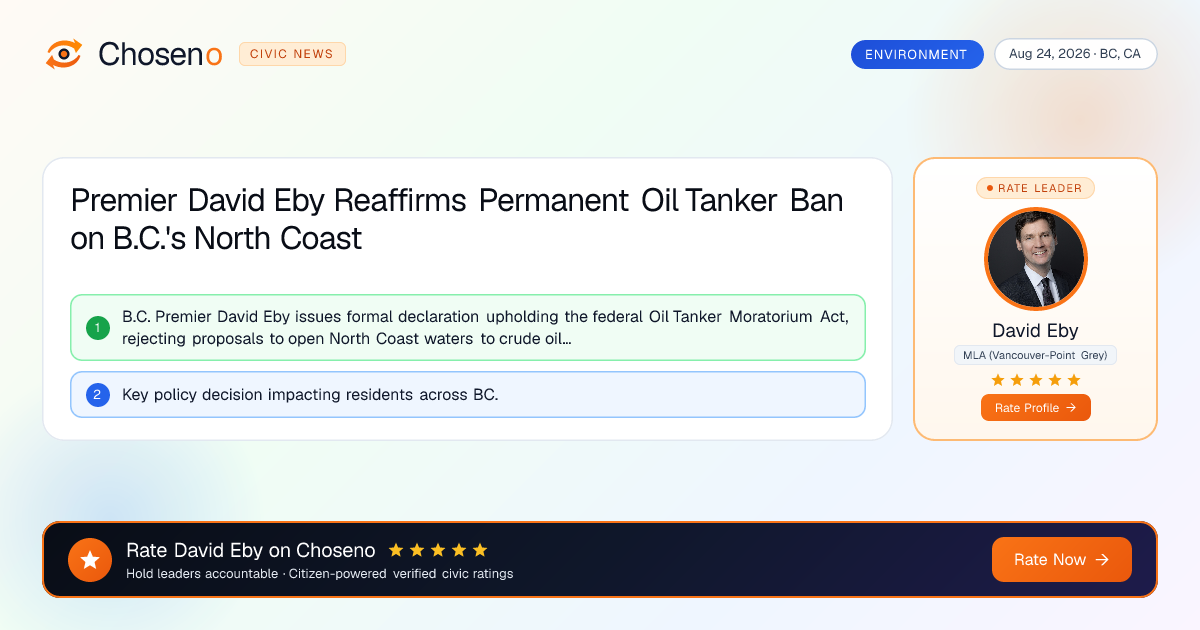
Premier David Eby Reaffirms Permanent Oil Tanker Ban on B.C.'s North Coast
B.C. Premier David Eby issues formal declaration upholding the federal Oil Tanker Moratorium Act, rejecting proposals to open North Coast waters to crude oil tankers.
Read full article
Environment Breaking
US Aug 24, 2026
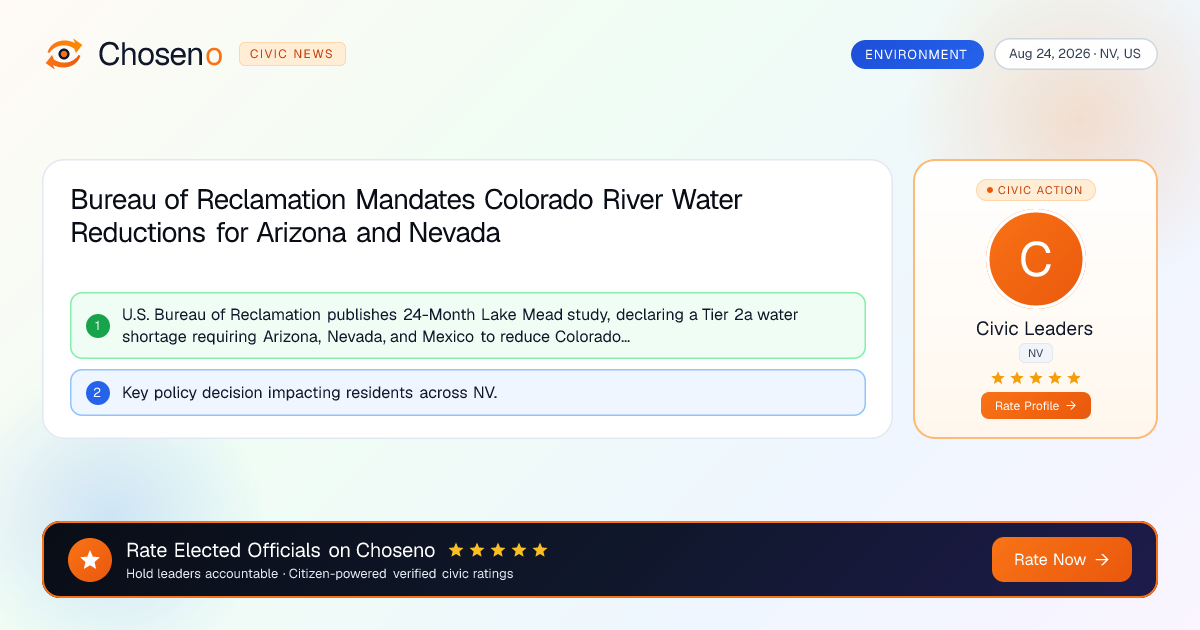
Bureau of Reclamation Mandates Colorado River Water Reductions for Arizona and Nevada
U.S. Bureau of Reclamation publishes 24-Month Lake Mead study, declaring a Tier 2a water shortage requiring Arizona, Nevada, and Mexico to reduce Colorado River diversions by 613,000 acre-feet in 2027.
Read full article