Flock Surveillance Technology Becomes Central Point of Contention in Texas Gubernatorial Campaign
The deployment of Flock automated license plate recognition cameras has surfaced as a significant policy divide in the Texas governor's race. The debate centers on the balance between enhanced law enforcement capabilities and the protection of individual privacy rights.
Choseno Civic News Desk August 28, 2026 2 min read TX, US
Dateline Lead
Texas is currently grappling with a growing political debate regarding the widespread implementation of Flock automated license plate recognition cameras. According to reporting by cbs19.tv, this surveillance technology has transitioned from a local law enforcement tool to a prominent issue in the ongoing gubernatorial campaign.
Policy & Taxpayer Impact
Flock cameras utilize high-speed sensors to capture vehicle data, which is then cross-referenced against law enforcement databases. While the technology is marketed as a force multiplier for police departments, the fiscal impact involves ongoing municipal investments in hardware, software licensing, and data storage infrastructure. Taxpayers are increasingly questioning the long-term costs and the efficacy of these systems in reducing crime rates.
Political & Legal Stakes
As the gubernatorial race intensifies, candidates are being forced to take definitive stances on the expansion of surveillance networks. The legal stakes involve potential challenges to Fourth Amendment protections, as the aggregation of movement data creates a comprehensive digital footprint of citizens. The outcome of this election could dictate the future of state-level regulations governing how private surveillance data is integrated into public policing.
The Debate: Proponent vs. Critic
Proponents of the technology argue that the cameras are essential for modern policing, providing investigators with real-time leads on stolen vehicles and suspects involved in violent crimes. Conversely, critics and privacy advocates express deep concern over the lack of transparency and the potential for mission creep. Opponents argue that the constant tracking of law-abiding citizens constitutes an overreach that fundamentally alters the relationship between the state and the public.
Public Accountability Context
Citizens are encouraged to monitor how their local jurisdictions manage data retention policies and vendor contracts associated with Flock systems. As the gubernatorial candidates continue to debate the merits of this technology, voters are tasked with evaluating whether the promise of increased public safety justifies the potential erosion of anonymity in public spaces.
Related Coverage in Politics
See all Politics newsPolitics
US Aug 28, 2026
Drone Strike Injures Four in Sevastopol as Regional Tensions Escalate
A drone attack in the Russian-held city of Sevastopol resulted in four injuries, according to local officials. The incident underscores the ongoing security instability in the region.
Read full article
Politics
CA Aug 28, 2026
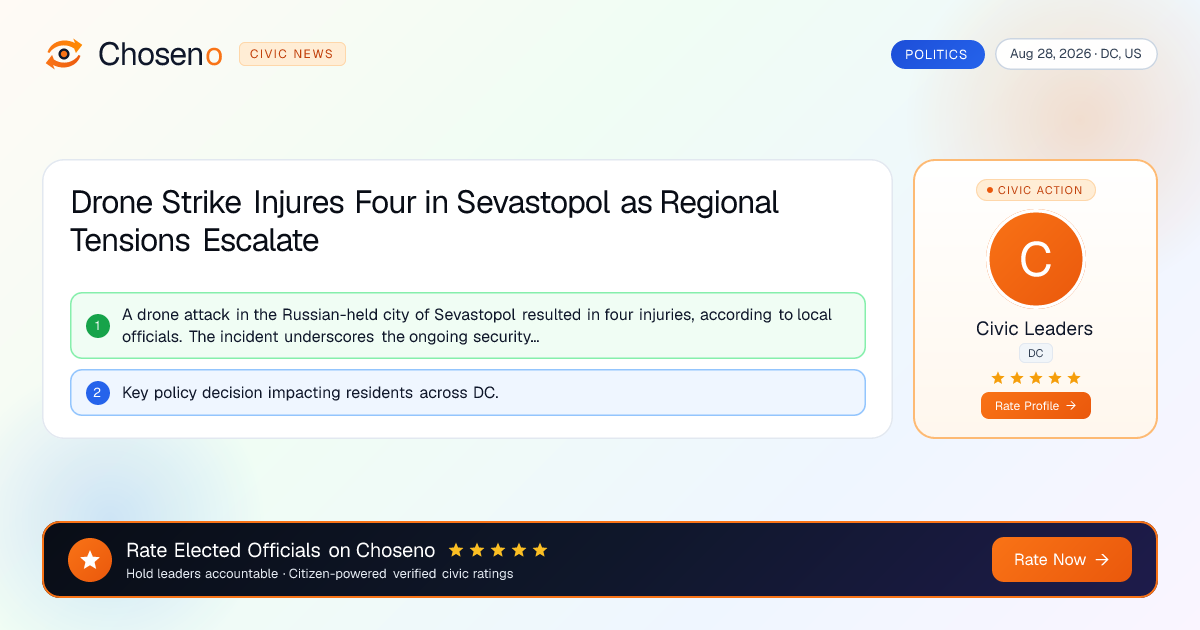
Three Vehicles Destroyed in Suspected Arson Outside Toronto MP's Home
Toronto Police are investigating a targeted arson attack on the Scarborough residence of Liberal MP Salma Zahid that destroyed three vehicles. The incident highlights the escalating security risks facing federal parliamentarians and the strain on national policing resources.
Read full article
Politics
US Aug 28, 2026
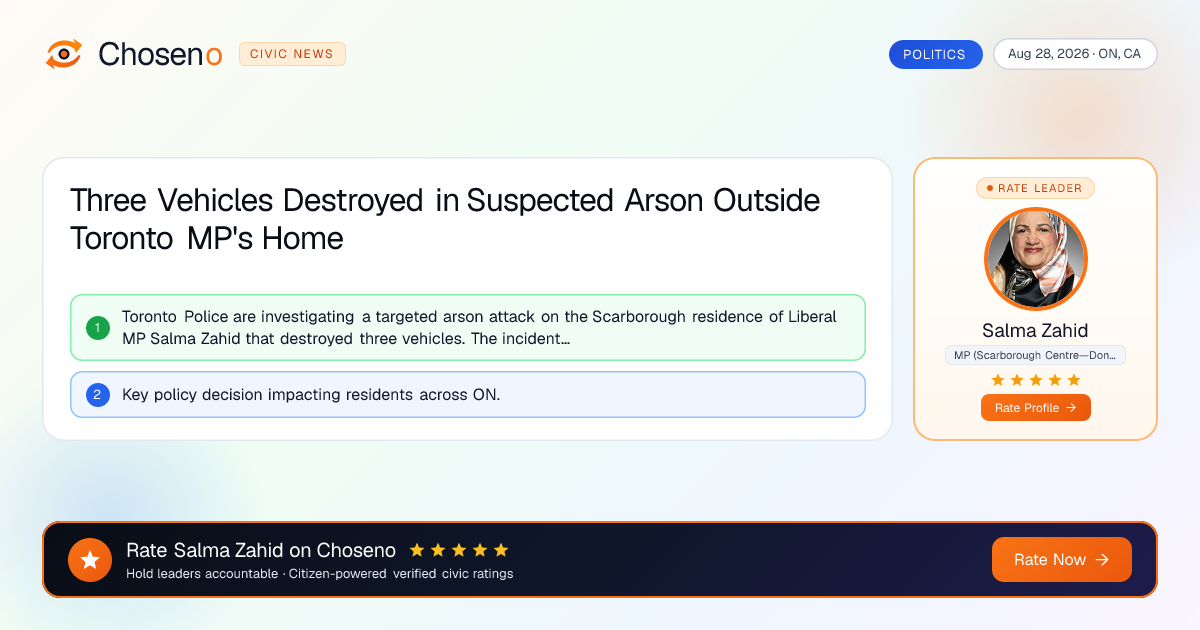
Queens Insurance Fraud Ring Sentenced Following Coordinated Staged Highway Crashes
Multiple individuals involved in a staged car crash conspiracy have received sentencing following a joint investigation by state and local authorities. The prosecution aims to curb insurance fraud that drives up premiums for New York motorists.
Read full article