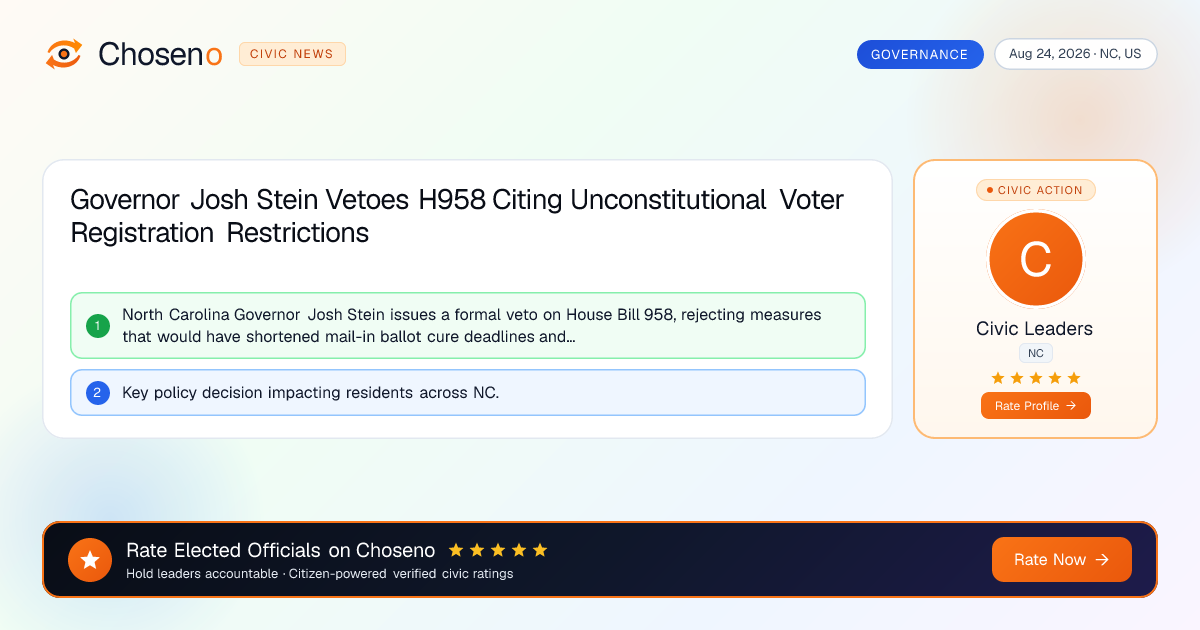
Governor Brian Kemp Issues Executive Orders Expanding Rural Healthcare and Public Integrity Oversight
Georgia Governor Brian Kemp signs a series of executive orders, deploying $15 million in rural healthcare workforce incentives and appointing judicial integrity review commissions.
Choseno Georgia State Affairs & Rural Health Desk August 24, 2026 1 min read GA, US
★ Choseno Civic Briefing
Key Leaders
ATLANTA, GA — Georgia Governor Brian Kemp signed multiple executive orders within the Executive Chamber, implementing targeted governance actions to strengthen rural hospital staffing, maintain municipal public integrity, and fill key superior court judicial vacancies.
Strengthening Healthcare in Underserved Rural Counties
Executive Order 08.24.26.01 authorizes the Georgia Department of Community Health to deploy $15 million through the Rural Healthcare Workforce Initiative, providing medical school tuition loan repayment grants up to $100,000 for primary care physicians, OB-GYNs, and emergency room nurses who commit to five years of service in counties with populations under 50,000. Governor Kemp also appointed specialized review panels under statutory integrity codes to ensure transparent governance in local municipal boards.
Governor Kemp emphasized that expanding access to quality healthcare in every corner of Georgia is essential to keep rural communities healthy, growing, and economically prosperous.
Hospital Associations and Rural Civic Leaders Endorse
The Georgia Hospital Association (GHA) praised the loan forgiveness program, highlighting severe clinical staffing shortages in rural community emergency rooms.
Rural chamber of commerce federations commended the proactive state investments in community hospital infrastructure.
Program Application Schedule
The Department of Community Health will begin accepting rural physician loan repayment applications on September 15, 2026.
Related Coverage in Governance
See all Governance newsGovernance
US Aug 24, 2026
Governor Brad Little Appoints Judge Jason Scott to the Idaho Supreme Court
Idaho Governor Brad Little appoints Fourth Judicial District Judge Jason Scott to the Idaho Supreme Court, filling the vacancy created by the retirement of Justice John Stegner.
Read full article
Governance Breaking
US Aug 24, 2026
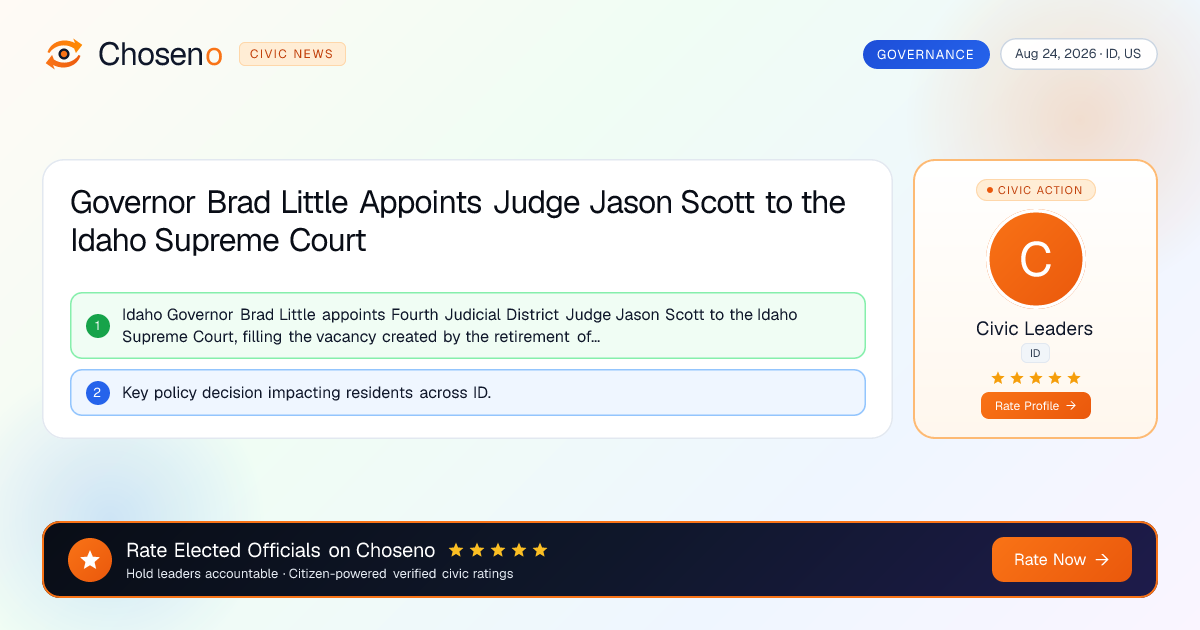
Governor Wes Moore Signs Bill Placing Constitutional Redistricting Standards on November Ballot
Maryland Governor Wes Moore enacts legislation passed in special legislative session, placing a constitutional amendment before voters in November to establish strict anti-gerrymandering criteria.
Read full article
Governance Breaking
US Aug 24, 2026
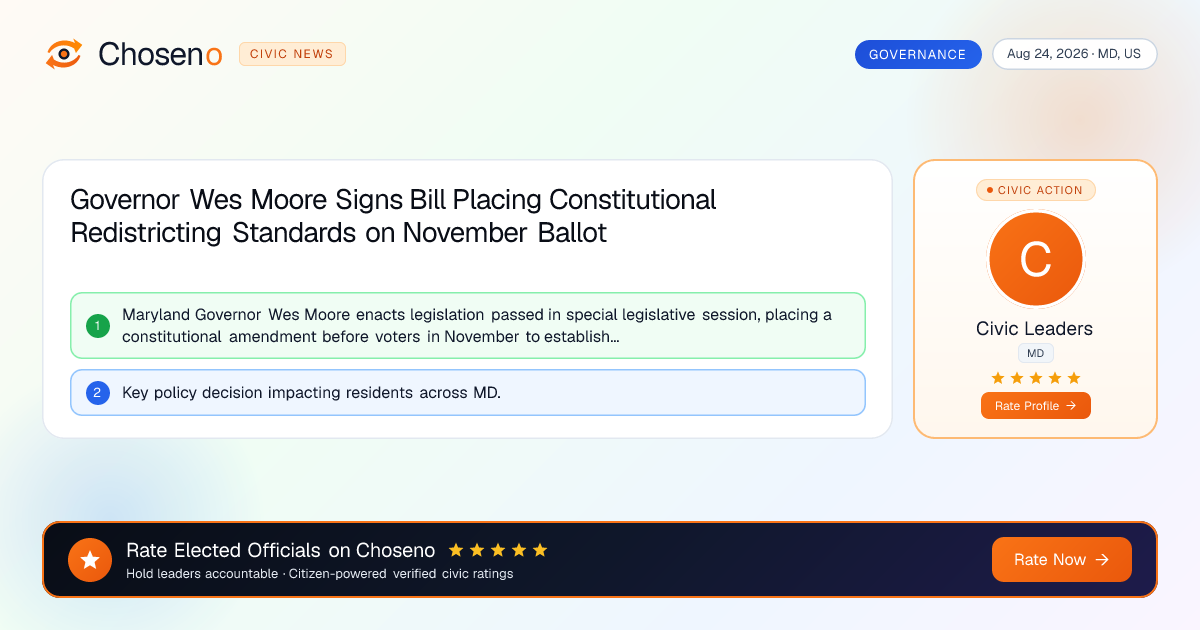
Governor Josh Stein Vetoes H958 Citing Unconstitutional Voter Registration Restrictions
North Carolina Governor Josh Stein issues a formal veto on House Bill 958, rejecting measures that would have shortened mail-in ballot cure deadlines and expanded mass voter roll challenges.
Read full article