Governor Josh Shapiro Establishes Vast Campaign Finance Advantage in Pennsylvania Gubernatorial Race
Latest state campaign finance filings reveal Pennsylvania Governor Josh Shapiro amassed over nineteen million dollars in available reserves, substantially outraising and outspending Republican challenger Stacy Garrity.
Choseno Civic News Desk September 25, 2026 3 min read Pennsylvania, US
Official campaign finance disclosures filed with the Pennsylvania Department of State reveal that incumbent Democratic Governor Josh Shapiro has established an overwhelming monetary advantage over Republican nominee and State Treasurer Stacy Garrity, entering the final stages of the gubernatorial campaign with vast cash reserves and comprehensive media dominance across every major media market in the commonwealth. Financial reports spanning the summer fundraising quarter document that the governor campaign apparatus collected thirteen point three million dollars over a fourteen-week period, lifting his liquid campaign treasury to nearly twenty million dollars in unspent reserves. In contrast, Treasurer Garrity raised one point eight million dollars during the identical timeframe, reporting approximately one point three million dollars in remaining liquid funds.
The widening resource disparity has fueled an asymmetrical airwave campaign across television, radio, and streaming digital networks throughout Pennsylvania. Campaign accounting summaries indicate that the Shapiro committee deployed nearly thirty-one point eight million dollars in advertising and ground field operations during the summer cycle, outspending the Republican challenger by a ratio exceeding twenty to one in major metropolitan television markets including Philadelphia, Pittsburgh, and the Lehigh Valley. Campaign consultants and media buyers noted that sustained multi-million-dollar broadcast buys have enabled the incumbent administration to define economic records and policy priorities uncontested across competitive suburban counties.
Campaign officials for Treasurer Garrity emphasized that grassroots enthusiasm, volunteer door-to-door mobilization, and localized voter frustration regarding utility costs and consumer inflation will overcome institutional fundraising disparities. Republican campaign strategists maintained that disciplined targeted digital campaigning and independent committee expenditures will ensure competitive voter turnout across central and western Pennsylvania counties. However, election analysts pointed out that significant cash differentials constrain challenger advertising in high-cost media corridors, leaving substantial segments of independent swing voters unfamiliar with the challenger statewide platform.
The financial disclosures coincide with statewide public polling demonstrating Governor Shapiro maintaining a double-digit lead among likely voters, bolstered by high approval ratings for state infrastructure repair projects, economic development incentives, and bipartisan budget enactments. Political science analysts at Franklin and Marshall College pointed out that well-funded incumbent campaign operations possess distinct structural advantages in large swing states, allowing campaigns to maintain continuous voter contact, field offices in all sixty-seven counties, and rapid-response digital operations without exhausting core operational reserves.
Campaign finance watchdog groups noted that the total expenditures across Pennsylvania executive elections reflect the nationalized stakes of gubernatorial contests in pivotal battleground states. Observers pointed out that donor networks from across the country continue to pour unprecedented capital into key state executive races, viewing gubernatorial offices as critical administrative bulwarks over state regulatory apparatuses, judicial appointments, and statutory election administration frameworks heading into future national electoral cycles.
With voter registration deadlines approaching and mail ballots being distributed to county election boards, both campaigns are preparing their final electoral phases. Governor Shapiro enters the final stretch with sufficient financial resources to maintain saturation advertising across all commonwealth media regions, while Treasurer Garrity focuses campaign stops and limited broadcast resources on maximizing conservative base mobilization and rural turnout across Pennsylvania interior counties.
Topics
Rate the people mentioned in this article

Related Coverage in General
See all General newsGeneral
US Sep 25, 2026
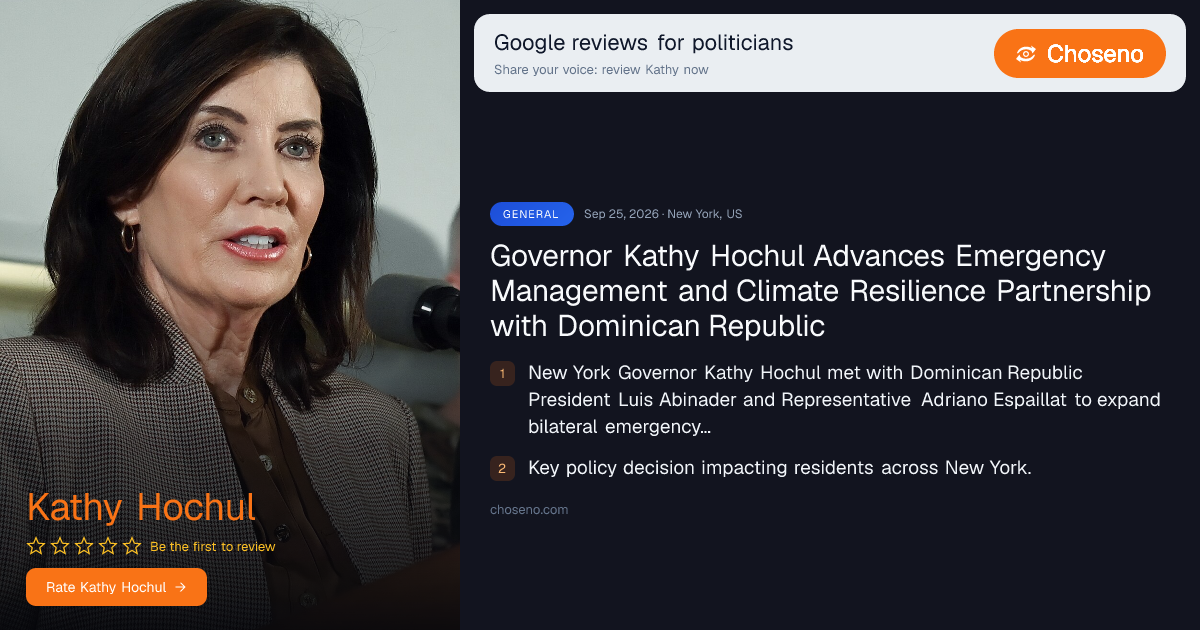
Georgia Gubernatorial Nominees Clash Over Agricultural Relief and Farm Production Safeguards
Candidates seeking to succeed term-limited Governor Brian Kemp outlined comprehensive agricultural blueprints targeting escalating input costs, diesel taxation relief, water allocations, and family farm preservation.
Read full article
General
US Sep 25, 2026
Oregon Gubernatorial Candidates Kotek and Drazan Present Contrasting Economic Platforms in Rematch Forum
Oregon Governor Tina Kotek and Republican challenger Christine Drazan outlined starkly different economic blueprints regarding commercial regulations, tax structures, and industrial competitiveness at a Portland business forum.
Read full article
General
US Sep 25, 2026
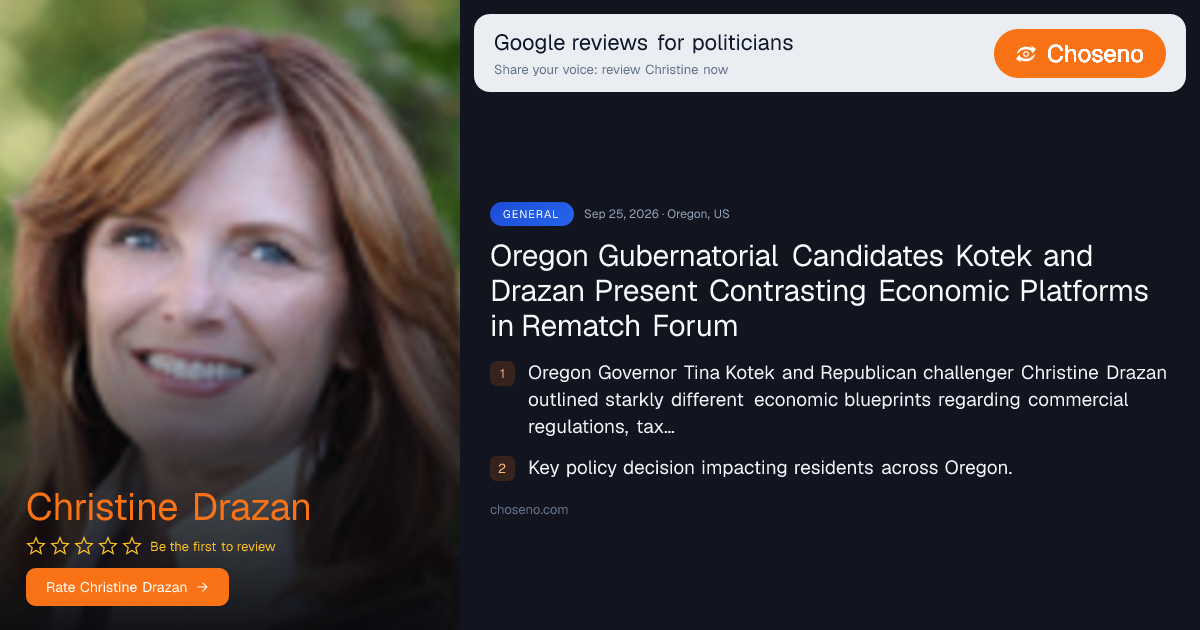
Governor Kathy Hochul Advances Emergency Management and Climate Resilience Partnership with Dominican Republic
New York Governor Kathy Hochul met with Dominican Republic President Luis Abinader and Representative Adriano Espaillat to expand bilateral emergency management cooperation, training exchanges, and environmental resilience.
Read full article