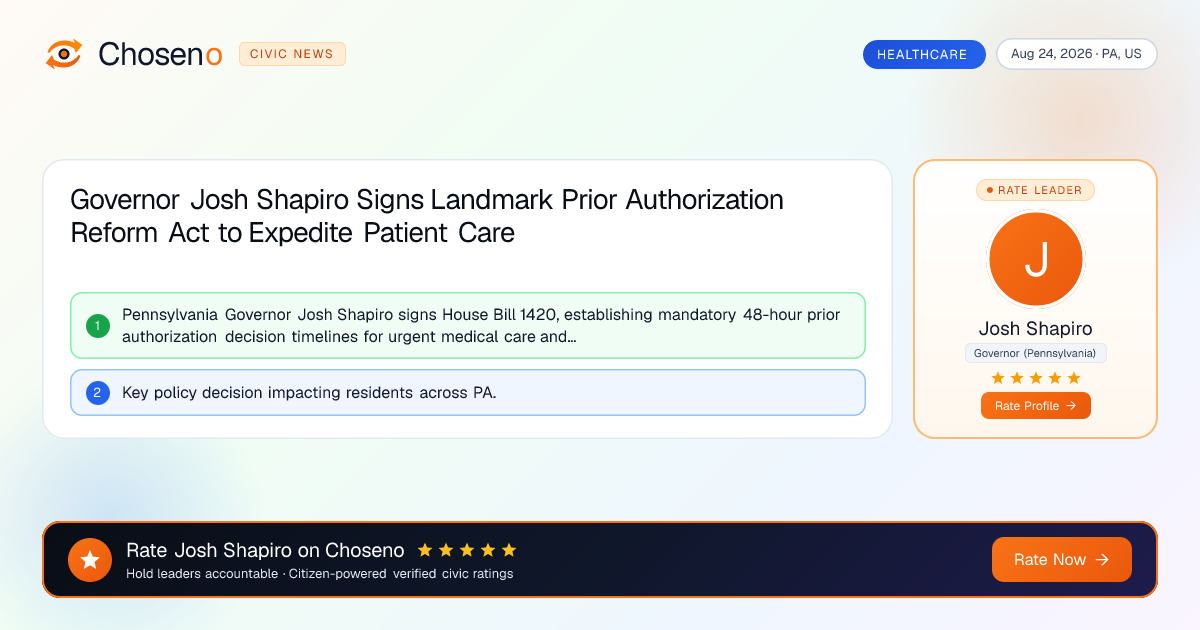
Governor Josh Shapiro Signs Landmark Prior Authorization Reform Act to Expedite Patient Care
Pennsylvania Governor Josh Shapiro signs House Bill 1420, establishing mandatory 48-hour prior authorization decision timelines for urgent medical care and prohibiting non-clinical algorithmic denials by health insurance companies.
Choseno Pennsylvania Bureau August 24, 2026 2 min read PA, US
★ Choseno Civic Briefing
Key Leaders
HARRISBURG, Pa. — Governor Josh Shapiro signed House Bill 1420 into law on Monday, enacting comprehensive reforms to the medical prior authorization process used by commercial health maintenance organizations and preferred provider insurance carriers across the Commonwealth of Pennsylvania.
The bipartisan statute, supported unanimously in the Pennsylvania General Assembly, establishes strict statutory turnaround deadlines for clinical insurance reviews, mandates that adverse coverage determinations be reviewed by licensed Pennsylvania physicians within the same medical specialty, and prohibits the use of automated artificial intelligence algorithms to issue batch claim denials without individualized physician review.
Eliminating Bureaucratic Delays in Critical Medical Treatments Physicians across Pennsylvania reported spending an average of 14 hours per week navigating administrative prior authorization paperwork, resulting in treatment delays for oncology medications, scheduled cardiac procedures, and physical therapy rehabilitation.
"When a doctor prescribes a lifesaving treatment or diagnostic MRI, patients should not have to wait weeks for a corporate insurance bureaucrat or automated computer algorithm to decide if they deserve care," Governor Shapiro said in Harrisburg. "This new law puts medical decisions back in the hands of licensed doctors and patients where they belong, eliminates unnecessary red tape, and guarantees that Pennsylvanians get the care they need when they need it."
Key Statutory Protections Under HB 1420 Under the new law:
- Urgent Care Approvals: Insurers must render definitive prior authorization determinations within 48 hours for urgent medical conditions and within five business days for non-urgent care.
- Same-Specialty Peer Review: Insurance denials can only be issued by licensed medical doctors who are board-certified in the same clinical specialty as the prescribing physician.
- Chronic Disease Continuous Authorizations: Approved medications and therapies for chronic lifelong conditions remain authorized for a minimum of 12 months without requiring repetitive re-authorization paperwork.
The Pennsylvania Medical Society and hospital associations praised the landmark legislation, noting that transparent authorization standards prevent preventable clinical complications and reduce administrative healthcare overhead.
Rate the people mentioned in this article
Related Coverage in Healthcare
See all Healthcare newsHealthcare
US Aug 24, 2026
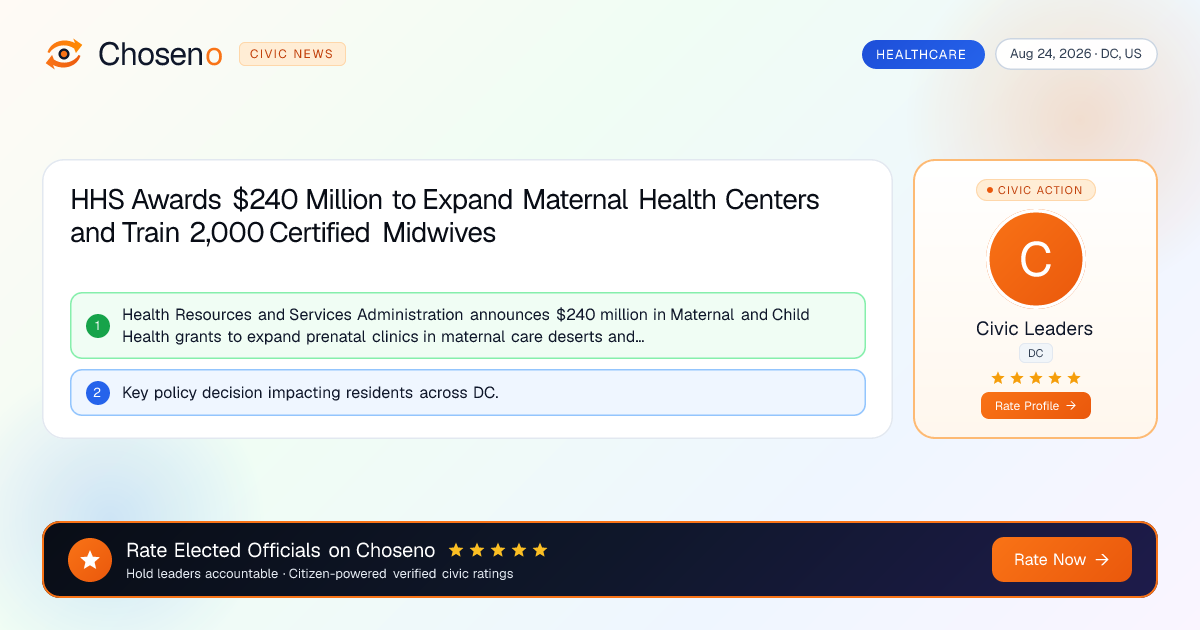
HHS Awards $240 Million to Expand Maternal Health Centers and Train 2,000 Certified Midwives
Health Resources and Services Administration announces $240 million in Maternal and Child Health grants to expand prenatal clinics in maternal care deserts and fund midwifery scholarships.
Read full article
Healthcare
CA Aug 24, 2026
Ontario Allocates $20 Million to Expand 300 Seniors Community and Active Living Centers
Ontario government deploys $20 million through the Seniors Community Grant Program, funding specialized mobility transit, dementia day programs, and recreation centers across 300 municipalities.
Read full article
Healthcare
CA Aug 24, 2026
Premier David Eby Directs $60 Million to Equip 10 Regional Hospitals with Robotic Surgery Systems
B.C. Ministry of Health deploys $60 million to purchase 10 state-of-the-art robotic surgical consoles for regional hospitals in Prince George, Kelowna, Victoria, and Surrey, cutting surgical wait times.
Read full article