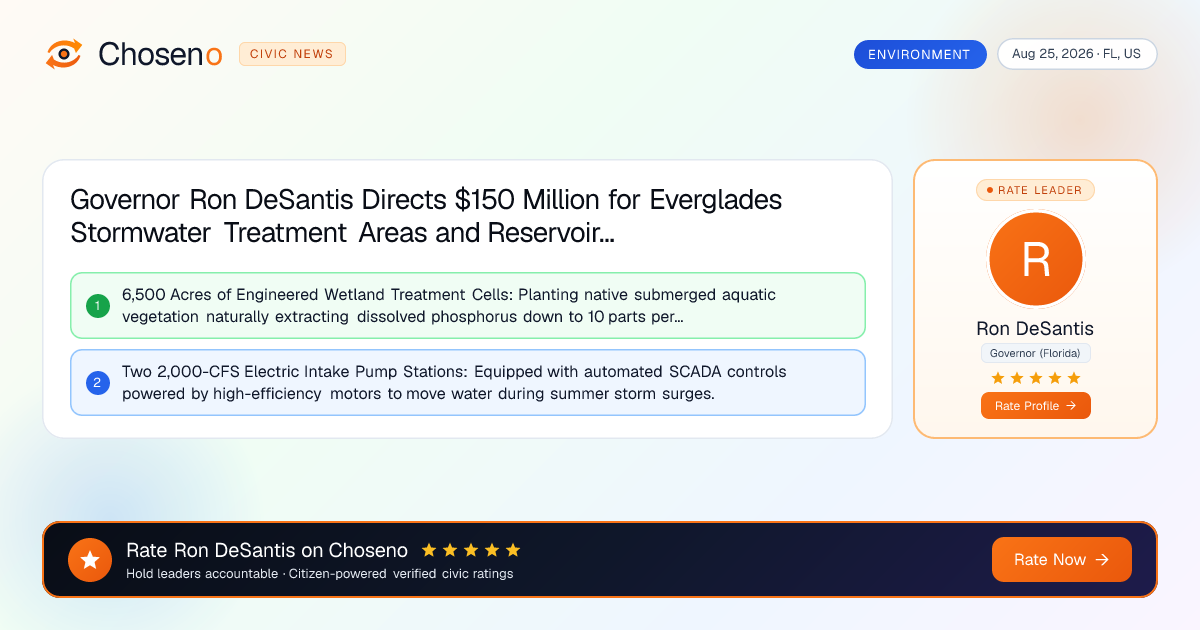
Governor Roy Cooper Directs $130 Million for Outer Banks and Pamlico Sound Coastal Living Shorelines
North Carolina Governor Roy Cooper and NCDEQ announce $130 million to construct engineered oyster reefs, restore maritime salt marshes, and fortify Highway 12 along the Outer Banks and Pamlico Sound.
Choseno North Carolina Bureau August 25, 2026 2 min read NC, US
★ Choseno Civic Briefing
Key Leaders
NAGS HEAD, N.C. — Governor Roy Cooper and North Carolina Department of Environmental Quality (NCDEQ) Secretary Elizabeth S. Biser announced on Monday the distribution of $130 million in state coastal resilience capital grants through the North Carolina Coastal Resilience Fund to engineer and construct twenty-five miles of bio-engineered oyster reef breakwaters, restore 3,500 acres of estuarine salt marshes, and elevate vulnerable low-lying segments of North Carolina Highway 12 across Dare, Hyde, and Carteret Counties on the Outer Banks.
The project deploys nature-based coastal engineering along the shallow waters of Pamlico and Albemarle Sounds, placing recycled oyster shell reefs and rock sills that attenuate storm wave energy before it can erode fragile barrier island coastlines, while providing thriving habitat for blue crabs, red drum, and commercial shrimp.
Defending Coastal Highway 12 and Coastal Communities from Severe Nor'easters North Carolina's Outer Banks barrier islands face severe erosion from winter nor'easters and Atlantic hurricanes, where ocean storm overwash frequently severs NC Highway 12, isolating Hatteras and Ocracoke Island residents from emergency services and mainland supplies.
"The Outer Banks are an iconic part of North Carolina's identity and a vital driver of our state's tourism and commercial fishing economies," Governor Cooper said during an announcement at Jockey's Ridge State Park in Nags Head. "As storms become more intense and sea levels rise, building rigid concrete seawalls is no longer enough. This $130 million investment harnesses nature to protect our coastline, building living oyster reefs that grow stronger over time, protecting Highway 12, and ensuring our coastal communities remain resilient for generations to come."
Coastal Project Packages Funded The $130 million program finances:
- Pamlico Sound Oyster Reef Sills: $55 million for twenty-five miles of rock-and-shell breakwaters buffering Hatteras Island.
- NC Highway 12 Rodanthe & Pea Island Road Elevation: $40 million to elevate low-lying asphalt roadway sections above storm surge levels.
- 3,500 Acres of Salt Marsh Bio-Restoration: $25 million for native Spartina grass plantings trapping coastal sediment.
- Community Resiliency Planning Grants: $10 million for Outer Banks municipal drainage and storm water gate upgrades.
Commercial watermen, barrier island mayors, and environmental conservation organizations praised the governor's investment, noting that living shorelines maintain coastal access while protecting commercial seafood harvesting.
Rate the people mentioned in this article

Related Coverage in Environment
See all Environment newsEnvironment
US Aug 25, 2026
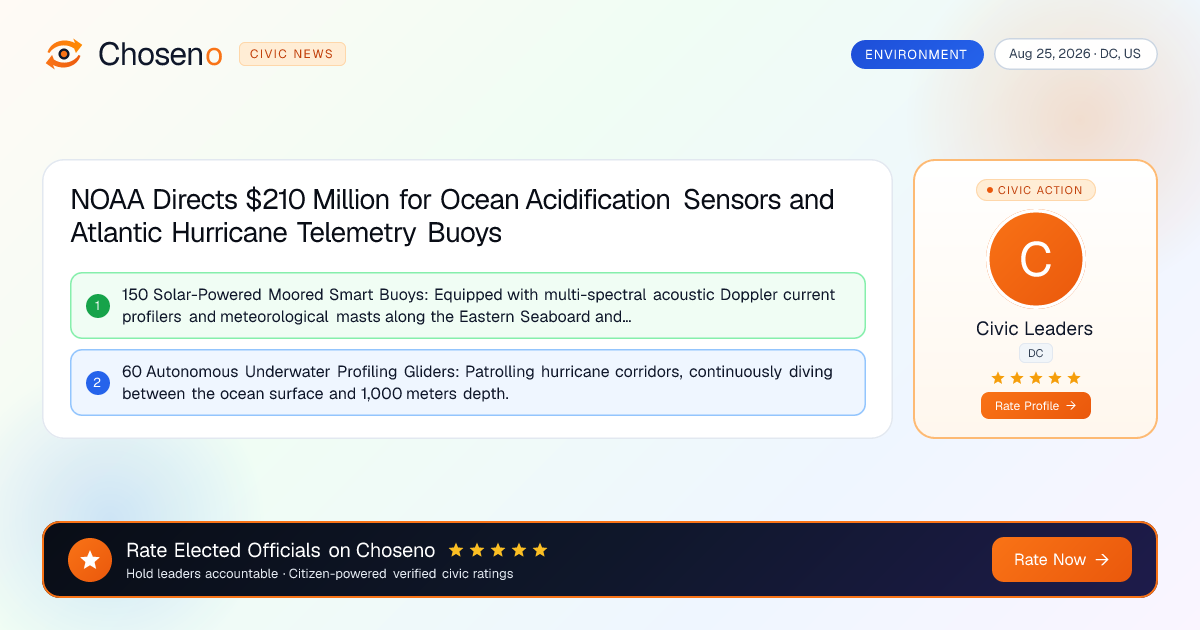
NOAA Directs $210 Million for Ocean Acidification Sensors and Atlantic Hurricane Telemetry Buoys
Commerce Secretary Gina Raimondo and NOAA Administrator Richard Spinrad announce $210 million to deploy 150 automated deep-ocean observing buoys and seafloor ocean acidification telemetry arrays along the Atlantic and Gulf Coasts.
Read full article
Environment
US Aug 25, 2026
Governor Gretchen Whitmer Directs $125 Million to Accelerate Michigan Lead Water Pipe Replacements
Michigan Governor Gretchen Whitmer and EGLE allocate $125 million in state clean water grants to excavate and replace 25,000 lead drinking water service lines in Benton Harbor, Flint, Detroit, and Grand Rapids.
Read full article

Environment
US Aug 25, 2026
Governor Ron DeSantis Directs $150 Million for Everglades Stormwater Treatment Areas and Reservoir Inflows
Florida Governor Ron DeSantis and SFWMD allocate $150 million to expand Stormwater Treatment Areas and construct automated inflow pump stations for the Everglades Agricultural Area (EAA) Reservoir.
Read full article