Governor Shapiro Allocates State Funding to Philadelphia Youth Basketball’s Generator Project
Governor Josh Shapiro has directed a five hundred thousand dollar state investment toward the construction of Philadelphia Youth Basketball’s fifty million dollar Generator facility. This funding aims to bolster youth development infrastructure in the city while sparking broader discussions regarding the role of public-private partnerships in urban revitalization.
Choseno Civic News Desk September 25, 2026 3 min read Pennsylvania, US
Governor Josh Shapiro has officially authorized a state investment of five hundred thousand dollars to support the development of the Generator, a massive fifty million dollar athletic and educational complex spearheaded by Philadelphia Youth Basketball. This financial commitment represents a strategic move by the executive branch to leverage public funds as a catalyst for private and philanthropic contributions aimed at urban youth development. The facility, which is designed to serve as a hub for both sports training and academic enrichment, is positioned as a cornerstone for community growth in Philadelphia. By injecting state capital into this project, the administration is signaling a belief that specialized infrastructure can effectively address systemic gaps in youth programming. The decision to provide this funding follows a broader trend of state-level support for non-profit initiatives that promise to deliver measurable social outcomes, though it also invites scrutiny regarding the allocation of taxpayer resources toward projects that rely heavily on private fundraising and corporate partnerships to reach their full operational capacity.
The Generator project is envisioned as far more than a traditional basketball arena, as the blueprints include dedicated spaces for educational tutoring, career readiness workshops, and mental health support services. Supporters of the initiative argue that by integrating these services into a high-traffic athletic environment, the organization can reach young people who might otherwise remain disconnected from traditional social support systems. The state’s contribution is intended to help bridge the gap between initial fundraising milestones and the total capital required to complete the facility. From a policy perspective, the administration frames this investment as a direct contribution to the long-term economic health of the region, suggesting that providing youth with stable, resource-rich environments reduces future social costs. However, the scale of the project, which carries a fifty million dollar price tag, necessitates a complex financial model that balances public grants with significant private donations, raising questions about the long-term sustainability of such large-scale community infrastructure projects once the initial construction phase concludes.
Critics and fiscal watchdogs have occasionally raised concerns about the precedent set by state governments providing seed money for projects that are primarily managed by private non-profit entities. While the Governor’s office maintains that the investment is a prudent use of funds that will yield significant dividends in youth engagement and crime reduction, some observers suggest that such allocations should be subject to more rigorous public oversight and performance-based metrics. The debate often centers on whether state funds should be prioritized for direct public services or if they are better utilized as matching grants for private ventures that promise to fill gaps in the public sector. In this instance, the administration has emphasized the collaborative nature of the Generator, noting that the facility is expected to serve thousands of young residents annually. The success of this investment will likely be measured by the organization’s ability to meet its fundraising goals and the subsequent impact on local youth development metrics, which remain a high priority for the Shapiro administration’s urban agenda.
As the project moves toward its construction phase, the focus will shift to how the facility integrates with existing city services and whether it can truly serve as a model for future public-private partnerships. The administration has indicated that this funding is part of a larger strategy to revitalize Philadelphia’s youth-focused infrastructure, yet the reliance on a fifty million dollar budget highlights the immense financial hurdles that non-profits face when attempting to build large-scale community assets. The Governor’s involvement provides a significant boost to the project’s credibility, potentially attracting further corporate and philanthropic interest. Ultimately, the state’s five hundred thousand dollar investment serves as both a financial contribution and a political endorsement of the organization’s mission. Whether this model of development proves to be a sustainable blueprint for other cities remains a subject of ongoing discussion among urban planners and state legislators who are tasked with balancing fiscal responsibility with the pressing need for community investment in underserved neighborhoods.
Rate the people mentioned in this article

Related Coverage in Municipal
See all Municipal newsMunicipal
US Sep 27, 2026
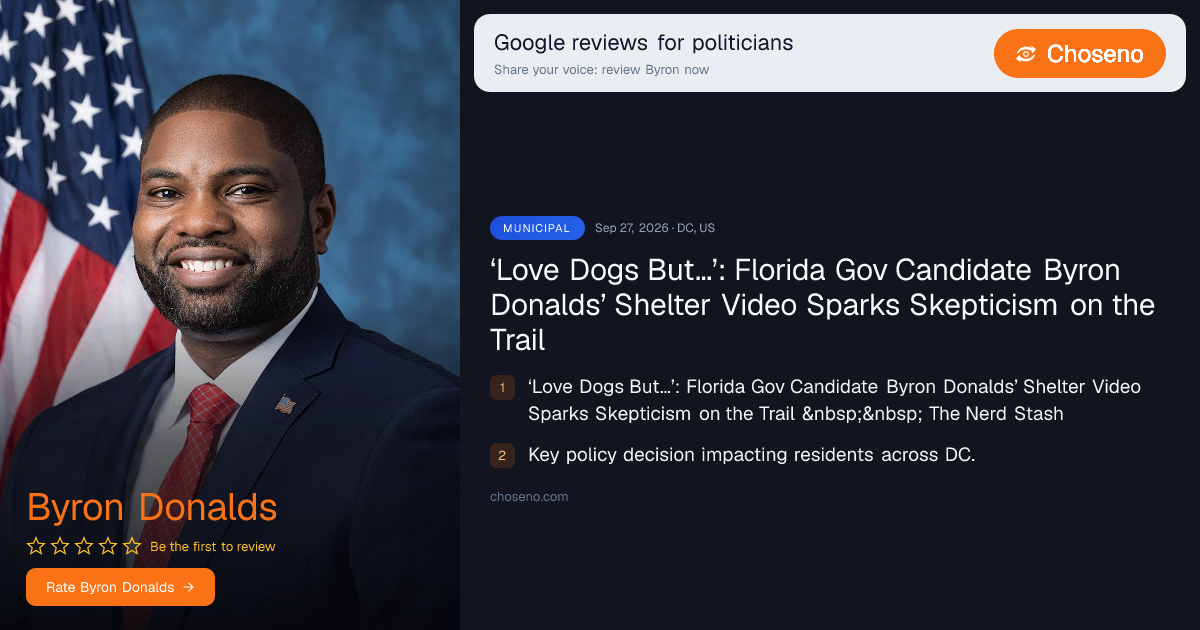
‘Love Dogs But…’: Florida Gov Candidate Byron Donalds’ Shelter Video Sparks Skepticism on the Trail
‘Love Dogs But…’: Florida Gov Candidate Byron Donalds’ Shelter Video Sparks Skepticism on the Trail The Nerd Stash
Read full article
Municipal
US Sep 27, 2026
Donald Trump booed at Tennessee-Texas game as midterms loom
Donald Trump booed at Tennessee-Texas game as midterms loom TheGrio
Read full article

Municipal
US Sep 27, 2026
President Donald Trump Attends Presidents Cup in Democratic Stronghold
President Donald Trump Attends Presidents Cup in Democratic Stronghold 조선일보
Read full article