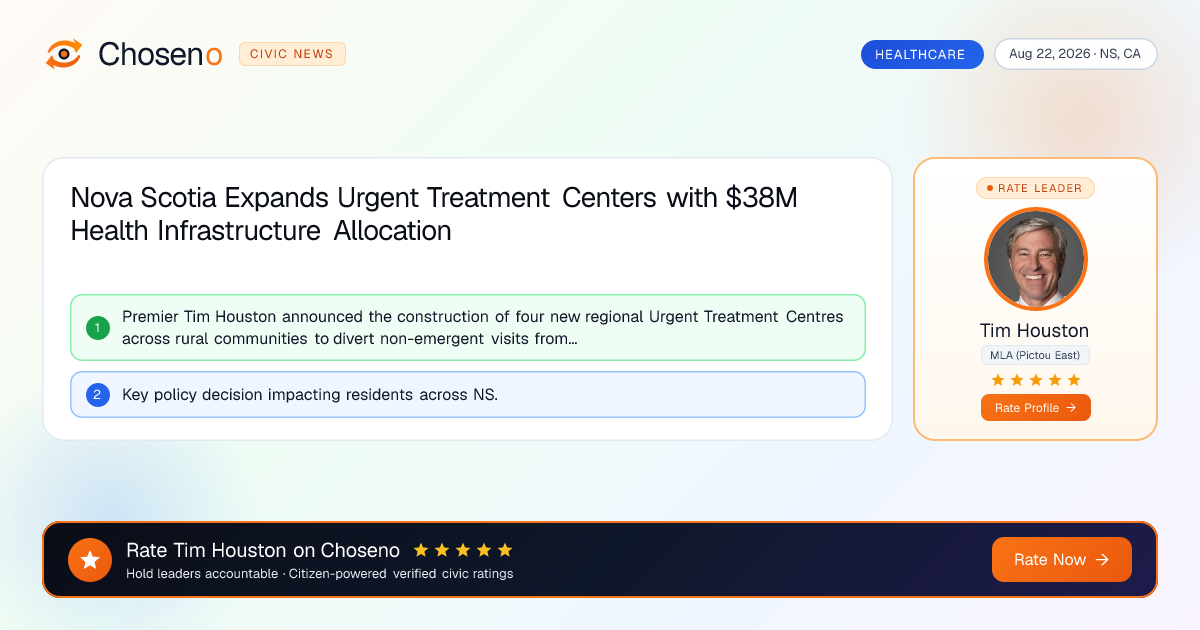
Health Authorities Expand High-Speed Mobile Telehealth Clinics Across Northern Prairie Communities
A joint federal-provincial healthcare partnership deployed satellite-connected mobile medical clinics to deliver specialized cardiology and pediatric consultations to remote northern towns.
Choseno Northern Health Desk August 23, 2026 1 min read SK, CA
★ Choseno Civic Briefing
Key Leaders
PRINCE ALBERT, SK — The Saskatchewan Health Authority (SHA) and Manitoba Northern Health Region announced the operational expansion of the Northern Mobile Digital Care Initiative on Sunday morning, deploying eight specialized all-terrain mobile clinic vehicles across remote northern communities.
Mobile Clinical Capabilities and Satellite Telemetry
The custom-engineered medical units, equipped with low-Earth-orbit satellite broadband transceivers, digital ultrasound scanners, 12-lead electrocardiograms (ECGs), and point-of-care blood chemistry analyzers, connect rural nurse practitioners directly with clinical specialists at Royal University Hospital in Saskatoon and Health Sciences Centre in Winnipeg.
The service provides remote patients with same-day consultations for chronic cardiac management, diabetic retinopathy screening, and pediatric respiratory conditions without requiring expensive and stressful multi-hour medical travel to southern urban centres.
"Every Canadian, regardless of postal code, deserves accessible, high-quality healthcare," regional health leadership stated in Prince Albert. "Mobile satellite clinics bridge the geographic divide, bringing specialized clinical care directly into northern communities."
Community Health Outcomes and Indigenous Governance
The initiative is operated in close partnership with Northern Inter-Tribal Health Authority (NITHA) and local First Nations community health directors, ensuring culturally safe clinical care delivery.
During regional pilot trials, mobile telehealth clinics reduced non-emergency medical evacuation flights by 32%, saving provincial healthcare systems over $4.5 million in annual air ambulance overhead.
Service Schedule
The mobile clinical teams will operate on bi-weekly rotating schedules across 16 northern settlements starting in September.
Related Coverage in Healthcare
See all Healthcare newsHealthcare
CA Aug 23, 2026
Health Canada Issues National Safety Advisory Following Commercial Pet Food Pathogen Contamination
Federal health regulators and the CFIA issued consumer advisories after laboratory testing detected Salmonella and metallic contaminants in distributed commercial dog food batches.
Read full article
Healthcare
CA Aug 22, 2026
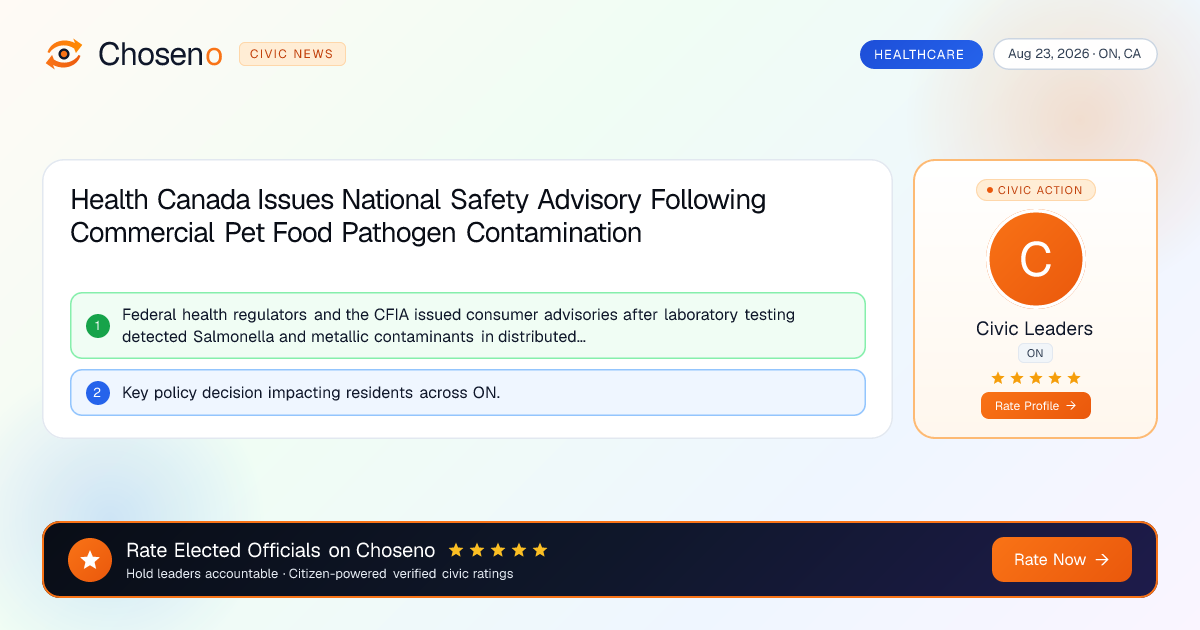
Ontario Ministry of Health Opens 60-Day Public Consultation on Digital Health Data Access Rules
The Ministry of Health initiated regulatory consultations to amend the Personal Health Information Protection Act, streamlining electronic patient record sharing among family health teams.
Read full article
Healthcare
CA Aug 22, 2026
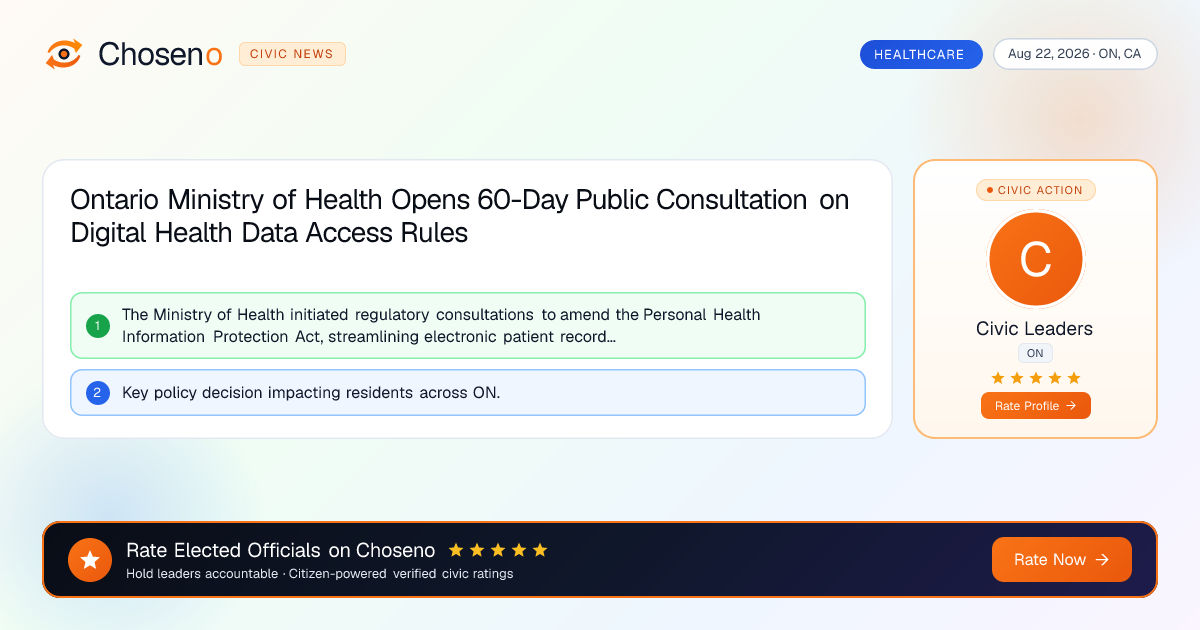
Nova Scotia Expands Urgent Treatment Centers with $38M Health Infrastructure Allocation
Premier Tim Houston announced the construction of four new regional Urgent Treatment Centres across rural communities to divert non-emergent visits from regional hospital ERs.
Read full article