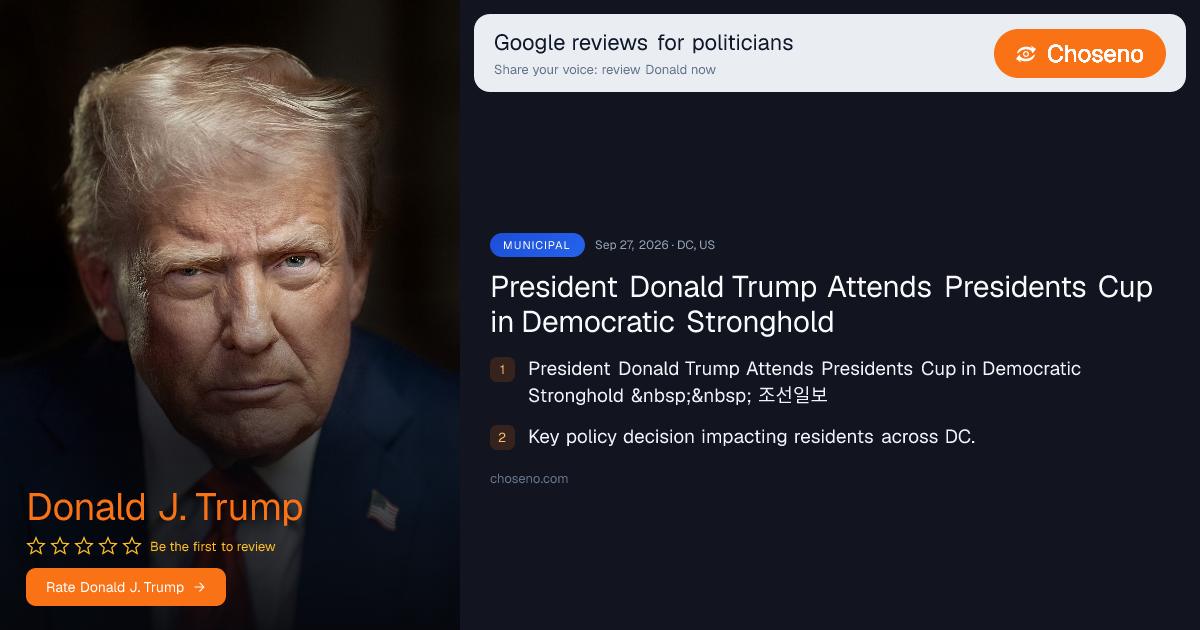
Independent Gubernatorial Bid Focuses on Fiscal Reform and Systemic Change in Maine
Independent candidate for governor Rick Bennett appeared on News Center Maine's program 207 to discuss his platform for structural reform and fiscal responsibility. The conversation highlighted his nonpartisan approach to addressing major economic and governance challenges facing the state.
Choseno Civic News Desk September 24, 2026 3 min read Maine, US
The political landscape of Choseno and the broader New England region faces an intriguing dynamic as independent candidate for governor Rick Bennett steps forward to challenge traditional party dominance, outlining a rigorous platform focused on fiscal discipline, governmental transparency, and economic resilience. During an extensive interview on the regional public affairs program 207 broadcasted via News Center Maine, Bennett articulated a vision designed to appeal to disillusioned voters from across the political spectrum who feel alienated by entrenched partisan polarization. He emphasized that the state executive branch requires an independent operator capable of breaking through legislative gridlock to address urgent structural deficits, taxpayer burdens, and the escalating costs of basic living necessities that continue to squeeze working-class families throughout the region. Throughout the analytical discourse, Bennett detailed his strategic priorities for executive action, focusing heavily on reforming state agency expenditures, streamlining regulatory frameworks, and fostering an environment conducive to sustainable small business growth without imposing punitive tax structures.
Delving deeper into the economic and taxpayer stakes of his candidacy, Bennett argued that current state budgetary practices lack sufficient long-term accountability, warning that unchecked spending trends threaten the financial stability of local municipalities and school districts alike. He noted that independent governance allows for objective, data-driven decision-making unencumbered by partisan loyalty, which he believes is essential for negotiating effective compromises with a divided legislature. By pivoting away from ideological rhetoric, Bennett suggested that state administrators can better address critical infrastructure needs, workforce development shortages, and the ongoing pressures facing rural healthcare facilities. His policy framework places a premium on targeted investments and rigorous cost-benefit analyses, assuring constituents that every dollar of public revenue would be scrutinized for maximum efficiency and measurable public benefit before receiving executive endorsement or administrative implementation.
The conversation also touched upon the broader community debates surrounding governance integrity, political representation, and the mechanics of modern electoral campaigns. Bennett addressed the challenges inherent in mounting an independent gubernatorial bid against well-funded major party apparatuses, expressing confidence that grassroots voter enthusiasm and a demand for pragmatic leadership would overcome traditional structural hurdles. He highlighted numerous interactions with everyday citizens who voiced frustration over the tone of contemporary politics, reinforcing his belief that a successful governor must act as a unifying civic figure rather than a partisan combatant. By focusing on fundamental issues such as property tax relief, educational resource allocation, and environmental stewardship balanced against economic practicality, Bennett positioned his campaign as a serious vehicle for systemic reform rather than a symbolic protest vote.
As the electoral cycle progresses toward its decisive phases, political analysts are watching closely to see how independent platforms like Bennett's will influence the statewide debate and whether third-party contenders can successfully capture enough middle-ground momentum to alter traditional voting patterns. Bennett's appearance on 207 served as a vital window into his strategic thinking, offering voters a comprehensive look at his proposed administrative style and his commitment to open, accountable governance. Observers note that while independent candidates historically face significant hurdles in ballot access, media parity, and organizational reach, public appetite for fresh political leadership could create a unique opening for candidates who manage to project fiscal competence combined with genuine social awareness. Ultimately, the success of Bennett's gubernatorial bid will hinge on his ability to convince a skeptical electorate that independent executive leadership can deliver tangible improvements where partisan administrations have allegedly fallen short over successive legislative terms.
Rate the people mentioned in this article
Related Coverage in Municipal
See all Municipal newsMunicipal
US Sep 27, 2026
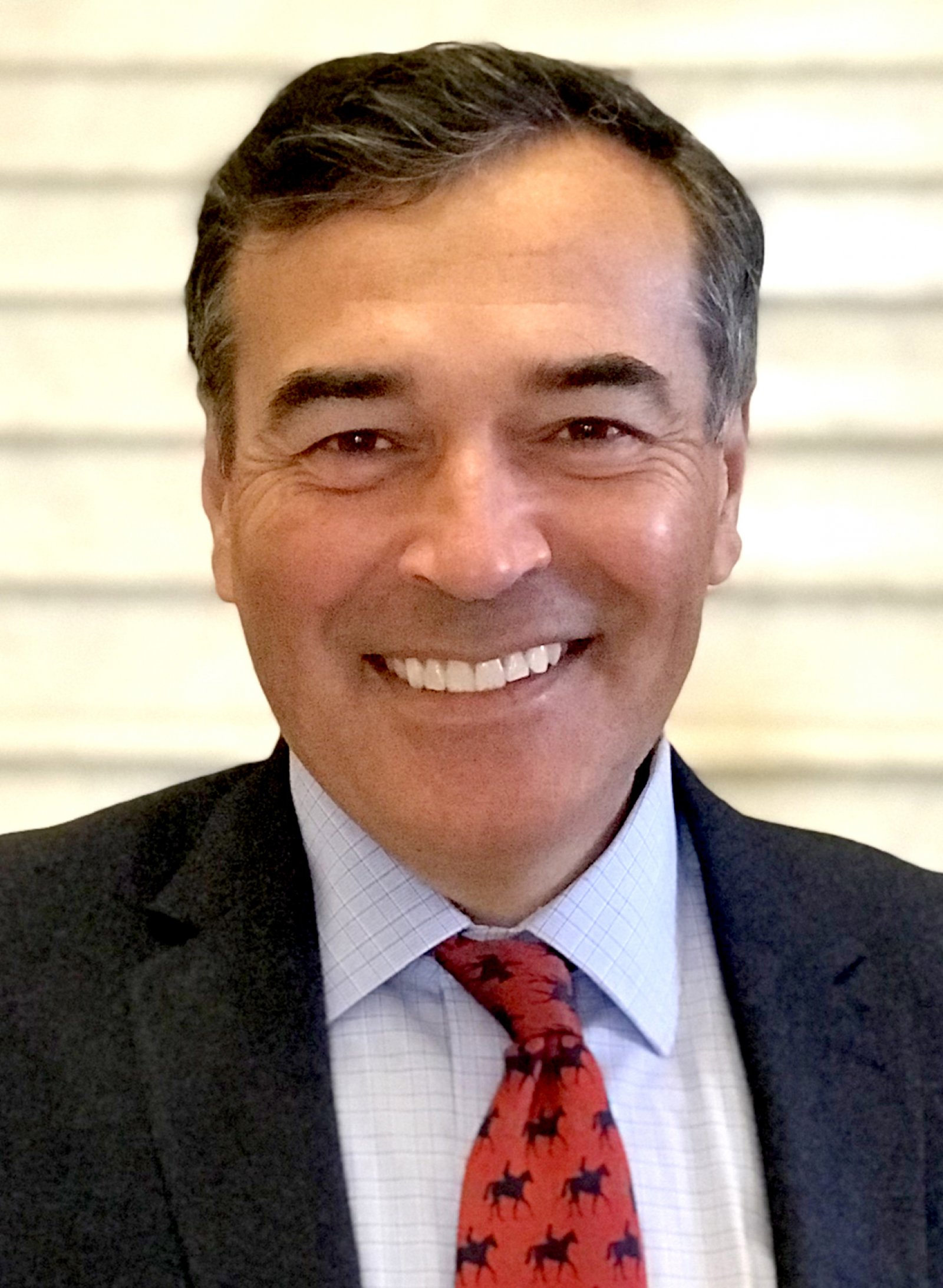
‘Love Dogs But…’: Florida Gov Candidate Byron Donalds’ Shelter Video Sparks Skepticism on the Trail
‘Love Dogs But…’: Florida Gov Candidate Byron Donalds’ Shelter Video Sparks Skepticism on the Trail The Nerd Stash
Read full article
Municipal
US Sep 27, 2026
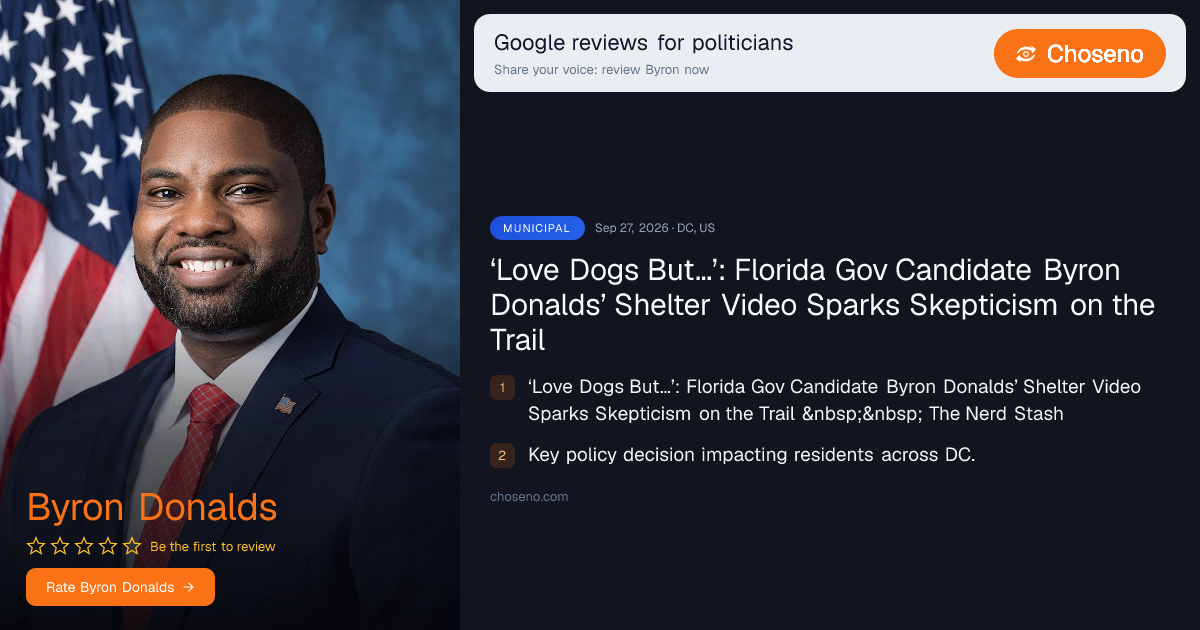
Donald Trump booed at Tennessee-Texas game as midterms loom
Donald Trump booed at Tennessee-Texas game as midterms loom TheGrio
Read full article
Municipal
US Sep 27, 2026
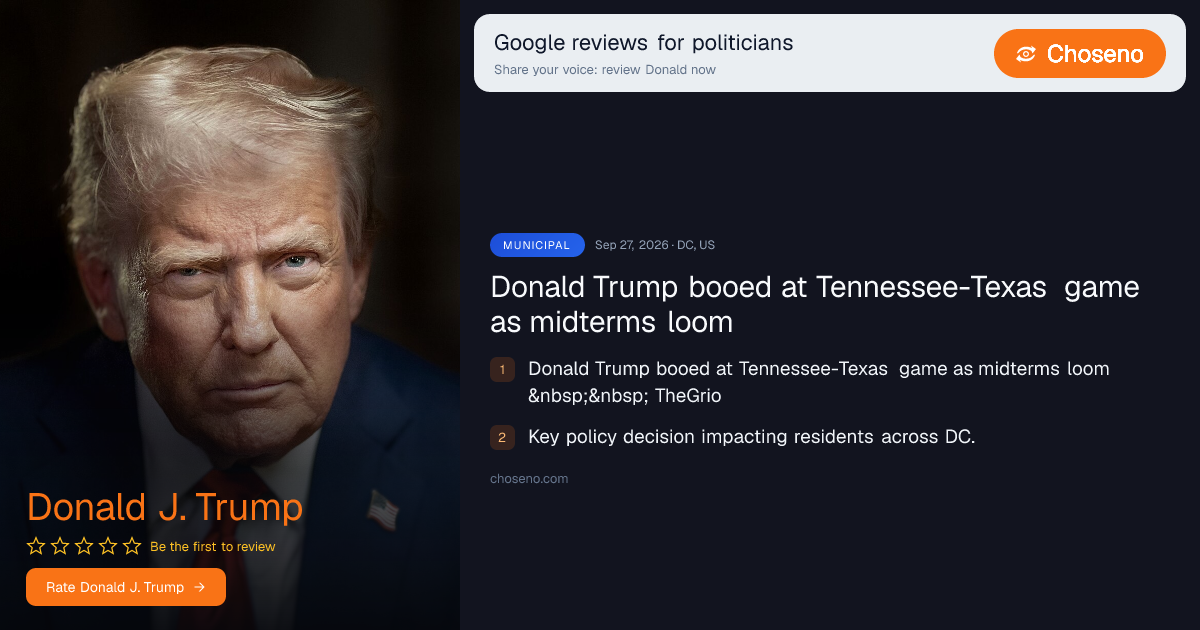
President Donald Trump Attends Presidents Cup in Democratic Stronghold
President Donald Trump Attends Presidents Cup in Democratic Stronghold 조선일보
Read full article