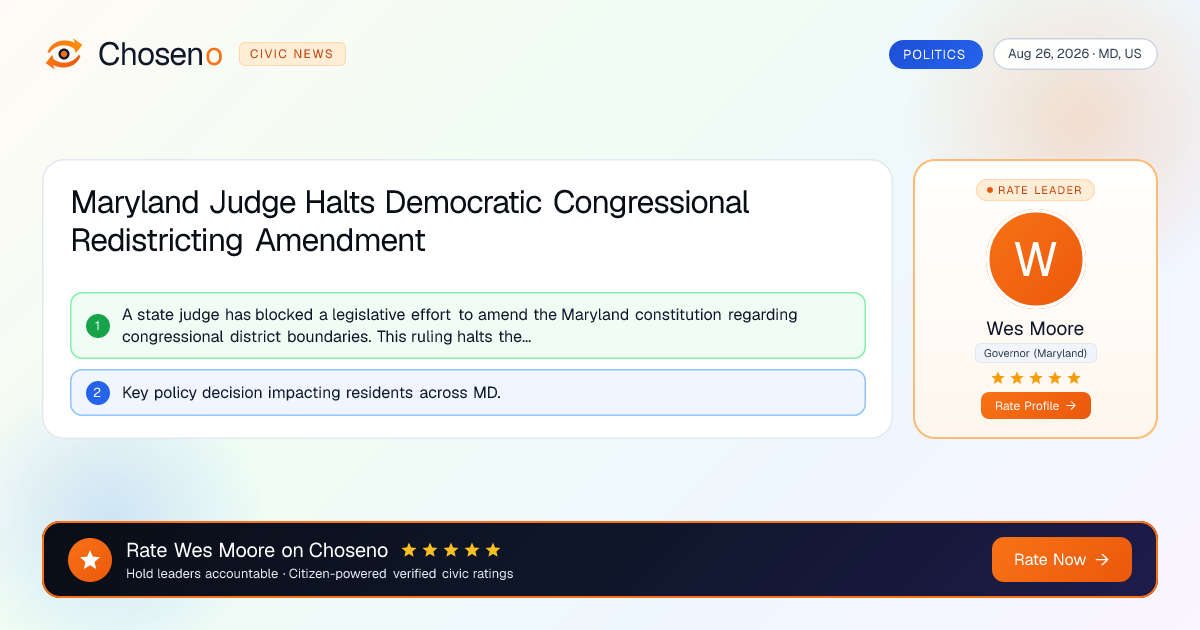
Maryland Judge Halts Democratic Congressional Redistricting Amendment
A state judge has blocked a legislative effort to amend the Maryland constitution regarding congressional district boundaries. This ruling halts the implementation of House Bill 2100, which had been signed into law earlier this month.
Choseno Civic News Desk August 26, 2026 2 min read MD, US
★ Choseno Civic Briefing
Key Leaders
Dateline: Annapolis, Maryland
On Wednesday, Judge Robert Thompson issued a ruling blocking a legislative initiative intended to amend the Maryland constitution to redraw congressional districts. The decision serves as a significant legal hurdle for the state's Democratic leadership, who had sought to implement the changes through House Bill 2100.
Policy & Taxpayer Impact
House Bill 2100, which was signed into law by Governor Wes Moore on August 5, was designed to alter the process by which congressional maps are established. The judicial intervention prevents the immediate implementation of this policy, effectively freezing the state's current redistricting framework. Taxpayers remain affected by the ongoing legal costs associated with defending the legislation in court.
Political & Legal Stakes
The ruling represents a notable setback for Democratic redistricting efforts in Maryland. By challenging the wording and procedural validity of the amendment, the court has placed the future of the state's electoral map in a state of uncertainty. The legal battle highlights the tension between legislative authority and judicial oversight regarding constitutional amendments.
The Debate
Proponents of the legislation, led by Governor Moore and Democratic lawmakers, argue that the amendment is necessary to modernize the state's redistricting process and ensure fair representation. Conversely, critics and legal challengers contend that the language used in the bill was insufficient or misleading, arguing that the legislative process failed to meet the necessary constitutional standards for such a significant change to state law.
Public Accountability Context
This case underscores the role of the judiciary in reviewing legislative actions that seek to modify constitutional provisions. As the legal process continues, citizens are encouraged to monitor the specific arguments presented by both the state and the plaintiffs to understand how these district boundaries may influence future electoral outcomes and the balance of political power within Maryland.
Rate the people mentioned in this article
Related Coverage in Politics
See all Politics newsPolitics
US Aug 26, 2026
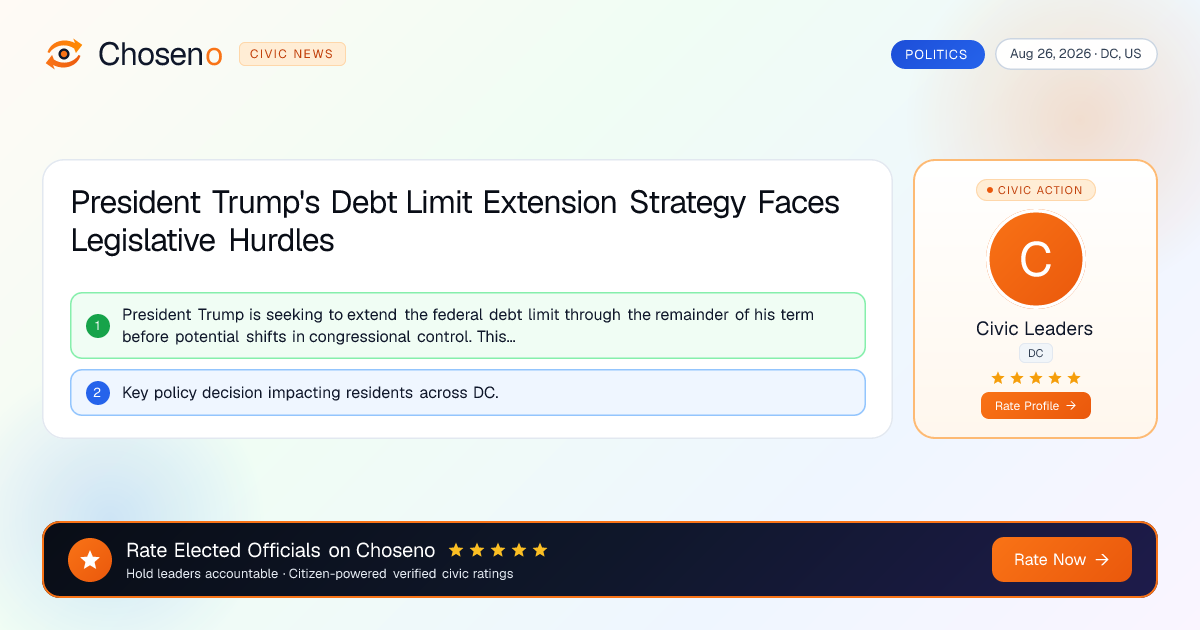
President Trump's Debt Limit Extension Strategy Faces Legislative Hurdles
President Trump is seeking to extend the federal debt limit through the remainder of his term before potential shifts in congressional control. This legislative maneuver carries significant implications for national fiscal stability and the federal borrowing authority.
Read full article
Politics
US Aug 26, 2026
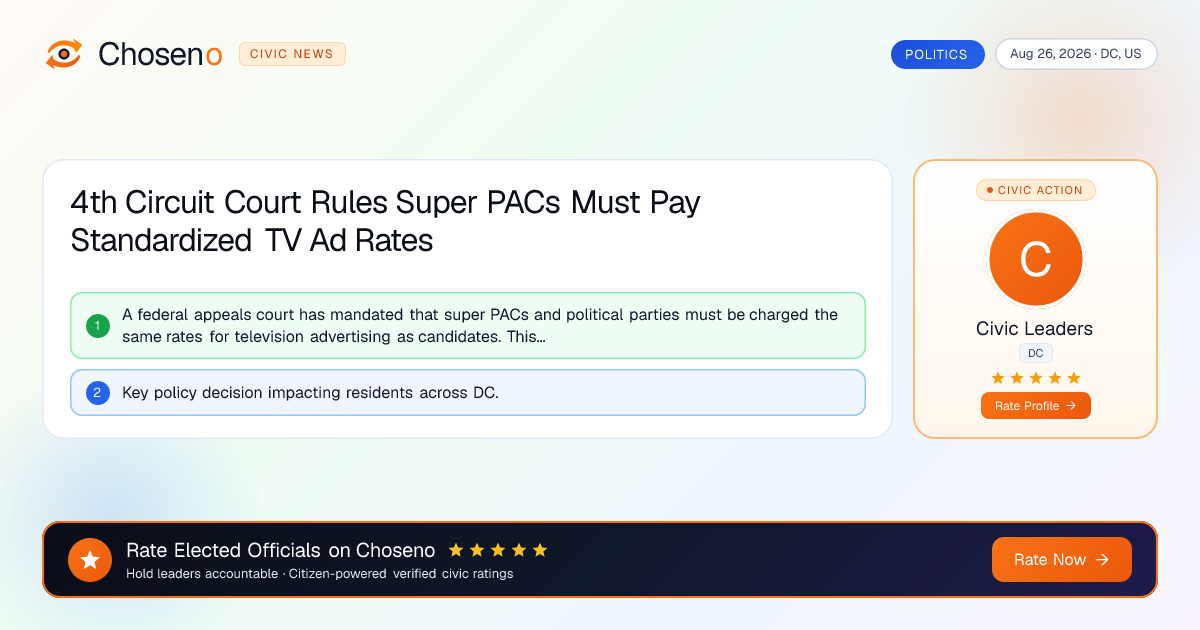
4th Circuit Court Rules Super PACs Must Pay Standardized TV Ad Rates
A federal appeals court has mandated that super PACs and political parties must be charged the same rates for television advertising as candidates. This decision aims to standardize political media spending, potentially altering the financial landscape for campaign advertising in the final stages of the election cycle.
Read full article
Politics
US Aug 26, 2026
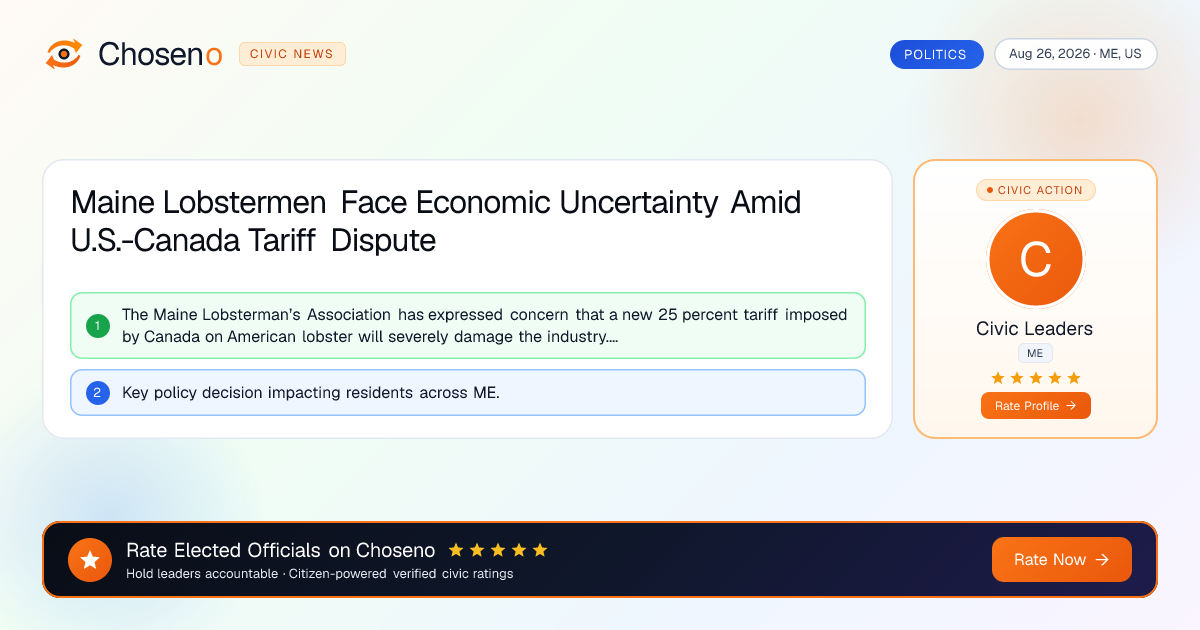
Maine Lobstermen Face Economic Uncertainty Amid U.S.-Canada Tariff Dispute
The Maine Lobsterman’s Association has expressed concern that a new 25 percent tariff imposed by Canada on American lobster will severely damage the industry. This trade escalation follows recent tariff actions taken by the Trump administration against Canadian goods.
Read full article