Mayor Cherelle Parker Allocates $75 Million for Philadelphia Neighborhood Foot Patrol Substations
Philadelphia Mayor Cherelle Parker and City Council authorize $75 million from the municipal capital budget to construct 10 neighborhood police mini-stations, deploy 200 walking beat officers, and install high-definition commercial corridor camera networks.
Choseno Mid-Atlantic Bureau August 25, 2026Updated August 29, 2026 1 min read PA, US
PHILADELPHIA — Mayor Cherelle Parker, Police Commissioner Kevin Bethel, and City Council leadership announced on Monday the authorization of a $75 million municipal capital funding package to build ten neighborhood police storefront mini-stations, deploy two hundred newly trained walking beat officers, and install five hundred smart commercial corridor safety cameras across North Philadelphia, Kensington, West Philadelphia, and South Philadelphia.
The investment represents a core pillar of Mayor Parker's Community-First Public Safety Strategy, shifting municipal policing away from reactive vehicle patrols toward high-visibility, walking beat officers permanently assigned to specific commercial corridors and neighborhood blocks.
Rebuilding Community-Centric Policing Infrastructure The $75 million municipal package funds:
- 10 Neighborhood Police Storefront Substations: $35 million renovating commercial storefronts into accessible community police stations equipped with citizen reporting desks, community meeting rooms, and public Wi-Fi.
- Walking & Bike Beat Patrol Operations: $25 million funding specialized equipment, lightweight e-bikes, and tactical gear for 200 dedicated corridor patrol officers.
- Corridor Lighting & Smart Camera Network: $15 million installing high-intensity pedestrian street lighting and 500 optical zoom cameras connected directly into the Real Time Crime Center.
"Every Philadelphian has the right to feel safe walking down their street, shopping at their local corner store, and sending their children to the playground," Mayor Cherelle Parker said during a press conference on 52nd Street in West Philadelphia. "By investing $75 million to build neighborhood substations and put 200 officers on foot patrol in our commercial corridors, we are taking back our streets, supporting our small businesses, and restoring pride and safety to every neighborhood in Philadelphia."
Neighborhood business associations, community development corporations, and civic leaders commended the neighborhood-based policing model, pointing out that consistent foot patrols build positive trust between officers and community residents.
Rate the people mentioned in this article

Related Coverage in Public Safety
See all Public Safety newsPublic Safety
US Sep 4, 2026
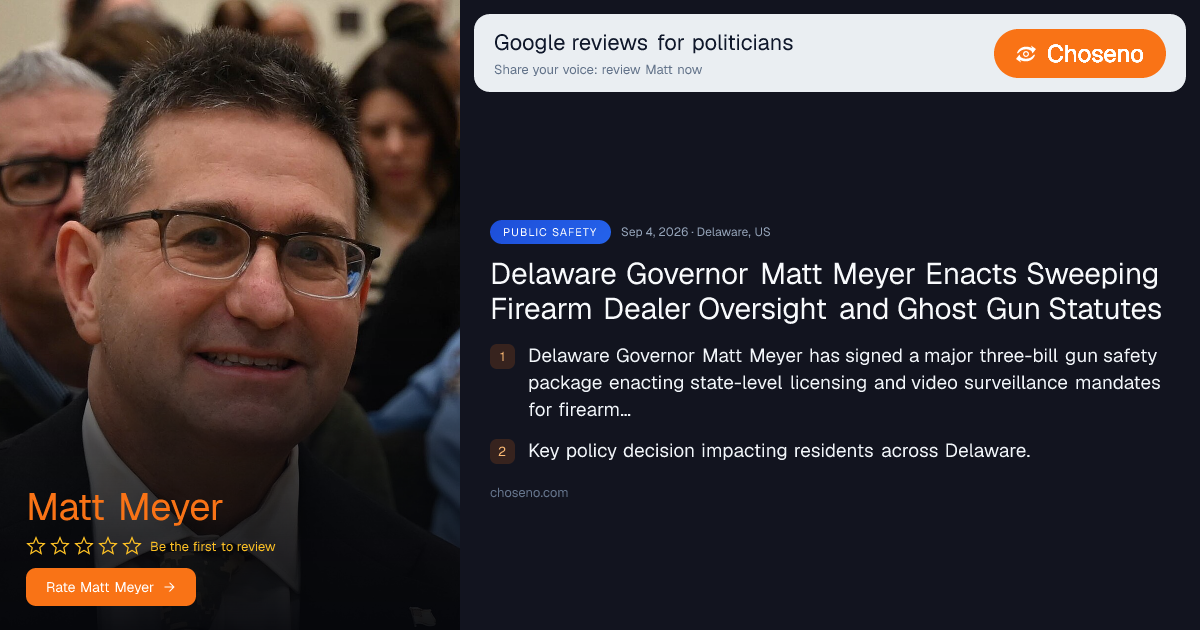
Delaware Governor Matt Meyer Enacts Sweeping Firearm Dealer Oversight and Ghost Gun Statutes
Delaware Governor Matt Meyer has signed a major three-bill gun safety package enacting state-level licensing and video surveillance mandates for firearm dealers, strict serialization rules for ghost guns, and permanent funding for community violence intervention.
Read full article
Public Safety
US Sep 4, 2026
Governor Gavin Newsom Highlights Record Low California Homicide Rate and UC Berkeley Violence Prevention Study
California Governor Gavin Newsom highlights Department of Justice crime data showing the lowest homicide rate since 1966, alongside a UC Berkeley study evaluating state-funded community violence intervention programs.
Read full article

Public Safety
US Sep 3, 2026
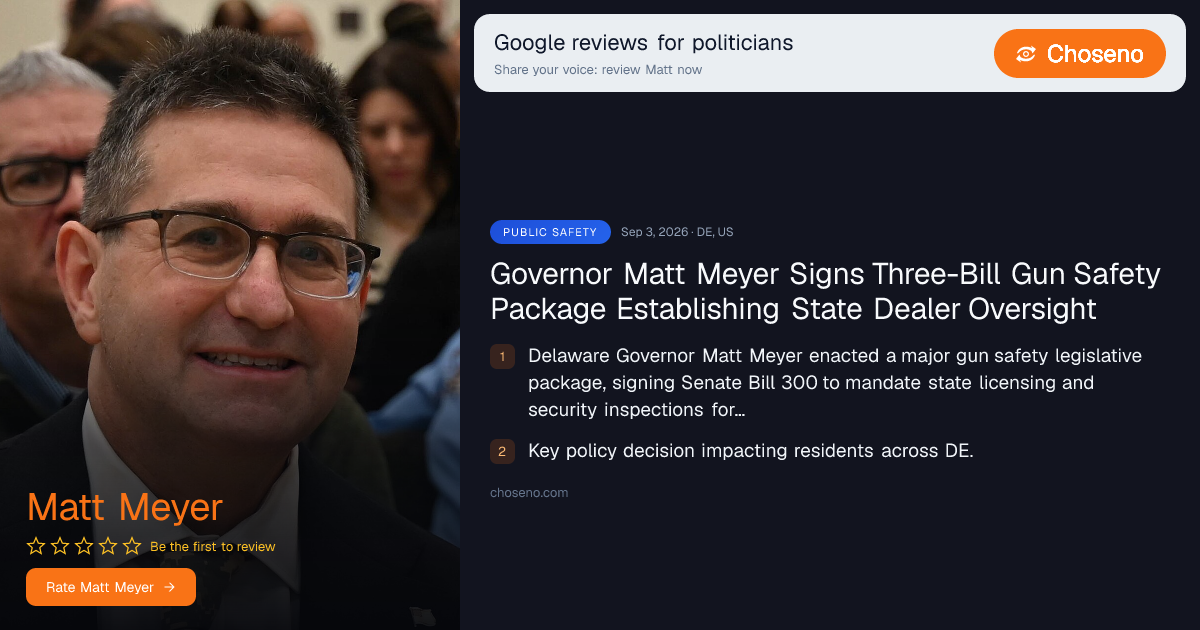
Governor Matt Meyer Signs Three-Bill Gun Safety Package Establishing State Dealer Oversight
Delaware Governor Matt Meyer enacted a major gun safety legislative package, signing Senate Bill 300 to mandate state licensing and security inspections for firearms dealers alongside ghost gun crackdowns.
Read full article