Minnesota Gubernatorial Nominee Lisa Demuth Defends Multi-Million Dollar Outside PAC Campaign Expenditures
Republican gubernatorial nominee Lisa Demuth has defended nearly three million dollars in independent television advertising funded by an outside political action committee, dismissing Democratic criticism of campaign finance imbalances as she confronts U.S. Senator Amy Klobuchar.
Choseno Civic News Desk September 7, 2026 3 min read Minnesota, US
What do you think of the people in this story? Rate them anonymously — tap a face below.
Republican gubernatorial nominee Lisa Demuth has pushed back forcefully against Democratic criticism regarding nearly three million dollars in outside political action committee spending deployed on her behalf in the 2026 Minnesota gubernatorial election. Addressing campaign reporters following a candidate forum, the state legislative leader affirmed that her campaign maintains absolute independence from independent expenditure groups, dismissing allegations of undue influence while highlighting the substantial financial advantages enjoyed by her general election opponent, Democratic-Farmer-Labor nominee and United States Senator Amy Klobuchar.
Campaign finance disclosures filed with state election regulators revealed that the Restore Sanity political action committee, financed primarily by prominent conservative industrialist Richard Uihlein, disbursed approximately two million eight hundred thousand dollars into high-rotation television and digital advertisements criticizing Democratic governance in St. Paul. Demuth affirmed that state and federal campaign statutes strictly prohibit coordination between candidate campaigns and independent political action committees, maintaining that her campaign team has strictly adhered to legal non-coordination boundaries.
The influx of independent expenditure capital comes as Demuth seeks to bridge a formidable fundraising gap in the open-seat contest to succeed outgoing Governor Tim Walz. Recent financial filings showed Klobuchar holding more than three million four hundred thousand dollars in available campaign cash reserves, driven by an expansive national donor network cultivated over three terms in the United States Senate. By comparison, Demuth reported approximately five hundred and forty-four thousand dollars in direct cash on hand, making outside independent broadcast buys vital to maintaining message parity across Twin Cities and regional television markets.
The scale of independent committee spending has renewed broader legislative debates surrounding the statutory jurisdiction of the Minnesota Campaign Finance and Public Disclosure Board. Under Minnesota election statutes, direct candidate spending is subject to voluntary spending limits tied to public subsidy matching funds, but independent expenditure committees face no aggregate expenditure ceilings following federal judicial precedents. State campaign finance reform advocates have urged state lawmakers to enact enhanced donor disclosure requirements for political action committees to ensure immediate public transparency for late-cycle advertising buys.
Throughout the campaign, Demuth has anchored her candidacy to themes of fiscal oversight and executive accountability, focusing heavily on recent state administrative audits that revealed systemic vulnerabilities within state-administered social service grants and pandemic relief programs. The Republican nominee argued that outside groups are investing resources in Minnesota because taxpayers are increasingly disillusioned with state budget expansions and demand rigorous legislative oversight of executive branch agencies.
Conversely, Democratic-Farmer-Labor officials and campaign integrity advocates have criticized the heavy concentration of outside mega-donor capital, characterizing the advertising barrage as an effort by out-of-state billionaires to influence state policy on environmental regulation, taxation, and labor laws. DFL spokespersons contended that Demuth’s reliance on independent expenditure groups contradicts her campaign messaging regarding grassroots fiscal responsibility and transparency.
The gubernatorial contest reflects high-stakes electoral competition in Minnesota, where Democrats have held the governor’s residence since 2011 while Republicans maintain significant strength in rural and exurban legislative districts. While Klobuchar has highlighted her federal bipartisan legislative record on consumer protection, infrastructure funding, and agricultural support, Demuth is seeking to assemble a broad coalition of fiscal conservatives and suburban moderates focused on restraining state spending, reforming social welfare oversight, and lowering corporate business taxes.
With autumn voter mobilization operations accelerating across Minnesota’s eighty-seven counties, the debate over campaign spending highlights the growing role of independent expenditure entities in state executive races, where multi-million dollar broadcast battles increasingly shape the closing weeks of gubernatorial campaigns.
Rate the people mentioned in this article


Related Coverage in General
See all General newsGeneral
US Sep 25, 2026
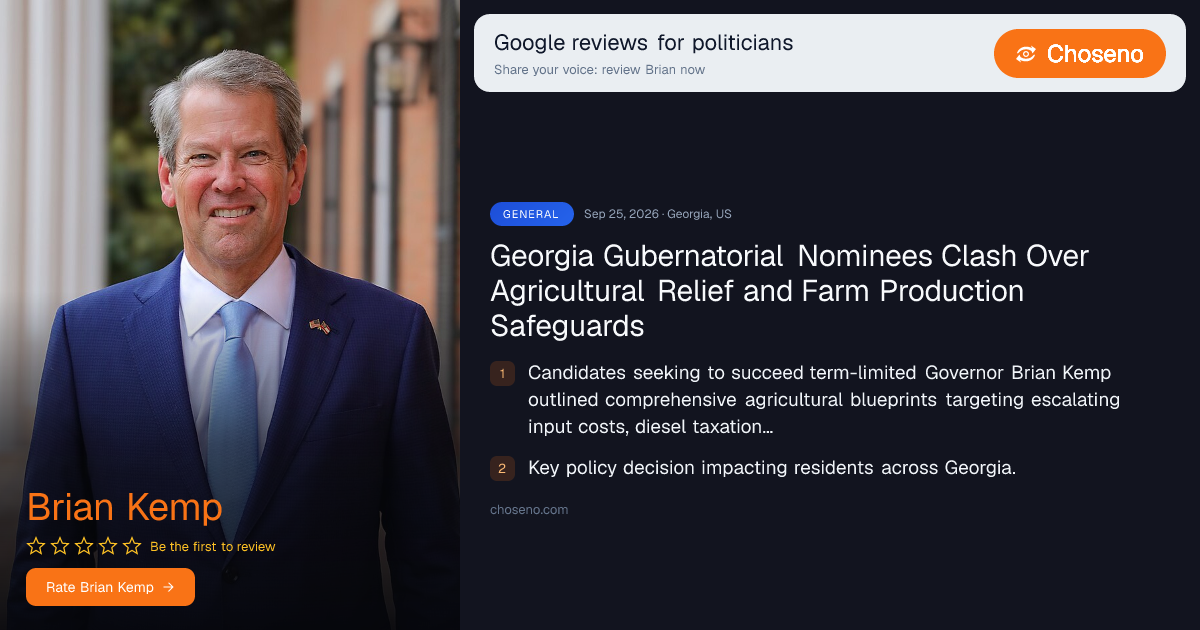
Georgia Gubernatorial Nominees Clash Over Agricultural Relief and Farm Production Safeguards
Candidates seeking to succeed term-limited Governor Brian Kemp outlined comprehensive agricultural blueprints targeting escalating input costs, diesel taxation relief, water allocations, and family farm preservation.
Read full article
General
US Sep 25, 2026
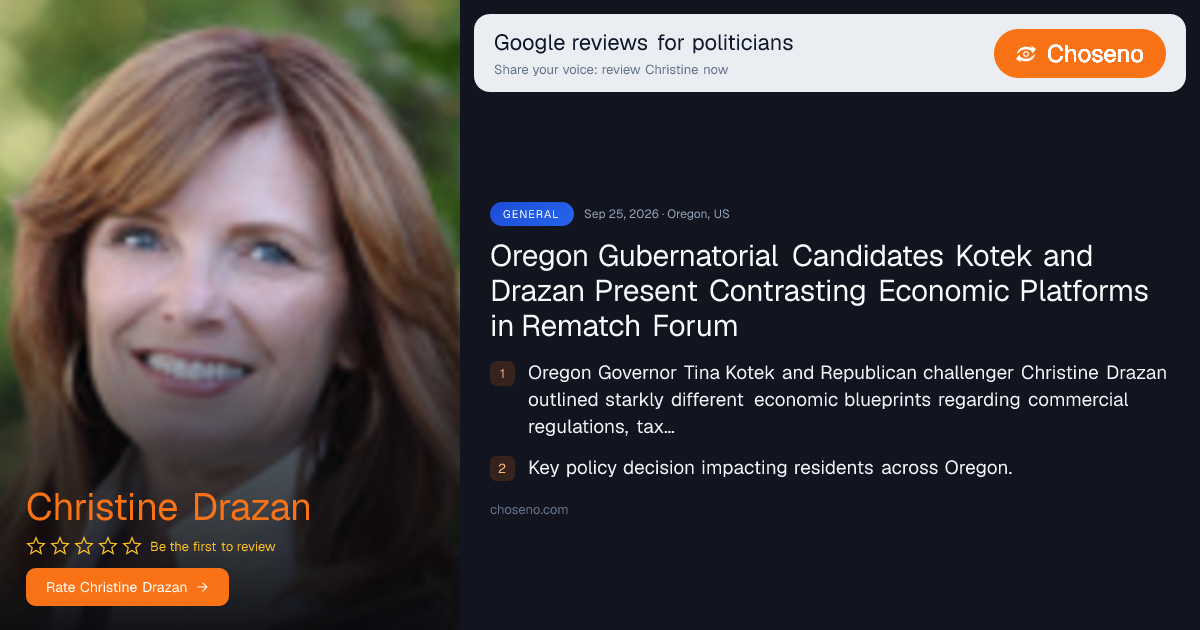
Oregon Gubernatorial Candidates Kotek and Drazan Present Contrasting Economic Platforms in Rematch Forum
Oregon Governor Tina Kotek and Republican challenger Christine Drazan outlined starkly different economic blueprints regarding commercial regulations, tax structures, and industrial competitiveness at a Portland business forum.
Read full article
General
US Sep 25, 2026
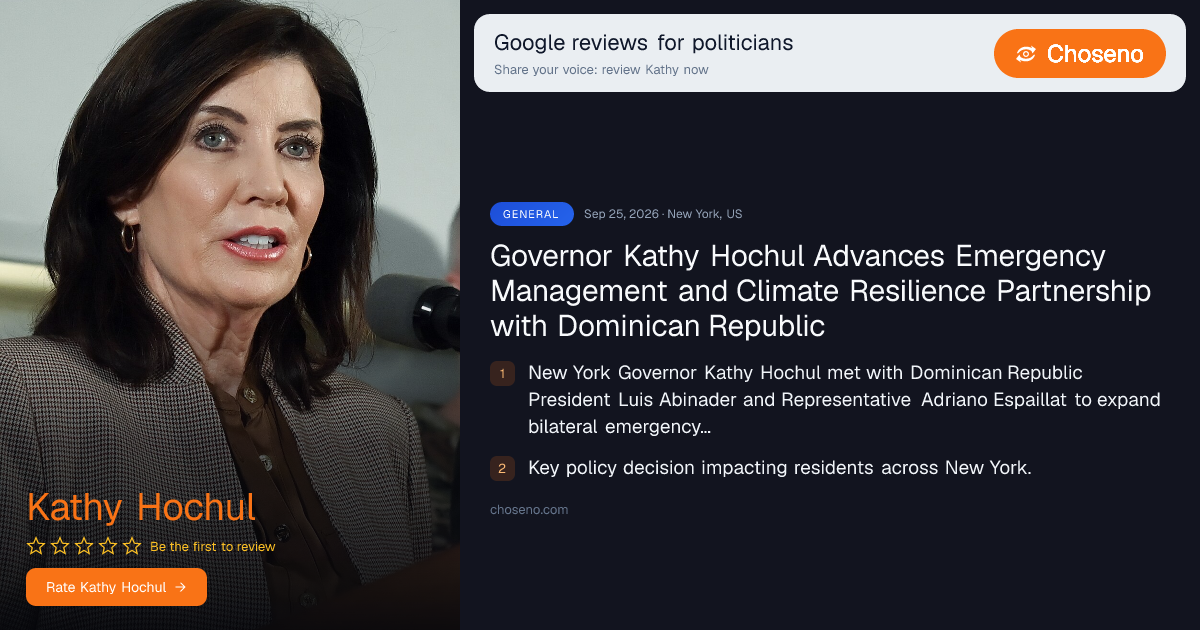
Governor Kathy Hochul Advances Emergency Management and Climate Resilience Partnership with Dominican Republic
New York Governor Kathy Hochul met with Dominican Republic President Luis Abinader and Representative Adriano Espaillat to expand bilateral emergency management cooperation, training exchanges, and environmental resilience.
Read full article