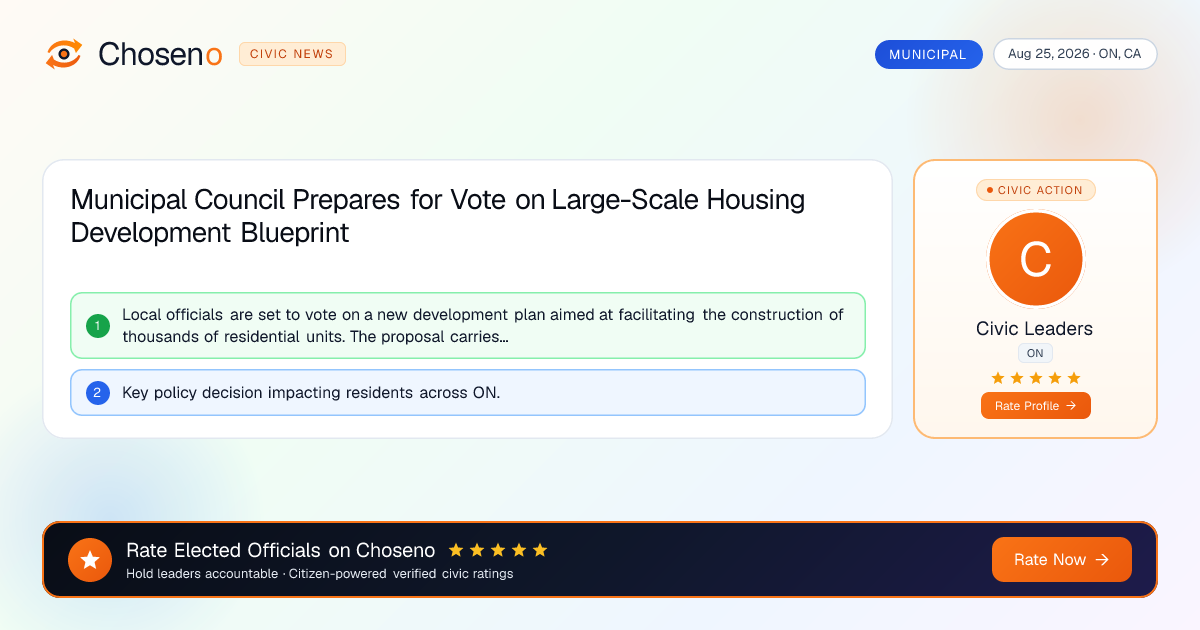
Municipal Council Prepares for Vote on Large-Scale Housing Development Blueprint
Local officials are set to vote on a new development plan aimed at facilitating the construction of thousands of residential units. The proposal carries significant implications for regional housing supply and municipal infrastructure planning.
Choseno Civic News Desk August 25, 2026 1 min read ON, CA
★ Choseno Civic Briefing
Key Leaders
Dateline: August 25, 2026
Local municipal authorities are moving toward a decisive vote on a comprehensive blueprint designed to authorize the construction of thousands of new homes. This legislative action represents a significant step in the region's ongoing efforts to address housing availability.
Policy & Taxpayer Impact
The proposed development plan serves as a framework for residential expansion, aiming to increase the total housing stock within the jurisdiction. For taxpayers, the policy carries long-term implications regarding municipal service delivery, utility infrastructure expansion, and potential shifts in property tax revenue bases as new residential units are integrated into the community.
Political & Legal Stakes
The upcoming vote is viewed as a critical test for local representatives tasked with balancing rapid urban growth against existing zoning regulations and infrastructure capacity. The legal framework surrounding this blueprint must align with provincial housing mandates, making the outcome of this vote a potential precedent for future land-use decisions in the area.
The Debate
Proponents of the blueprint argue that the initiative is a necessary intervention to alleviate the current housing shortage, suggesting that the scale of the project will provide much-needed relief for residents struggling with affordability. Conversely, critics express concerns regarding the potential strain on public services, the impact on local traffic patterns, and the preservation of existing neighborhood character, urging council members to consider more measured growth strategies.
Public Accountability Context
As the vote approaches, citizens are encouraged to review the specific details of the development blueprint to understand how these changes may affect their local districts. Transparency in the approval process remains a central focus for community stakeholders who are monitoring how their elected officials weigh the competing interests of developers, current residents, and future homeowners.
Related Coverage in Municipal
See all Municipal newsMunicipal
US Aug 25, 2026
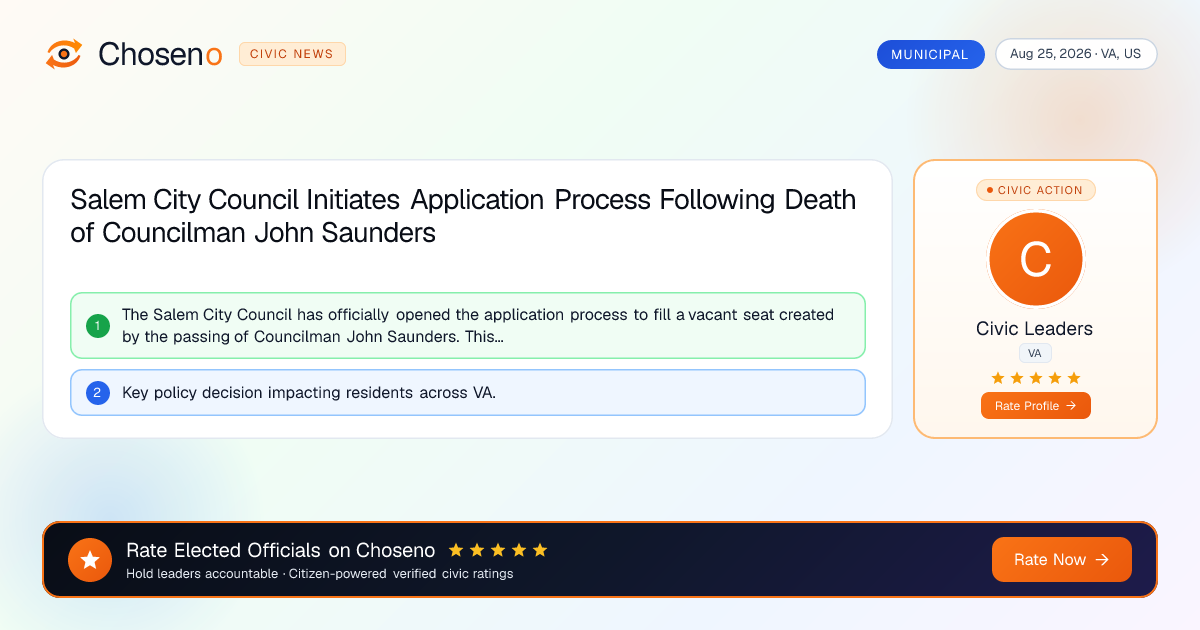
Salem City Council Initiates Application Process Following Death of Councilman John Saunders
The Salem City Council has officially opened the application process to fill a vacant seat created by the passing of Councilman John Saunders. This administrative transition ensures continued municipal representation for residents while the council manages the appointment process.
Read full article
Municipal
US Aug 25, 2026
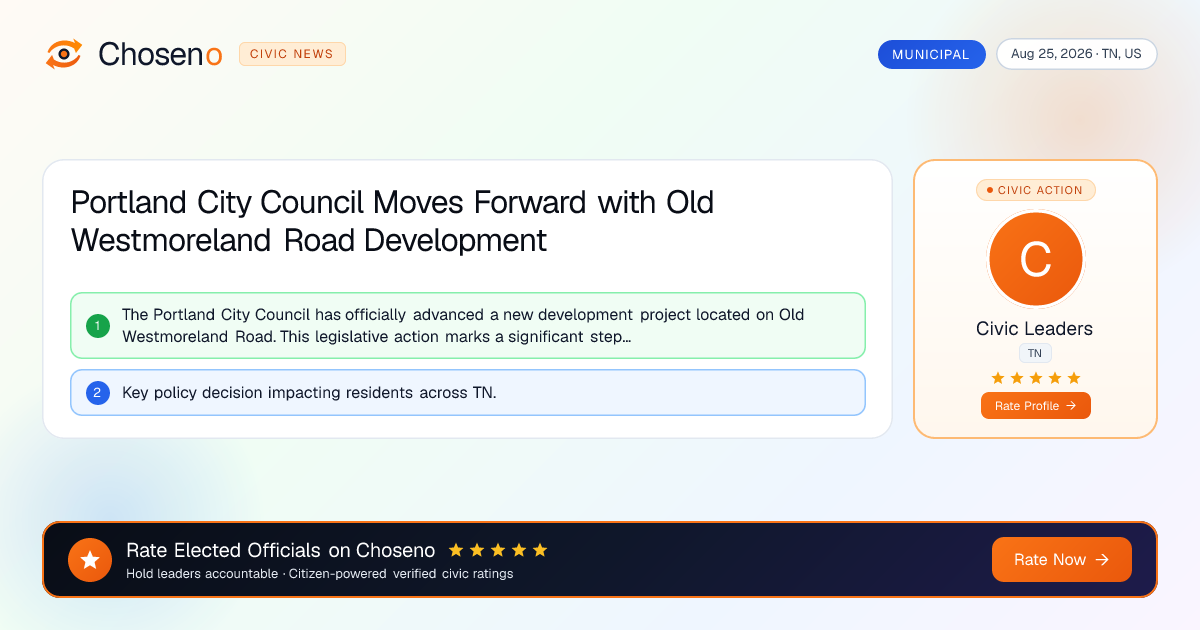
Portland City Council Moves Forward with Old Westmoreland Road Development
The Portland City Council has officially advanced a new development project located on Old Westmoreland Road. This legislative action marks a significant step in the city's land-use planning, with potential long-term implications for local infrastructure and municipal growth.
Read full article
Municipal
US Aug 25, 2026
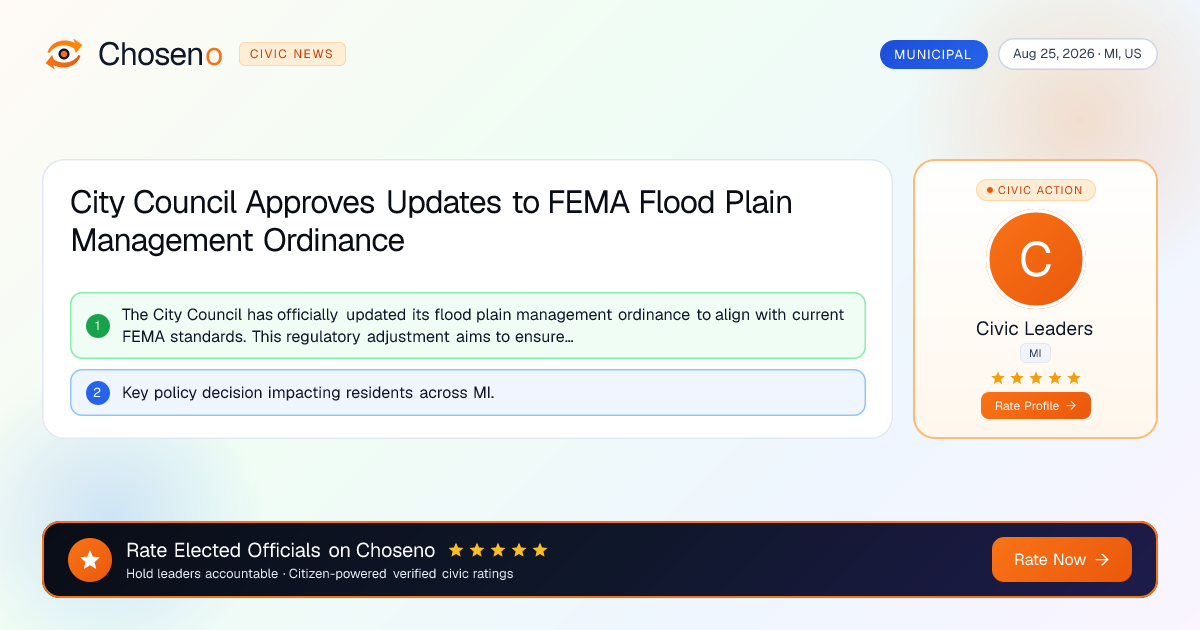
City Council Approves Updates to FEMA Flood Plain Management Ordinance
The City Council has officially updated its flood plain management ordinance to align with current FEMA standards. This regulatory adjustment aims to ensure continued compliance with federal guidelines, which may influence local insurance requirements and development standards.
Read full article