Nashville International Airport to Adopt Dolly Parton Name Following Gubernatorial Directive
Tennessee Governor Bill Lee has announced that the Nashville International Airport will be renamed to honor country music icon Dolly Parton. The transition marks a significant rebranding effort for the state's primary aviation hub.
Choseno Civic News Desk August 28, 2026 1 min read TN, US
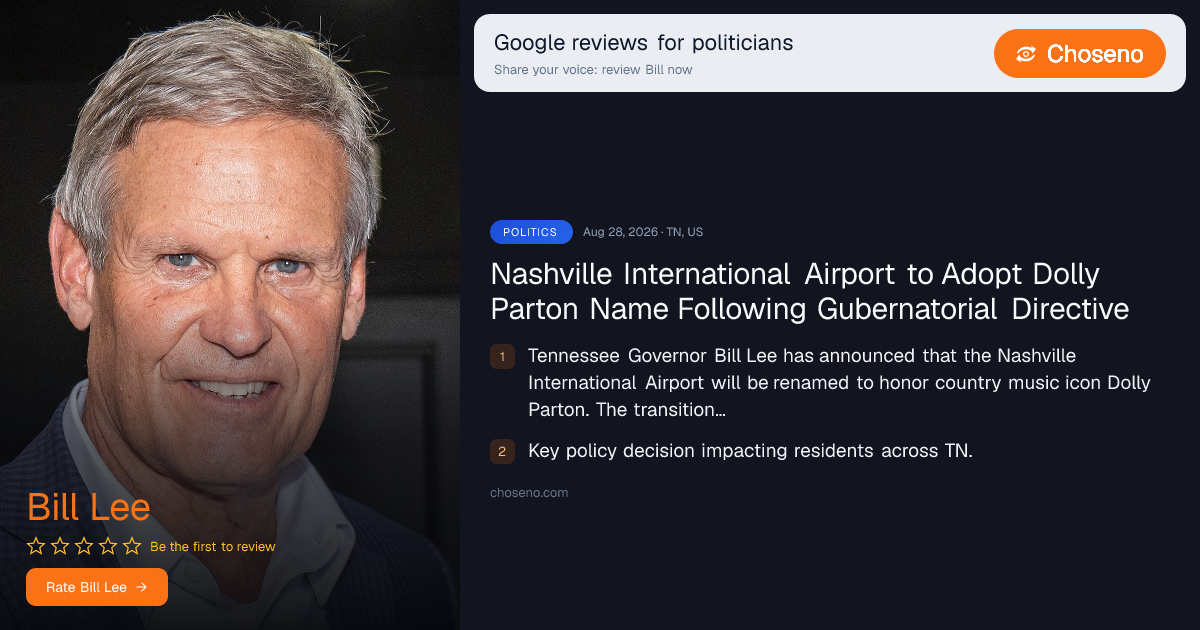
The Nashville International Airport is set to undergo a formal name change to honor country music legend Dolly Parton, according to an announcement made by Tennessee Governor Bill Lee. The decision, reported by WWLTV.com, signals a shift in the branding of the state's busiest aviation facility.
While the announcement confirms the intent to rename the airport, specific details regarding the timeline for the transition, the associated costs of rebranding signage and infrastructure, and the formal legislative or administrative process required to finalize the change remain forthcoming. The airport, which serves as a major gateway for the region, has long been associated with the city's identity as a global center for music and entertainment.
This move aligns with broader state efforts to leverage Tennessee's cultural heritage in public infrastructure branding. As the project moves forward, stakeholders will likely look for further clarification on how the renaming will be implemented across the airport's various terminals and digital platforms. The announcement follows a period of significant growth for the airport, which has seen increased passenger traffic and facility expansions in recent years.
Rate the people mentioned in this article

Related Coverage in Politics
See all Politics newsPolitics
CA Aug 28, 2026
North Bay MPP Travel Expense Allocation Under Review Following Split-Billing Disclosure
Questions have emerged regarding the practice of splitting travel expenses by a North Bay MPP. The scrutiny focuses on the transparency and procedural adherence of provincial reimbursement claims.
Read full article
Politics
US Aug 28, 2026
Ohio Executive Leadership Concludes Statewide Heart of Opportunity Tour in Cincinnati and Springfield
Governor Mike DeWine and Lieutenant Governor Jim Tressel have finalized a series of regional visits focused on state-level economic and community development initiatives. The tour served as a concluding engagement for the administration's current outreach efforts across Ohio's urban centers.
Read full article

Politics
US Aug 28, 2026
Pennsylvania Governor Signals Support for Statewide Prohibition of Flock Surveillance Technology
Governor Josh Shapiro has expressed openness to a legislative ban on the use of Flock automated license plate reader cameras across Pennsylvania. The potential policy shift follows ongoing public and legislative discourse regarding the privacy implications of widespread automated surveillance.
Read full article