New Iowa Polling Reveals Highly Competitive Contests for Governor and United States Senate
A statewide survey conducted across Iowa shows closely contested races for governor and the United States Senate, reflecting shifting voter priorities on economic policy and governance.
Choseno Civic News Desk September 24, 2026Updated September 25, 2026 3 min read Iowa, US
What do you think of the people in this story? Rate them anonymously — tap a face below.
A comprehensive statewide survey conducted across Iowa indicates highly competitive general election contests for both the governor seat and the United States Senate, signaling a dynamic political landscape as major party nominees intensify general election outreach across rural counties and metropolitan centers alike. The newly published findings reflect heightened voter engagement and tight margins that suggest both parties face significant organizational hurdles in mobilizing undecided voters ahead of November balloting. Campaign teams across the state have responded by expanding volunteer networks and deploying regional policy surrogates to key suburban and agricultural battlegrounds.
In the gubernatorial contest to succeed outgoing Governor Kim Reynolds, public opinion data demonstrates a tightly drawn statistical contest between Democratic nominee Rob Sand and Republican nominee Zach Lahn. Polling data shows voters closely divided between competing visions for state fiscal oversight, public school financing structures, and rural healthcare access. Survey analysts observed that Sand draws considerable support from independent suburban precincts and agricultural communities prioritizing government transparency and strict auditing practices, while Lahn maintains robust margins among traditional conservative bases emphasizing state tax reduction, private school choice expansions, and regulatory restraint.
Parallel polling in the United States Senate race highlights an equally tight contest between Republican candidate Ashley Hinson and Democratic contender Josh Turek. The survey reveals that economic concerns, particularly agricultural commodity pricing, manufacturing resilience, and inflation across rural supply chains, form the central battleground for Senate voters. Campaign observers pointed out that Hinson emphasizes federal spending reduction, border security enforcement, and agricultural trade safeguards, whereas Turek focuses heavily on expanding federal healthcare subsidies, protecting disability rights programs, and securing targeted infrastructure investments across community forums.
Electoral analysts highlighted that the open gubernatorial seat has transformed Iowa into one of the most closely watched statewide landscapes in the Midwest. With Governor Reynolds opting against seeking an additional executive term, party organizations have accelerated fundraising drives, digital advertising initiatives, and precinct-level voter contact operations. Field strategists on both sides noted that voter turnout in mid-sized counties will likely prove decisive, as traditional partisan alignments face pressure from shifting demographics and regional economic concerns.
Focus group feedback captured alongside the statistical survey indicates that undecided voters remain focused on kitchen-table concerns, including water quality infrastructure, property tax adjustments, and local hospital retention. Civic observers noted that voters expressed desire for pragmatic legislative cooperation and stable governance, demonstrating fatigue with ideological polarization and demanding clear policy proposals addressing rural population stabilization and workforce shortages. Many participants highlighted that access to reliable obstetric care and emergency medical transport in rural townships represents an urgent legislative priority that neither candidate can afford to overlook.
Both political campaigns responded to the polling results by signaling increased ad buys and scheduled grassroots town halls across all ninety-nine counties. Political science researchers emphasized that with polling figures falling within standard margins of statistical error, neither major party can claim an insurmountable advantage heading into the final stretch. Ground operations, early voting participation rates, and direct debates scheduled throughout the autumn will serve as pivotal factors in deciding whether Iowa maintains executive continuity or elects new legislative leadership. The upcoming debates will provide voters an essential opportunity to evaluate specific fiscal proposals before ballots are distributed.
Rate the people mentioned in this article


Related Coverage in General
See all General newsGeneral
US Sep 25, 2026
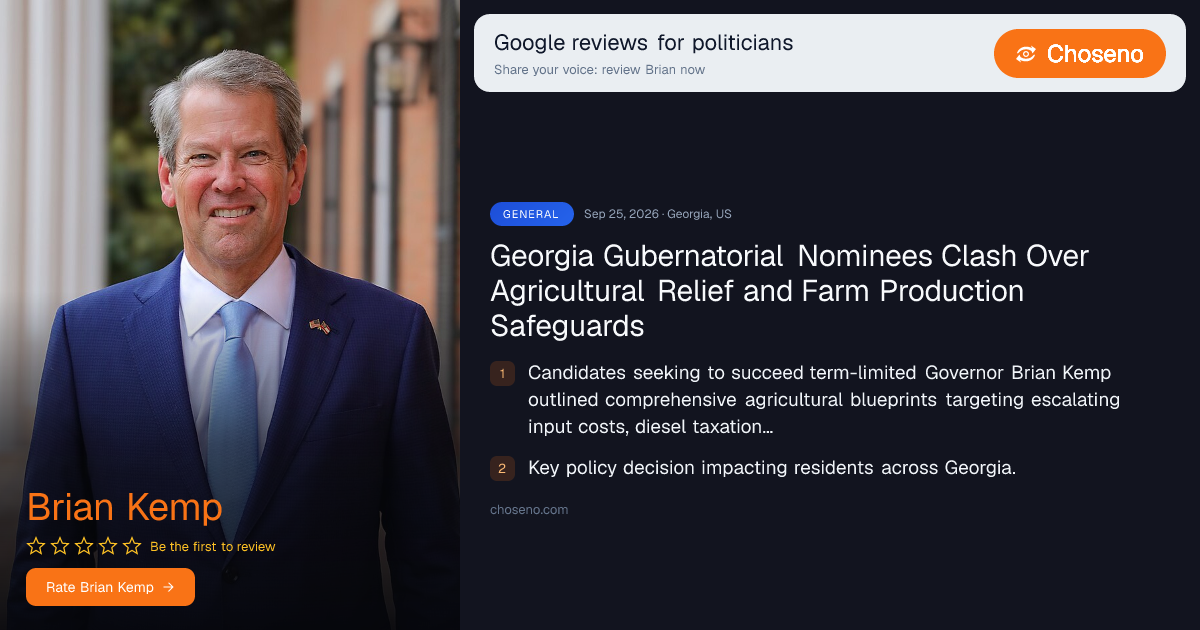
Georgia Gubernatorial Nominees Clash Over Agricultural Relief and Farm Production Safeguards
Candidates seeking to succeed term-limited Governor Brian Kemp outlined comprehensive agricultural blueprints targeting escalating input costs, diesel taxation relief, water allocations, and family farm preservation.
Read full article
General
US Sep 25, 2026
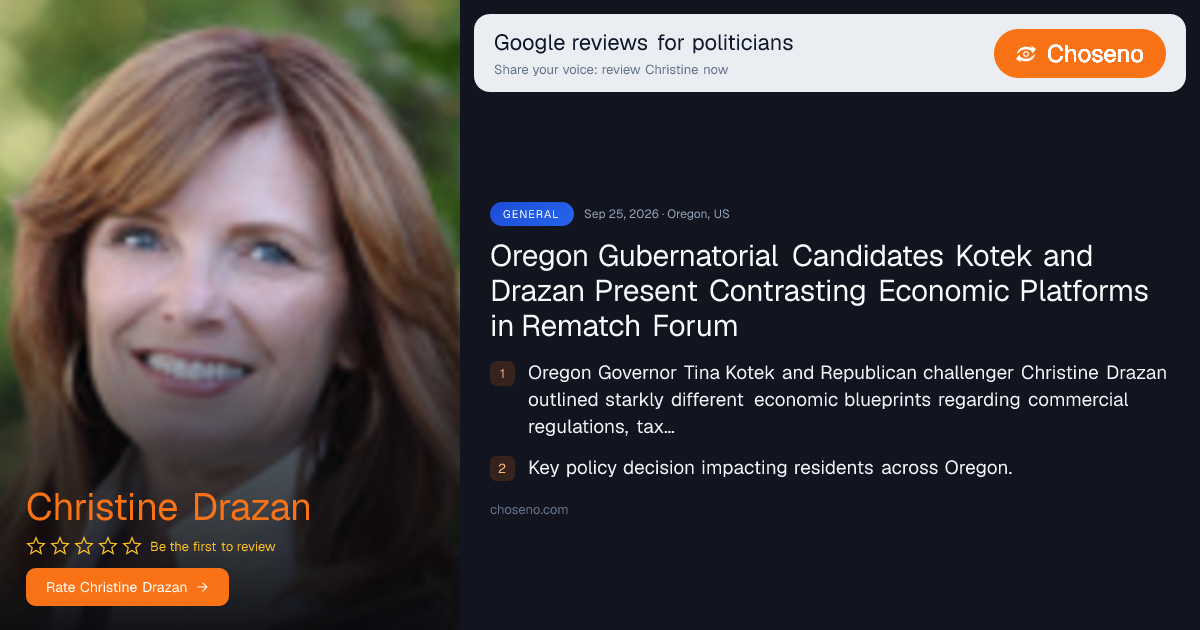
Oregon Gubernatorial Candidates Kotek and Drazan Present Contrasting Economic Platforms in Rematch Forum
Oregon Governor Tina Kotek and Republican challenger Christine Drazan outlined starkly different economic blueprints regarding commercial regulations, tax structures, and industrial competitiveness at a Portland business forum.
Read full article
General
US Sep 25, 2026
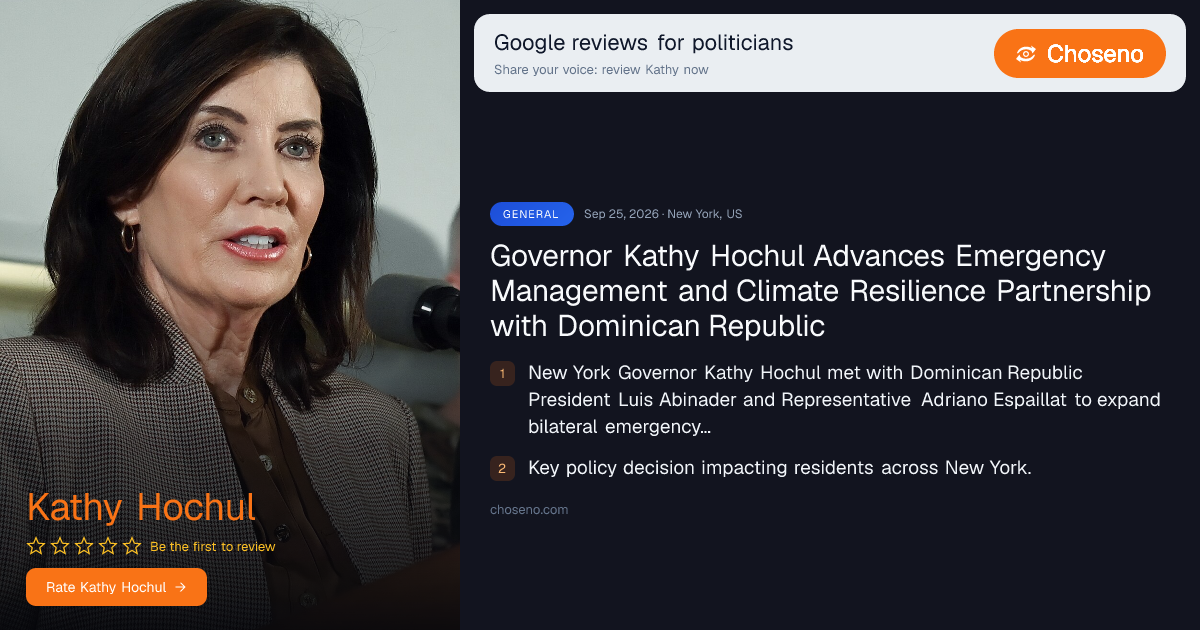
Governor Kathy Hochul Advances Emergency Management and Climate Resilience Partnership with Dominican Republic
New York Governor Kathy Hochul met with Dominican Republic President Luis Abinader and Representative Adriano Espaillat to expand bilateral emergency management cooperation, training exchanges, and environmental resilience.
Read full article