Governor Signs Zwicker-Turner Bill Creating New Jersey Employee Ownership Transition Program
New Jersey enacts legislation establishing an Economic Development Authority program with revolving loans and technical guidance to help companies transition to employee ownership.
Choseno Civic News Desk September 4, 2026Updated September 6, 2026 3 min read New Jersey, US
Legislation establishing a state-backed program to assist private businesses in transitioning to employee ownership models has been signed into law in New Jersey, creating dedicated financing tools and technical advisory services aimed at preserving local enterprises and building worker wealth. The statute, designated as S-4218, mandates that the New Jersey Economic Development Authority (NJEDA) establish an official Employee Ownership Transition Program to guide business founders through the complex structural and legal pathways of selling their companies to their workforces.\n\nSponsored by state Senators Andrew Zwicker (D-Middlesex/Mercer/Somerset/Hunterdon) and Shirley K. Turner (D-Mercer/Hunterdon), the legislation is specifically tailored to address an impending generational turnover among small- and mid-sized business owners across the Garden State. As thousands of retirement-age founders seek succession plans, lawmakers warned that absent viable internal transfer mechanisms, profitable local firms risk being liquidated or acquired by out-of-state private equity conglomerates that frequently consolidate operations and lay off regional staff.\n\nNew Jersey is facing a generational transition in business ownership, so we need new policies that will keep successful companies throughout the state operating and growing in the years to come, Senator Zwicker stated upon enactment. Employee ownership is a proven model that helps workers build wealth, strengthen their businesses, and preserve well-paying jobs in their communities. This legislation will allow the EDA to help businesses make the transition to employee ownership possible. Under the statutory framework, employee ownership models encompass Employee Stock Ownership Plans (ESOPs), worker-owned cooperatives, employee ownership trusts, direct stock equity arrangements, and synthetic equity structures.\n\nSenator Turner highlighted the stabilization benefits for local community workforces, noting that expanding equity participation gives frontline personnel a tangible stake in company profitability. In helping more companies transition to employee ownership structures, we will keep them rooted in New Jersey, protecting the jobs that make up the fabric of our communities, all while giving employees a meaningful stake in the work they already do every day, Turner said. This program will provide businesses with the guidance and financing they need to turn succession challenges into long-term security.\n\nThe new statute substantially codifies and expands upon an existing NJEDA pilot initiative—the Employee Stock Ownership Plan Assistance Program—which previously offered partial subsidies for initial feasibility studies. S-4218 formalizes this support into permanent statutory policy while granting the authority power to disburse low-interest loans from a revolving fund. These state loans will directly finance majority employee buyouts and cover transaction-related advisory, legal, and post-transition capital requirements essential for long-term operational sustainability.\n\nAdministratively, the law creates a specialized leadership post within state government, directing the NJEDA to designate a Director of Employee Ownership reporting directly to the authority's Chief Executive Officer. Additionally, an Advisory Commission on Employee Ownership will be appointed to evaluate outreach metrics, advise on regulatory guidelines, and recommend programmatic improvements. By creating an integrated infrastructure of revolving capital, technical vetting, and institutional advocacy, New Jersey joins a growing national cohort of states deploying employee ownership as an economic retention strategy against corporate consolidation.
Under the statutory transition guidelines, any qualified contractors and consultants currently certified under New Jersey’s legacy pilot program will automatically retain their certified status under the expanded initiative, preventing procedural delays for businesses actively evaluating succession transitions. By pairing technical underwriting with accessible debt capital, state policymakers aim to encourage broad participation across diverse industrial sectors, from manufacturing and logistics to professional services and regional retail. The program represents a coordinated effort between the legislative branch and state economic planners to cultivate inclusive wealth generation while preserving the independent character of New Jersey’s domestic business landscape.
Rate the people mentioned in this article

Related Coverage in Economy & Budget
See all Economy & Budget newsEconomy & Budget
US Sep 4, 2026
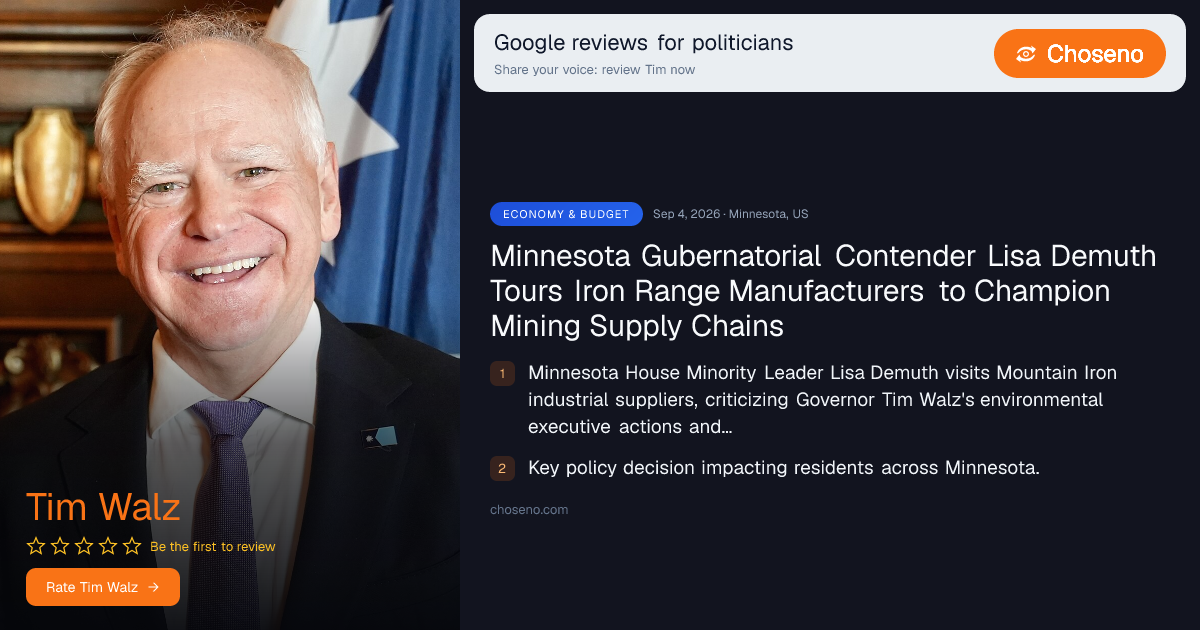
Minnesota Gubernatorial Contender Lisa Demuth Tours Iron Range Manufacturers to Champion Mining Supply Chains
Minnesota House Minority Leader Lisa Demuth visits Mountain Iron industrial suppliers, criticizing Governor Tim Walz's environmental executive actions and pledging regulatory relief for mining communities.
Read full article
Economy & Budget
US Sep 4, 2026
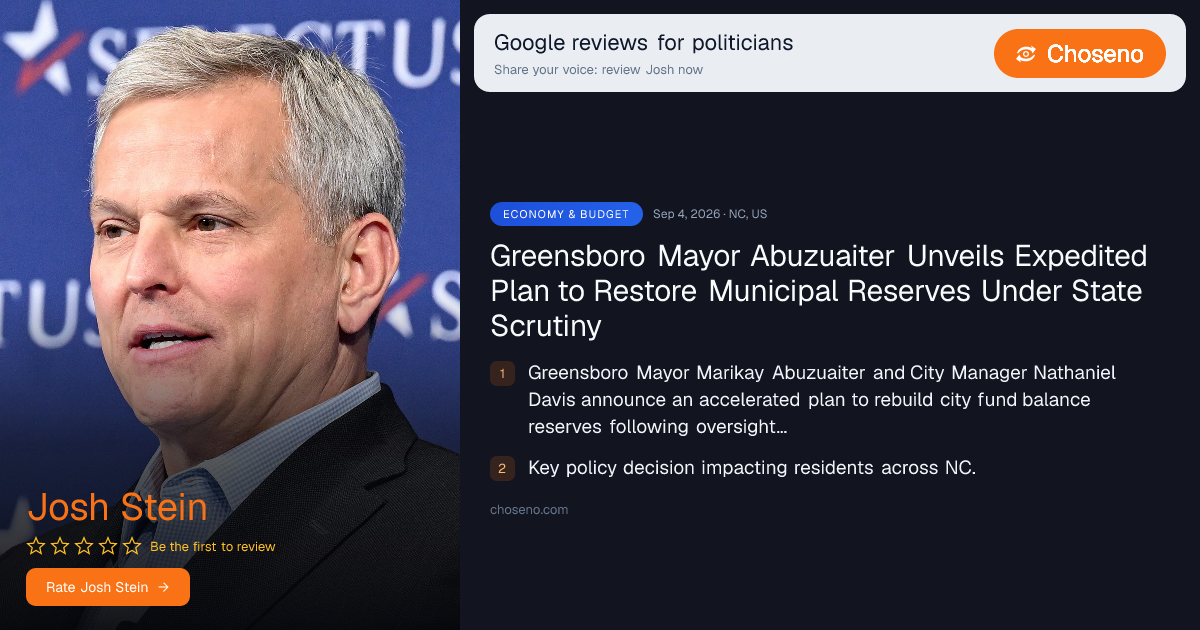
Greensboro Mayor Abuzuaiter Unveils Expedited Plan to Restore Municipal Reserves Under State Scrutiny
Greensboro Mayor Marikay Abuzuaiter and City Manager Nathaniel Davis announce an accelerated plan to rebuild city fund balance reserves following oversight from North Carolina’s Local Government Commission.
Read full article
Economy & Budget
US Sep 4, 2026
Texas Senator Paul Bettencourt Warns Harris County Tax Hike Nears School District Levy
State Senator Paul Bettencourt releases 254-county property tax data, criticizing Harris County's proposed $0.67 tax rate for nearly matching Houston ISD's homestead tax burden despite $51B in state tax cuts.
Read full article