New Jersey Executive Branch Crisis Escalates as Governor Demands Lieutenant Governor Step Down
Governor Mikie Sherrill has publicly demanded the resignation of Lieutenant Governor Dale Caldwell, asserting that his departure is vital for the state's residents. This unprecedented political rupture sends shockwaves through Trenton and forces a constitutional reexamination of executive accountability.
Choseno Civic News Desk September 25, 2026 3 min read New Jersey, US
What do you think of the people in this story? Rate them anonymously — tap a face below.
The political landscape of New Jersey experienced a dramatic tremor when Governor Mikie Sherrill publicly demanded the immediate resignation of Lieutenant Governor Dale Caldwell, asserting that such a departure was strictly necessary and fundamentally in the best interest of all state residents. This extraordinary public break between the two highest-ranking members of the state executive branch immediately triggered widespread speculation across Trenton, forcing legislators, political analysts, and civic leaders to reevaluate the stability of the administration. While the initial announcement lacked granular details regarding the specific precipitating factors, the governor framed the demand as an unavoidable measure driven by an unwavering commitment to good governance, institutional integrity, and public trust. Observers noted that executive friction of this magnitude is exceedingly rare in modern New Jersey politics, particularly given the shared constitutional platform on which the administration was elected to serve.
From a statutory perspective, the state constitution outlines explicit protocols for executive succession and vacancies, yet it provides remarkably little guidance on managing an intractable feud between a sitting governor and lieutenant governor who refuse to work in tandem. Legal scholars point out that a lieutenant governor in New Jersey cannot be unilaterally fired by the governor, meaning that any departure relies entirely upon voluntary resignation, legislative impeachment, or intense political and public pressure. This constitutional reality has transformed the unfolding drama into a high-stakes standoff, where the governor must rely heavily on moral authority and party alignment to compel the lieutenant governor's exit. Civic watchdog organizations have begun scrutinizing the potential administrative paralysis that could ensue if the two executive leaders remain deadlocked, warning that essential state agency oversight, legislative collaboration, and emergency preparedness could suffer collateral damage during the prolonged impasse.
The taxpayer and economic stakes of this executive branch fracture are considerable, as state budget negotiations, infrastructure funding distributions, and economic development initiatives require seamless cooperation between the governor's office and the lieutenant governor's portfolio. Business leaders across the Garden State have expressed cautious concern that prolonged instability at the executive level could undermine investor confidence and stall crucial legislative packages aimed at property tax relief and urban revitalization. Chambers of commerce and fiscal policy groups emphasize that predictability and stable governance are paramount for maintaining New Jersey's bond ratings and attracting corporate investment. Any prolonged distraction or administrative infighting risks diverting vital legislative focus away from pressing fiscal reforms, leaving taxpayers to bear the ultimate cost of governmental dysfunction during an already challenging economic climate.
Public reaction throughout communities across New Jersey has been intensely polarized, with constituents and local political organizations sharply divided along partisan and regional lines. Grassroots advocacy groups have mobilized across digital platforms to debate the propriety of the governor's demand, with supporters praising the decisive leadership and critics condemning the move as an unnecessary distraction from broader policy challenges. Local elected officials have found themselves pressured to take a side, forcing county party chairs to navigate delicate diplomatic paths to prevent deeper fractures within the broader political coalition. As local town halls and community forums grapple with the implications of the feud, residents are increasingly demanding full transparency regarding the underlying disputes that prompted such a drastic escalation, underscoring a deep public appetite for accountability and stable executive leadership.
Rate the people mentioned in this article
Related Coverage in Municipal
See all Municipal newsMunicipal
US Sep 27, 2026
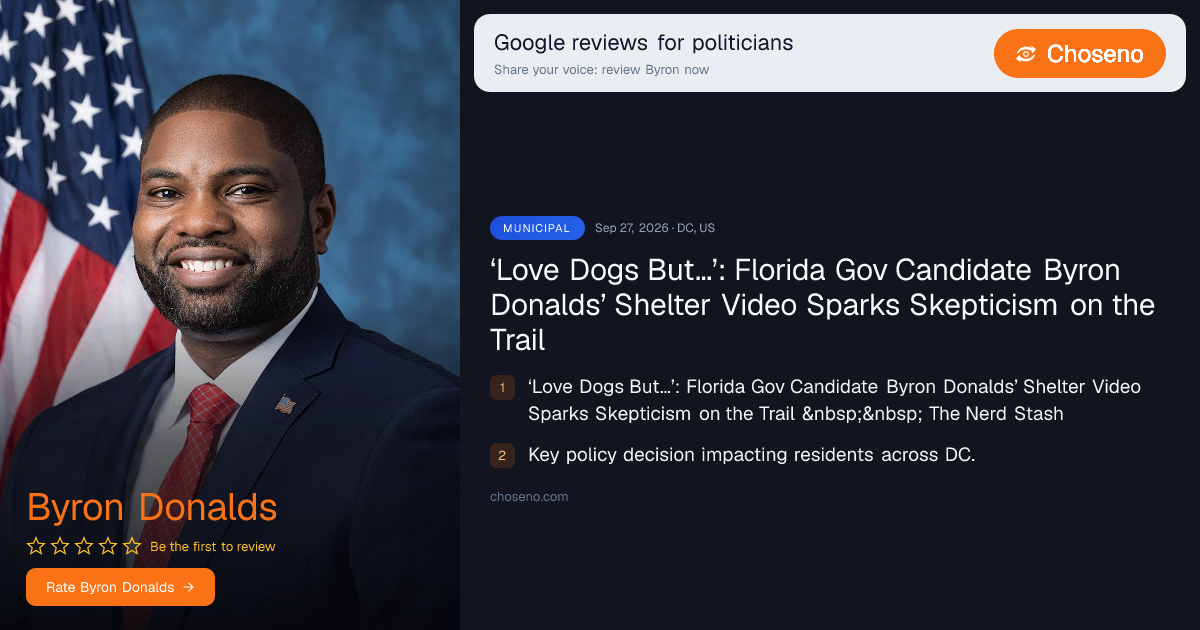
‘Love Dogs But…’: Florida Gov Candidate Byron Donalds’ Shelter Video Sparks Skepticism on the Trail
‘Love Dogs But…’: Florida Gov Candidate Byron Donalds’ Shelter Video Sparks Skepticism on the Trail The Nerd Stash
Read full article
Municipal
US Sep 27, 2026
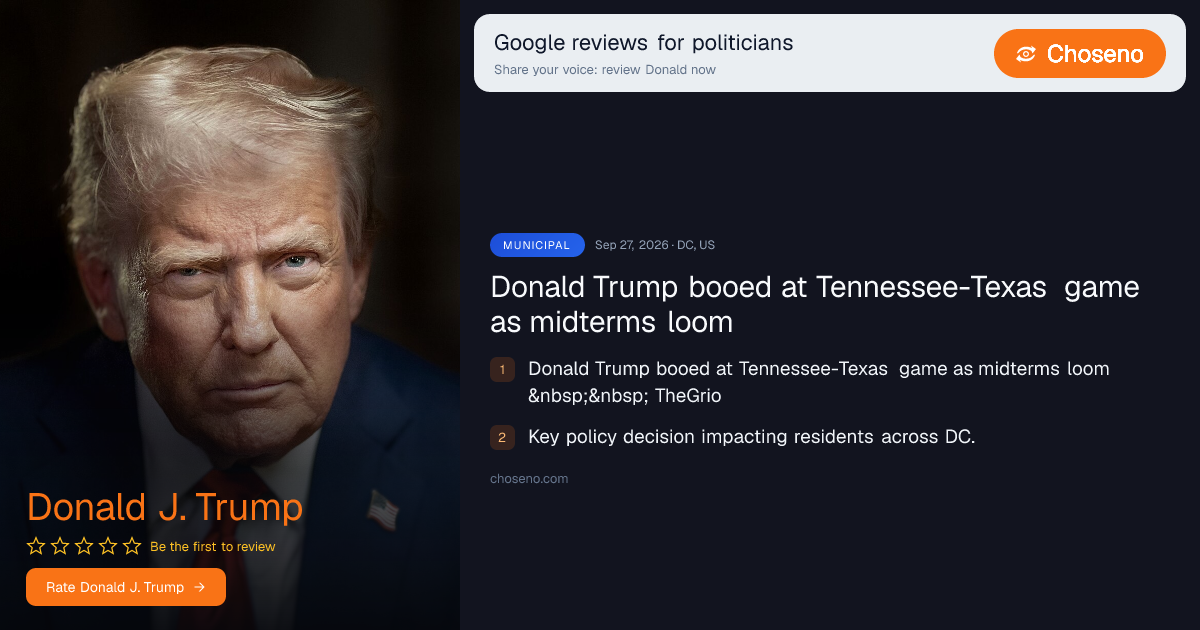
Donald Trump booed at Tennessee-Texas game as midterms loom
Donald Trump booed at Tennessee-Texas game as midterms loom TheGrio
Read full article
Municipal
US Sep 27, 2026
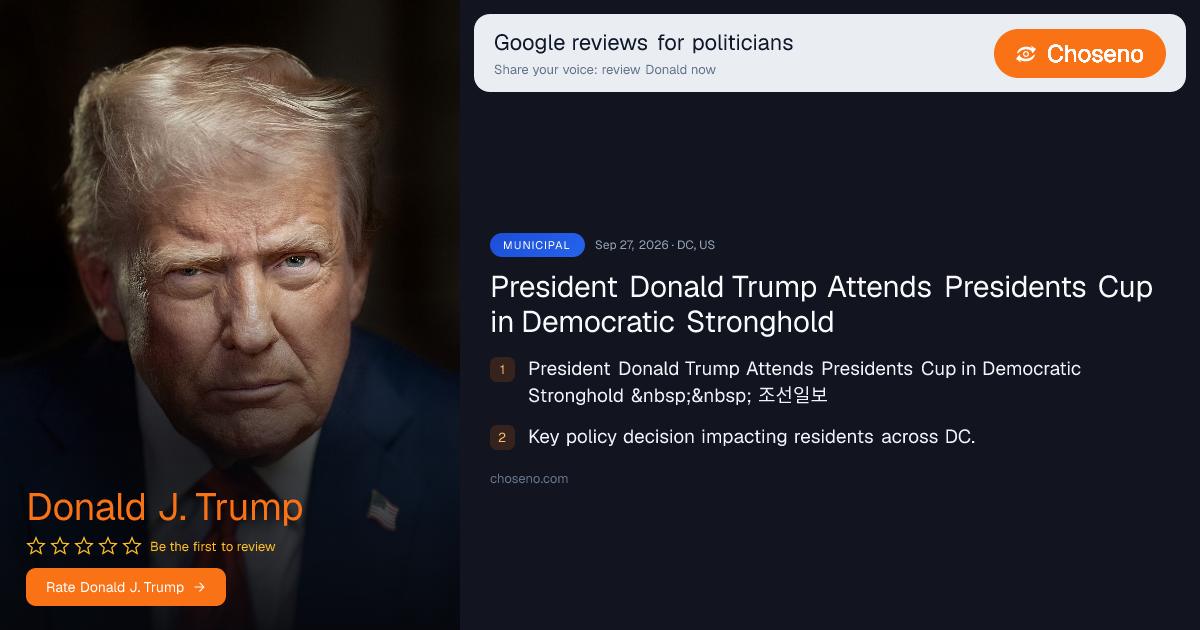
President Donald Trump Attends Presidents Cup in Democratic Stronghold
President Donald Trump Attends Presidents Cup in Democratic Stronghold 조선일보
Read full article