New York City Mayor Zohran Mamdani Establishes Nation’s First Municipal Office of Worker Power
Choseno Civic News Desk September 7, 2026 3 min read
★ Choseno Civic Briefing
NEW YORK — Marking a historic shift in municipal labor policy, New York City Mayor Zohran K. Mamdani signed an executive order establishing the Mayor’s Office of Worker Power, creating the first municipal government department in the United States dedicated to supporting workplace organizing and expanding collective bargaining access. The new city agency represents an institutional expansion of municipal authority, designed to leverage City Hall’s administrative resources to assist low-wage and unrepresented workers across the five boroughs in securing fair compensation, comprehensive health benefits, and robust workplace safety protections.
Operating under the direction of the Deputy Mayor for Economic Justice, the newly established office is tasked with educating private and public sector employees regarding their statutory organizing rights under federal, state, and local labor codes. Agency personnel will coordinate directly with existing municipal enforcement bodies, including the Department of Consumer and Worker Protection, to investigate systemic wage theft, unlawful employer retaliation, and fair workweek violations, while serving as an accessible informational clearinghouse for workers seeking to form independent bargaining units or affiliate with established labor unions.
To lead the groundbreaking agency, Mayor Mamdani appointed veteran labor organizer Tony Perlstein as the inaugural executive director. Perlstein brings decades of grassroots organizing experience, having previously worked as a maritime longshoreman before directing national educational and organizing initiatives for the United Auto Workers. City Hall officials indicated that Perlstein’s operational mandate will focus primarily on historically vulnerable employment sectors, including app-based food delivery couriers, warehouse logistics handlers, fast-food employees, retail clerks, and home healthcare aides who have traditionally faced high barriers to collective bargaining.
The establishment of the agency fulfills a core commitment of Mayor Mamdani’s progressive governing agenda, which seeks to transform city administrative power into an active instrument for economic democracy and wealth equity. Administration officials emphasized that rather than remaining neutral in labor relations, municipal government should actively support working New Yorkers facing corporate consolidation and soaring urban living costs. The office will host quarterly public hearings to document labor exploitation across distinct industry sectors, publish annual workforce equity reports, and advise the mayor on municipal procurement standards to ensure that city contracting dollars favor employers adhering to prevailing wage standards and labor neutrality agreements.
The initiative has drawn enthusiastic acclaim from the city’s major labor syndicates and progressive grassroots coalitions, who characterized the office as an essential counterweight against corporate resistance to unionization. Labor leaders argued that empowering workers with administrative knowledge, legal guidance, and institutional backing is vital to reversing decades of declining union density in the private sector.
Conversely, the creation of the agency has prompted sharp criticism from business federations, hospitality associations, and commercial real estate groups. Industry representatives contended that deploying municipal tax dollars to actively facilitate unionization campaigns oversteps the traditional role of city government, warning that aggressive administrative intervention could discourage corporate investment, complicate private labor negotiations, and escalate compliance costs for struggling small businesses. Despite business pushback, Mayor Mamdani reaffirmed that the city will aggressively deploy its statutory authorities to ensure that all workers possess a meaningful voice in shaping their working conditions.
Rate the people mentioned in this article

Related Coverage in General
See all General newsGeneral
US Sep 25, 2026
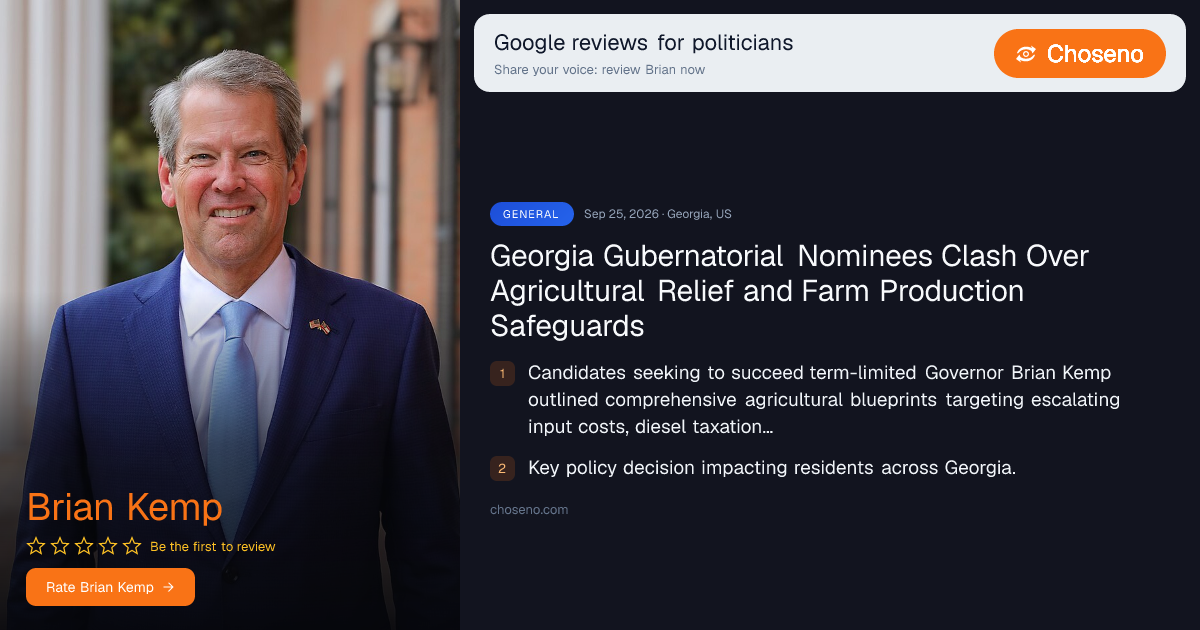
Georgia Gubernatorial Nominees Clash Over Agricultural Relief and Farm Production Safeguards
Candidates seeking to succeed term-limited Governor Brian Kemp outlined comprehensive agricultural blueprints targeting escalating input costs, diesel taxation relief, water allocations, and family farm preservation.
Read full article
General
US Sep 25, 2026
Oregon Gubernatorial Candidates Kotek and Drazan Present Contrasting Economic Platforms in Rematch Forum
Oregon Governor Tina Kotek and Republican challenger Christine Drazan outlined starkly different economic blueprints regarding commercial regulations, tax structures, and industrial competitiveness at a Portland business forum.
Read full article
General
US Sep 25, 2026
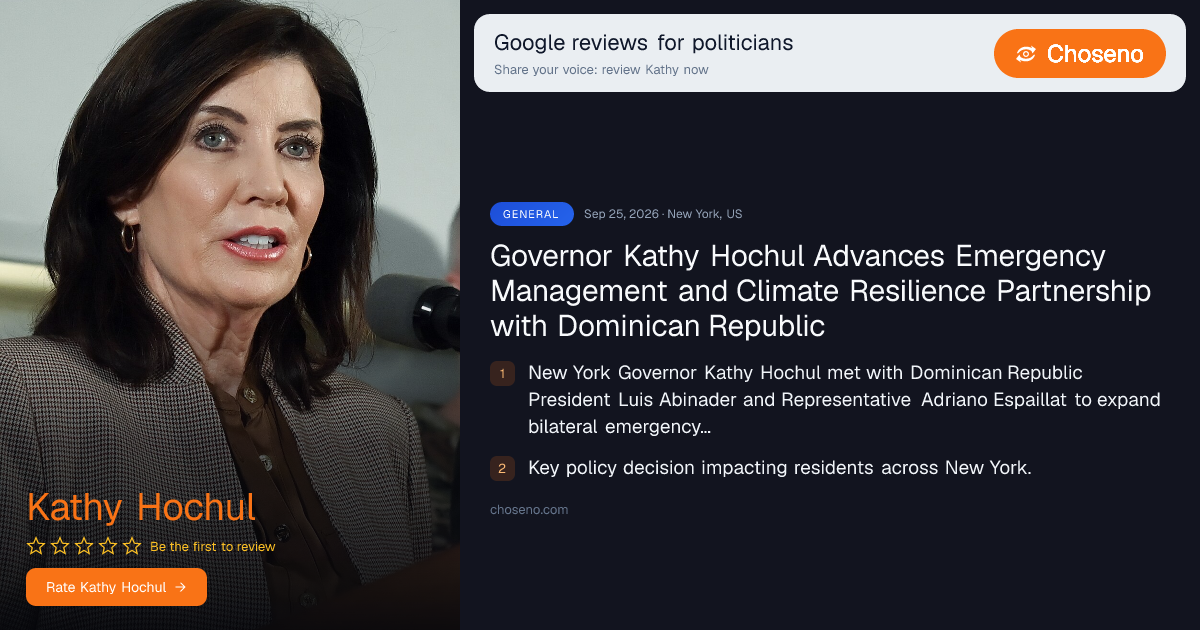
Governor Kathy Hochul Advances Emergency Management and Climate Resilience Partnership with Dominican Republic
New York Governor Kathy Hochul met with Dominican Republic President Luis Abinader and Representative Adriano Espaillat to expand bilateral emergency management cooperation, training exchanges, and environmental resilience.
Read full article