North Dakota Governor Kelly Armstrong Signs Kratom Safety Legislation Following Special Session Debate
Choseno Civic News Desk September 7, 2026 3 min read
★ Choseno Civic Briefing
BISMARCK, N.D. — Concluding a focused special legislative session on substance regulation and consumer protection, North Dakota Governor Kelly Armstrong signed into law a comprehensive statutory compromise governing the retail sale, manufacturing, and distribution of kratom. While Governor Armstrong had publicly advocated for a total statewide prohibition on the herbal substance, the enacted measure—House Bill 1628—establishes an aggressive regulatory framework that outlaws synthetic formulations as controlled substances while imposing strict retail safeguards on natural plant extracts.
The legislative debate in Bismarck centered on rising public health concerns regarding unregulated kratom derivatives sold at convenience stores, gas stations, smoke shops, and online retail outlets across the state. Derived from a Southeast Asian plant, kratom contains active alkaloids that interact with opioid receptors in the human brain, producing stimulating or sedative effects depending on dosage and chemical purity. Governor Armstrong and state public health officials warned lawmakers that the proliferation of concentrated liquid extracts and unregulated synthetic variants posed acute risks of dependency, accidental poisoning, and cardiovascular complications, arguing that an outright ban represented the cleanest approach to safeguarding North Dakota youth.
However, after extensive committee testimony from retail merchant associations, agricultural advocates, and consumers who reported using traditional herbal kratom for chronic pain management, legislative leaders crafted a bifurcated statutory structure. Under House Bill 1628, the state formally classifies synthetic kratom-related compounds and chemically altered alkaloid extracts as Schedule 1 controlled substances under state criminal statutes. The provision equips state and local law enforcement agencies with immediate authority to seize synthetic products, conduct compliance searches, and prosecute illicit distributors under felony narcotics statutes across all jurisdictions.
For unadulterated, natural plant kratom products, the law institutes rigorous commercial controls designed to eliminate adulterated or contaminated products from the marketplace. The statute strictly prohibits the sale or transfer of kratom to individuals under twenty-one years of age, mandating electronic age verification at the point of sale. Retailers must store all kratom products behind service counters, prohibiting open shelf access to prevent theft or unauthorized access by minors. Furthermore, manufacturers must submit products to accredited third-party laboratory testing to certify the absence of heavy metals, synthetic additives, and harmful pathogens, while displaying detailed alkaloid concentration warnings on all retail packaging.
Regulatory oversight and licensing authority are vested in the North Dakota Attorney General’s office, which is authorized to conduct unannounced retail compliance audits, revoke commercial vendor licenses, and assess substantial civil penalties against non-compliant businesses. State health authorities will maintain an active surveillance registry to monitor regional hospital poison control reports and identify any emerging synthetic analogues circulating in local communities.
In an official signing statement accompanying the bill, Governor Armstrong reiterated his underlying preference for an outright prohibition on kratom products, but characterized the enacted legislation as a meaningful and pragmatic victory for community public safety. The governor emphasized that by removing hazardous synthetic compounds from convenience store shelves and empowering state prosecutors with clear statutory enforcement tools, North Dakota has established enforceable consumer protections that hold commercial vendors accountable while shielding families, teenagers, and young adults from toxic synthetic alternatives.
Rate the people mentioned in this article

Related Coverage in General
See all General newsGeneral
US Sep 25, 2026
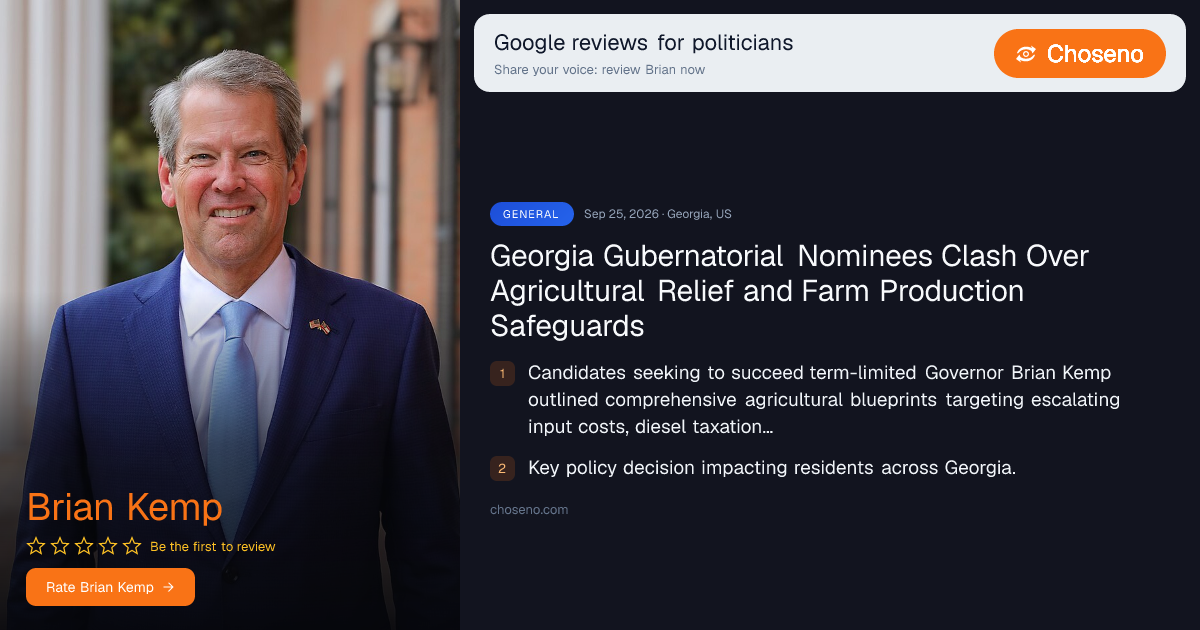
Georgia Gubernatorial Nominees Clash Over Agricultural Relief and Farm Production Safeguards
Candidates seeking to succeed term-limited Governor Brian Kemp outlined comprehensive agricultural blueprints targeting escalating input costs, diesel taxation relief, water allocations, and family farm preservation.
Read full article
General
US Sep 25, 2026
Oregon Gubernatorial Candidates Kotek and Drazan Present Contrasting Economic Platforms in Rematch Forum
Oregon Governor Tina Kotek and Republican challenger Christine Drazan outlined starkly different economic blueprints regarding commercial regulations, tax structures, and industrial competitiveness at a Portland business forum.
Read full article
General
US Sep 25, 2026
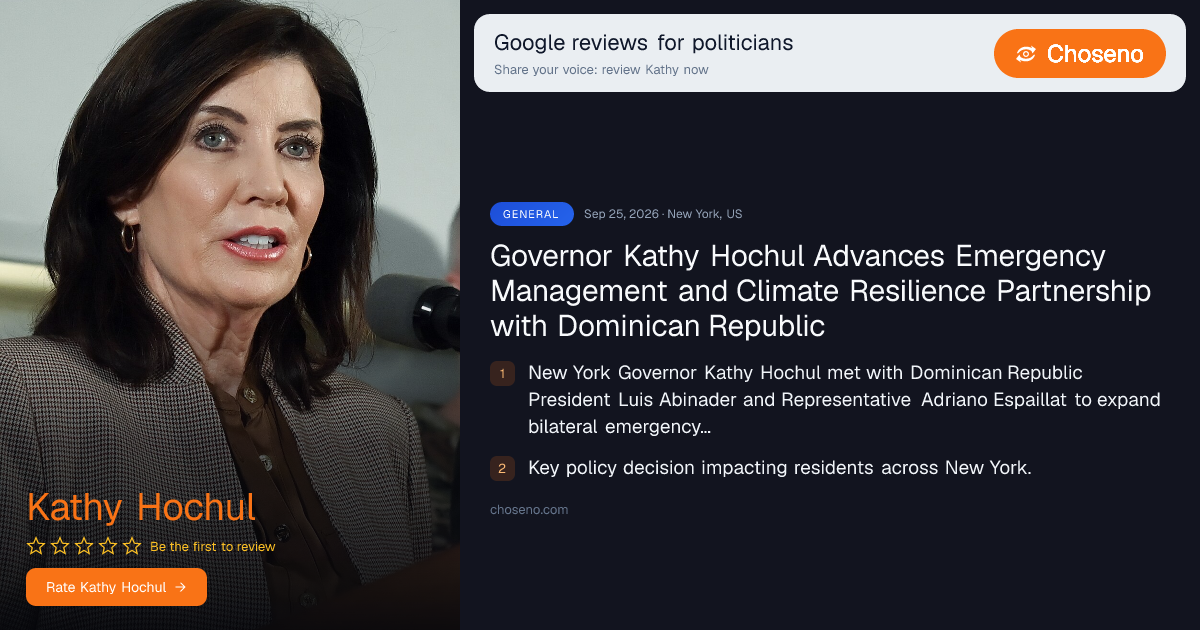
Governor Kathy Hochul Advances Emergency Management and Climate Resilience Partnership with Dominican Republic
New York Governor Kathy Hochul met with Dominican Republic President Luis Abinader and Representative Adriano Espaillat to expand bilateral emergency management cooperation, training exchanges, and environmental resilience.
Read full article