Premier Tim Houston Advances Onshore Gas Development Following End of Nova Scotia Fracking Moratorium
Nova Scotia Premier Tim Houston is pushing forward plans to commercialize the province’s estimated seven trillion cubic feet of onshore natural gas, arguing that ending the decade-long hydraulic fracturing moratorium will fund healthcare and bolster regional energy autonomy.
Choseno Civic News Desk September 4, 2026 3 min read Nova Scotia, CA
HALIFAX — Nova Scotia Premier Tim Houston is aggressively promoting the expansion of the province’s onshore natural gas reserves, positioning the sector as a cornerstone of long-term economic growth and energy sovereignty following his government’s landmark decision to dismantle a decade-long provincial moratorium on hydraulic fracturing.
The initiative centers on an estimated 198 billion cubic metres—approximately seven trillion cubic feet—of undiscovered and undeveloped natural gas reserves trapped in subterranean shale and sandstone formations across the province. Through an ongoing -million, multi-year subsurface energy research initiative administered in partnership with Dalhousie University, provincial geologists and energy planners are mapping prospective basins to attract private capital investment.
Premier Houston has framed the natural gas push as both a fiscal necessity and a strategic buffer against international energy volatility. In public remarks defending the policy pivot, Houston rejected blanket resource prohibitions as lazy policy, asserting that modern regulatory frameworks can safeguard environmental standards while generating royalty revenues essential for sustaining frontline public healthcare and education budgets.
Nova Scotia cannot afford to perpetually say no to responsible resource development while our healthcare system faces historic capital demands and our communities grapple with rising living costs, Houston stated. Producing our own energy domestically reduces our reliance on foreign energy imports, strengthens national supply chains, and ensures that the wealth generated from Atlantic resources stays right here to support Nova Scotian families.
The Progressive Conservative government’s strategy envisions natural gas serving as a transitional fuel alongside massive regional investments in offshore wind and green hydrogen production. By establishing local gas production, provincial planners argue Nova Scotia can phase out coal-fired electrical generation plants more rapidly while providing grid stability during peak winter demand periods.
However, the policy shift has reignited fierce legislative and civic opposition across the province. Environmental organizations, grassroots community coalitions, and opposition legislators from both the Nova Scotia Liberal Party and the New Democratic Party have voiced deep alarm over the potential impacts of high-volume hydraulic fracturing. Critics point to risks of groundwater contamination, methane leakage, wastewater management hazards, and heightened seismic activity, arguing that re-opening the province to fossil fuel extraction contradicts Nova Scotia's statutory greenhouse gas reduction targets.
Furthermore, Mi'kmaq leadership and Indigenous rights advocates have emphasized that any prospective drilling or pipeline infrastructure requires meaningful, legally binding consultation under the duty to consult and the United Nations Declaration on the Rights of Indigenous Peoples (UNDRIP). First Nations representatives have raised unresolved concerns regarding territorial land use, watershed protection, and the cumulative ecological impacts of heavy industrial equipment in rural regions.
The provincial government has indicated that while exploratory discussions with commercial developers are progressing, commercial drilling operations are not expected to commence before 2027, pending comprehensive environmental impact reviews and updated regulatory protocols.
As public consultation hearings continue across rural counties and within the Halifax legislature, the debate over onshore energy development is poised to remain one of Nova Scotia's defining political and environmental touchstones ahead of future electoral cycles.
Regional trade and industrial stakeholders in the Atlantic provinces have largely endorsed the exploration timeline, contending that affordable domestic fuel supplies could insulate Maritime manufacturing and food processing businesses from international commodity price shocks. The ongoing tension between resource monetization and environmental stewardship will test the Houston administration's ability to forge broad public consensus.
Rate the people mentioned in this article

Related Coverage in Energy & Environment
See all Energy & Environment newsEnergy & Environment
CA Sep 4, 2026
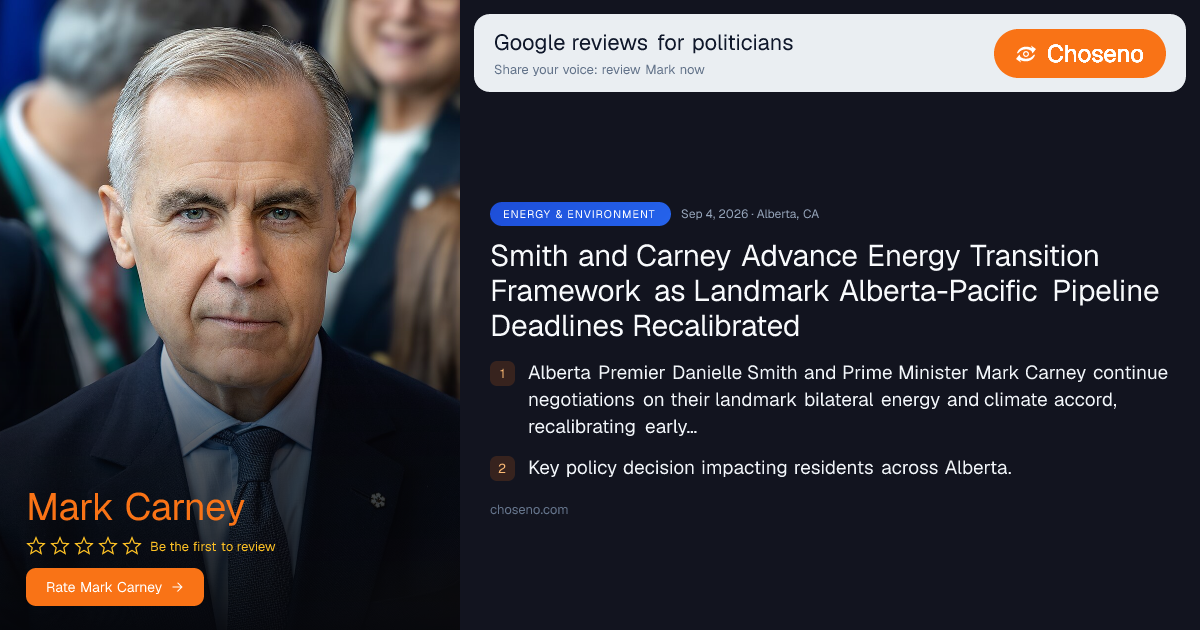
Smith and Carney Advance Energy Transition Framework as Landmark Alberta-Pacific Pipeline Deadlines Recalibrated
Alberta Premier Danielle Smith and Prime Minister Mark Carney continue negotiations on their landmark bilateral energy and climate accord, recalibrating early regulatory milestones while keeping construction of a major Pacific export pipeline targeted for late 2027.
Read full article
Energy & Environment
CA Sep 4, 2026
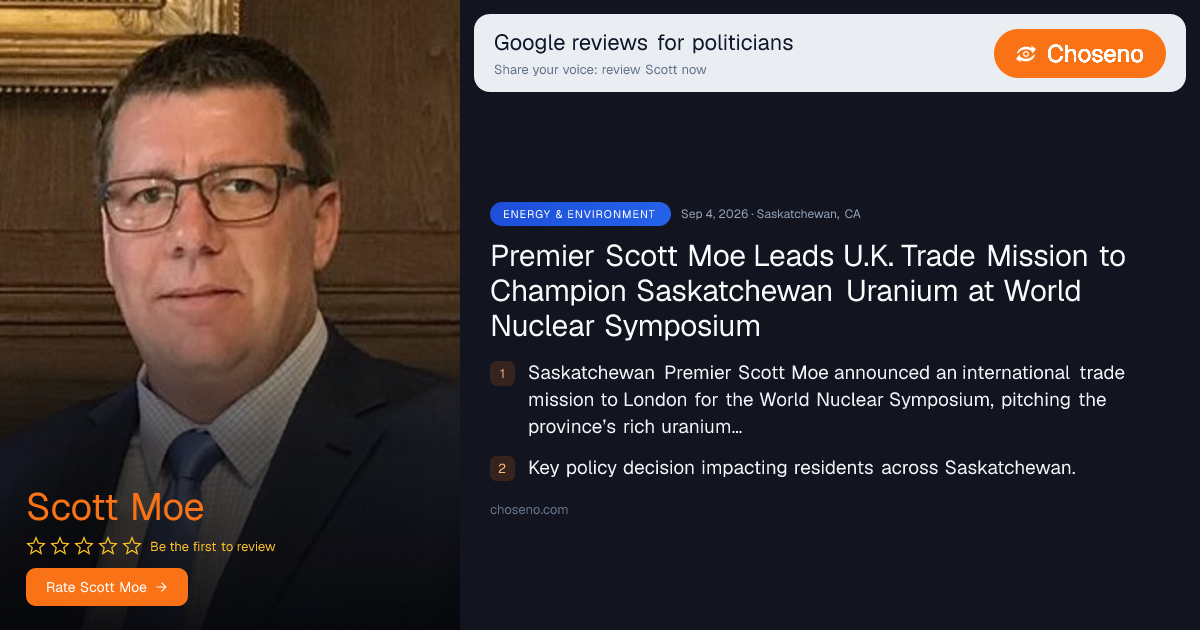
Premier Scott Moe Leads U.K. Trade Mission to Champion Saskatchewan Uranium at World Nuclear Symposium
Saskatchewan Premier Scott Moe announced an international trade mission to London for the World Nuclear Symposium, pitching the province’s rich uranium reserves and emerging small modular reactor supply chain as exports to the U.K. surge 178 percent.
Read full article
Energy & Environment
US Sep 4, 2026
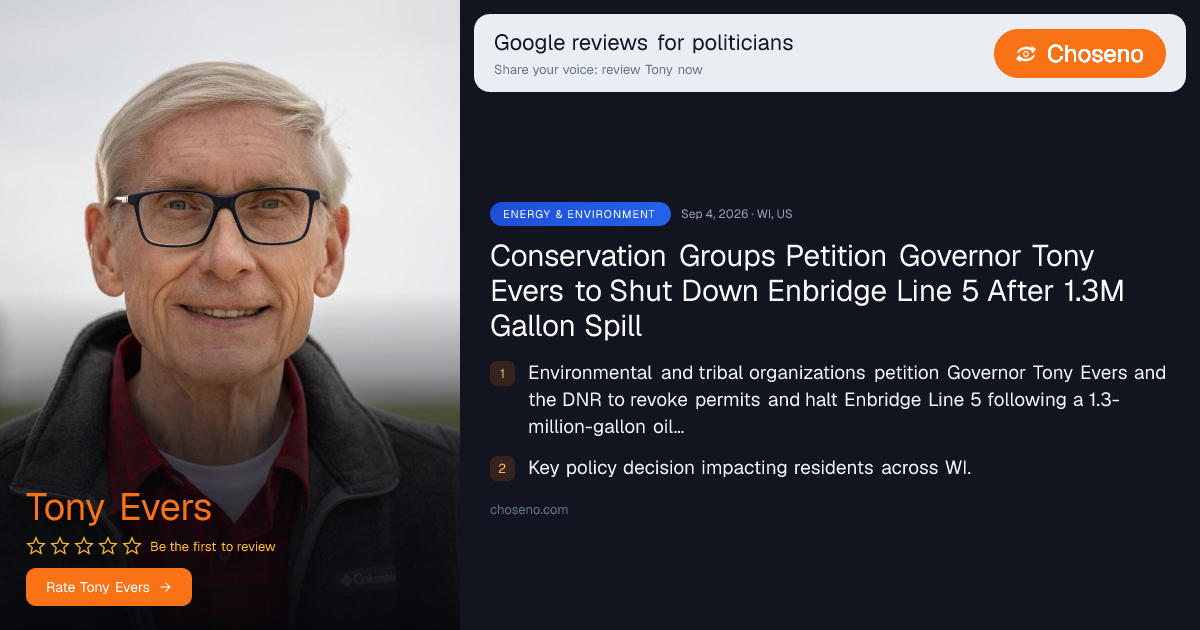
Conservation Groups Petition Governor Tony Evers to Shut Down Enbridge Line 5 After 1.3M Gallon Spill
Environmental and tribal organizations petition Governor Tony Evers and the DNR to revoke permits and halt Enbridge Line 5 following a 1.3-million-gallon oil spill in Saxon and disputes over site access.
Read full article