BREAKING
Ontario Deploys $150 Million to Clear Encampments and Construct Supportive Housing in 10 Cities
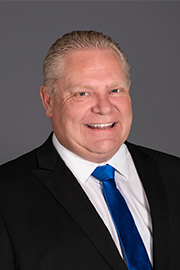
Premier Doug Ford and Minister of Municipal Affairs Paul Calandra allocate $150 million under the Unsheltered Homelessness and Encampments Initiative (UHEI), funding 1,200 modular transitional supportive beds.
Choseno Ontario Municipal Housing & Social Policy Bureau August 24, 2026 3 min read ON, CA
★ Choseno Civic Briefing
Key Leaders
TORONTO, ON — Taking aggressive provincial action to resolve public park encampments and provide permanent clinical pathways off the street, Ontario Premier Doug Ford and Minister of Municipal Affairs and Housing Paul Calandra announced the deployment of $150 million on Monday through the Unsheltered Homelessness and Encampments Initiative (UHEI), delivering targeted capital and operational grants to 10 designated municipal service managers across Ontario.
The provincial funding initiative finances the rapid construction and operation of 1,200 modular supportive housing units, transitional tiny home communities, and 24/7 indoor navigation centers. The initiative provides dedicated multi-disciplinary outreach teams pairing municipal police and outreach workers with psychiatric nurses and addictions specialists to systematically transition individuals living in unsheltered public park encampments into safe, private indoor transitional housing equipped with on-site mental healthcare and substance abuse treatment.
Targeted Municipal Capital and Clinical Allocations
The $150 million provincial investment is allocated across 10 high-need urban centers experiencing significant encampment pressures:
- City of Toronto ($55 Million): Constructing four modular supportive housing sites totaling 450 units and expanding mobile crisis intervention outreach teams.
- Region of Peel ($22 Million): Building a 180-unit transitional navigation center in Brampton with specialized addiction detox beds.
- City of Hamilton ($18 Million): Expanding tiny home village infrastructure and funding 150 supportive rental vouchers.
- City of Ottawa ($16 Million): Converting municipal property into a 120-bed indoor transitional shelter hub.
- Regional Municipalities ($39 Million): Allocating targeted supportive housing grants across London, Windsor, Waterloo Region, Niagara Region, Sudbury, and Thunder Bay.
Under provincial funding agreements, recipient municipalities must enforce municipal public space bylaws prohibiting tent encampments in public parks, school zones, and transit shelters once indoor supportive beds are made available.
"Public parks and playgrounds belong to families and children, not tent encampments," Premier Ford stated during the announcement. "At the same time, we cannot simply tell vulnerable people to move along without giving them a safe place to go. This $150 million investment delivers real roofs over people's heads, round-the-clock mental health and addictions support, and a compassionate pathway to permanent stability."
Ontario Big City Mayors and Healthcare Coalitions React
The Ontario Big City Mayors (OBCM) caucus strongly welcomed the provincial funding injection, noting that municipal property tax bases could no longer sustain the mounting healthcare and policing costs associated with chronic encampments.
"Our cities have been on the front lines of a national humanitarian crisis involving severe mental illness, toxic drugs, and homelessness," said Marianne Meed Ward, Mayor of Burlington and Chair of OBCM. "This substantial provincial funding provides the specialized clinical housing infrastructure our municipalities urgently need to help vulnerable individuals heal while restoring safety and access to public parks."
Housing and poverty advocacy groups emphasized that ongoing operational funding for mental health caseworkers must be permanently embedded in multi-year provincial budgets to ensure long-term housing retention.
Site Construction and Tenant Move-In Schedule
Factory modular assembly and municipal site grading across all 10 designated cities will commence in October 2026. The first transitional supportive housing complexes will open their doors for resident intakes in January 2027.
Rate the people mentioned in this article


Related Coverage in Housing
See all Housing newsHousing Breaking
US Aug 24, 2026
Governor Gavin Newsom Awards $239 Million to Fast-Track 1,700 Affordable Rental Homes Across California
California Department of Housing and Community Development deploys $239 million under the Multifamily Housing Program, financing 20 transit-oriented developments in Los Angeles, Oakland, and Fresno.
Read full article

Housing
US Aug 24, 2026
HUD Awards $320 Million to Eliminate Youth Homelessness and Provide Supportive Rental Housing
HUD announces $320 million in Youth Homelessness Demonstration Program (YHDP) grants across 45 communities, funding rapid re-housing, host homes, and mental health counseling for 18,000 young adults.
Read full article
Housing
CA Aug 24, 2026
Mayor Olivia Chow and Federal Housing Ministers Announce $140 Million Infill Rental Acceleration
Toronto City Council and federal infrastructure agencies deploy $140 million in housing accelerator funds to fast-track 2,200 non-profit and co-op rental apartments on municipal lands.
Read full article