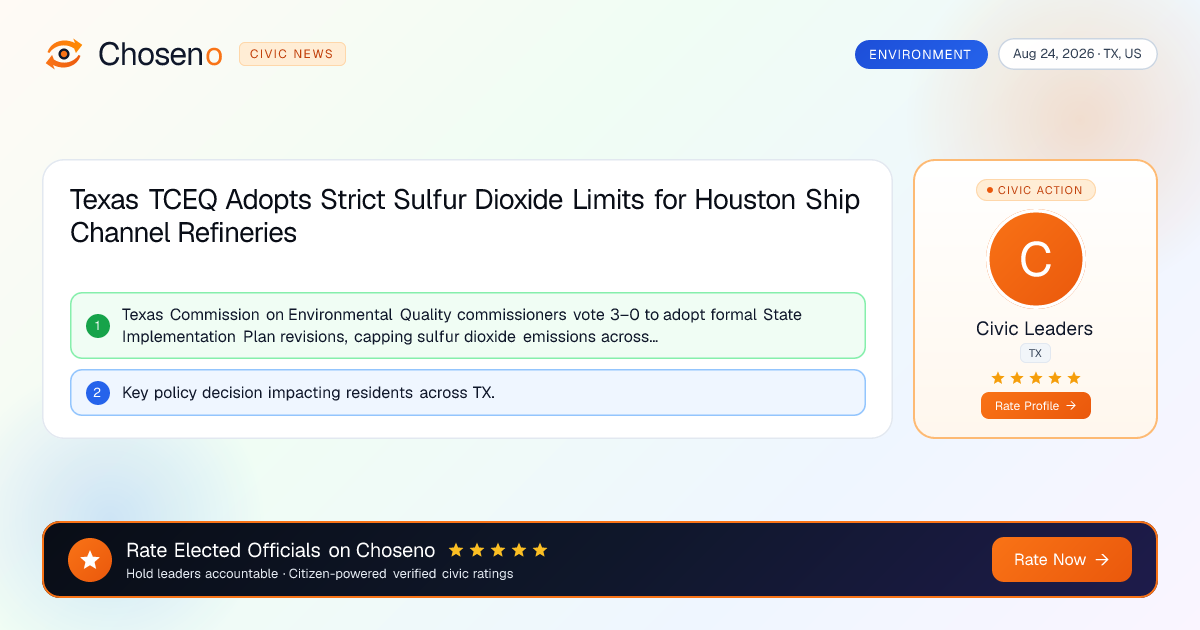
Ontario Ministry of Natural Resources Allocates $25 Million to Halt Spread of Aquatic Invasive Species
Ontario allocates $25 million in environmental grants to install automated boat-washing stations and deploy acoustic deterrent barriers protecting the Great Lakes from invasive carp and mussels.
Choseno Freshwater Ecology & Great Lakes Bureau August 24, 2026 1 min read ON, CA
★ Choseno Civic Briefing
Key Leaders
PETERBOROUGH, ON — The Ontario Ministry of Natural Resources announced a $25 million investment under the Ontario Invasive Species Action Plan, deploying targeted funding to protect provincial waterways, cottage country lakes, and the Great Lakes basin from destructive aquatic invasive species.
Defending Freshwater Biodiversity and Multi-Billion Recreational Fisheries
The funding packages provide direct grants to conservation authorities and municipal marina operators to install 120 free automated high-pressure boat decontamination wash stations along the Trent-Severn Waterway, Lake Simcoe, and Georgian Bay. The initiative also funds acoustic and underwater bubble barriers to prevent grass carp and hydrilla from entering St. Lawrence River and Lake Ontario spawning estuaries, safeguarding Ontario's $2.2 billion commercial and sport fishing industry.
Natural Resources Minister Mike Harris stated that preventing invasive species from establishing footholds protects pristine freshwater ecosystems and safeguards regional tourism economies.
Ontario Federation of Anglers and Hunters Support
The Ontario Federation of Anglers and Hunters (OFAH) praised the free boat wash stations for empowering recreational boaters to practice responsible biosecurity.
Conservation authorities established rapid-response environmental DNA (eDNA) surveillance teams to detect invasive species at microscopic levels.
Equipment Deployment Schedule
Automated boat wash units will begin installation at municipal public boat launches in spring 2027 ahead of the Victoria Day boating season.
Rate the people mentioned in this article
Related Coverage in Environment
See all Environment newsEnvironment
US Aug 24, 2026
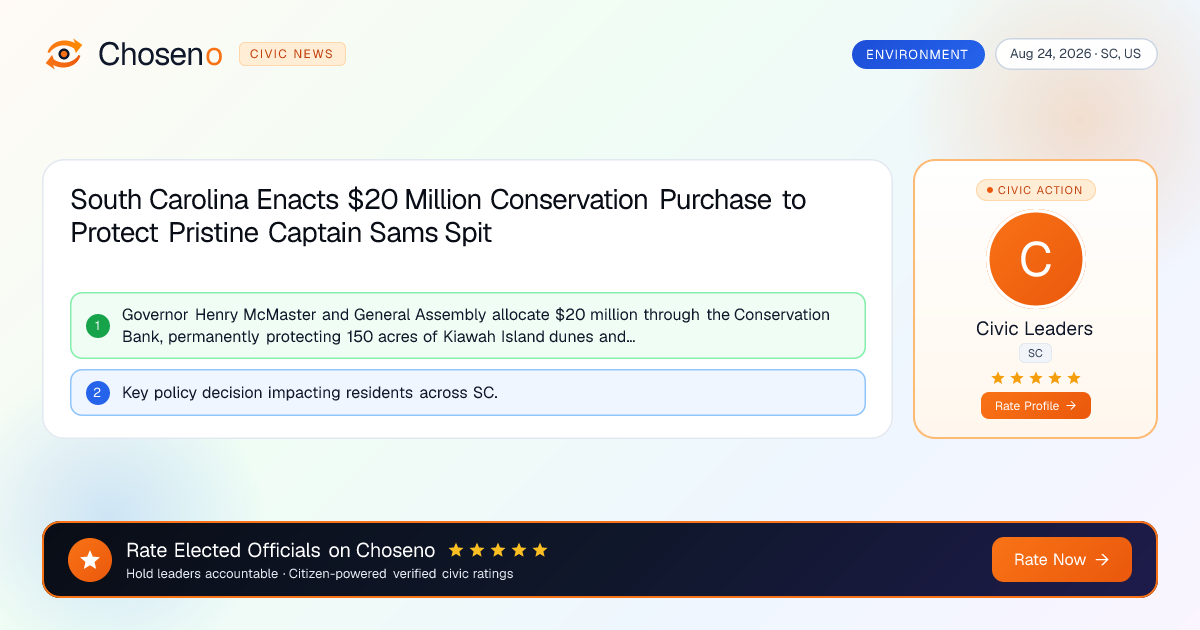
South Carolina Enacts $20 Million Conservation Purchase to Protect Pristine Captain Sams Spit
Governor Henry McMaster and General Assembly allocate $20 million through the Conservation Bank, permanently protecting 150 acres of Kiawah Island dunes and sea turtle nesting grounds.
Read full article
Environment
US Aug 24, 2026
Mississippi MDEQ Allocates $30 Million to Restore 1,500 Acres of Commercial Oyster Reefs
Mississippi Department of Environmental Quality deploys $30 million from coastal restoration trust funds to plant 200,000 cubic yards of cultch material across Mississippi Sound oyster reefs.
Read full article
Environment
US Aug 24, 2026
Texas TCEQ Adopts Strict Sulfur Dioxide Limits for Houston Ship Channel Refineries
Texas Commission on Environmental Quality commissioners vote 3–0 to adopt formal State Implementation Plan revisions, capping sulfur dioxide emissions across 12 industrial petrochemical complexes.
Read full article