Pennsylvania Gubernatorial Candidates Josh Shapiro and Stacy Garrity Offer Contrasting Visions on Civil Rights Protections
Choseno Civic News Desk September 7, 2026 3 min read
★ Choseno Civic Briefing
HARRISBURG — As Pennsylvania voters prepare for the November 2026 gubernatorial election, the policy records and public platforms of incumbent Democratic Governor Josh Shapiro and Republican nominee State Treasurer Stacy Garrity present a stark contrast on state civil rights protections and non-discrimination legislation. While both campaigns have anchored their core public messaging to economic growth, energy development, and state fiscal stewardship, their differing approaches to statutory protections for LGBTQ+ residents highlight fundamental disagreements over the scope of state regulatory authority.
At the center of the legislative debate is the long-standing Pennsylvania Fairness Act, a measure designed to formally amend the Pennsylvania Human Relations Act to explicitly prohibit discrimination on the basis of sexual orientation and gender identity in housing, employment, and commercial public accommodations. Although versions of the legislation have repeatedly passed the Democratic-controlled state House of Representatives, the proposal has encountered persistent procedural resistance in the Republican-controlled state Senate, making the executive office pivotal in determining the future direction of statewide non-discrimination policy.
Governor Shapiro has made the codification of comprehensive non-discrimination protections a consistent legislative priority throughout his tenure in the governor’s residence. Drawing upon his prior administrative service as state attorney general, county commissioner, and state representative, the governor has repeatedly pressed the General Assembly to pass the Fairness Act into law. In the absence of statutory codification, the Shapiro administration has utilized executive rulemaking and guidance through the Pennsylvania Human Relations Commission to interpret existing sex discrimination prohibitions as encompassing gender identity and sexual orientation, defending these regulatory interpretations against legal challenges in state appellate courts.
In contrast, State Treasurer Stacy Garrity has maintained a distinct approach that prioritizes fiscal conservatism and limited government intervention. On campaign questionnaires and in public policy inquiries regarding civil rights statutes, the Republican nominee has largely declined to endorse statutory expansions or discuss speculative legislative scenarios. Garrity’s campaign advisers emphasize that her gubernatorial candidacy is focused on pocketbook concerns, government transparency, and reducing burdensome regulatory mandates for Commonwealth businesses. Her past political positions have aligned with conservative legal viewpoints that emphasize robust protections for religious liberties and conscience exemptions for private business owners and service providers.
The contrasting perspectives reflect broader philosophical divisions between the two major parties ahead of the general election contest. Advocacy groups supporting non-discrimination statutes argue that statutory codification is essential to ensure uniform legal protections across all sixty-seven counties, particularly in rural and municipal jurisdictions that lack local non-discrimination ordinances. Conversely, conservative policy organizations maintain that existing statutory frameworks provide adequate safeguards and caution that expanding state mandates could infringe upon traditional religious freedoms and complicate employment compliance for small enterprise owners.
As the campaign enters its decisive autumn phase, political strategists note that the debate over civil rights protections will play a notable role in shaping turnout among suburban voters across the decisive Philadelphia collar counties, the Lehigh Valley, and Allegheny County. Governor Shapiro continues to frame statutory equality as both a moral imperative and an economic necessity for attracting corporate investment and young professional talent to Pennsylvania. Meanwhile, Treasurer Garrity seeks to build a winning coalition by focusing voter attention on inflation, tax reform, and state budget oversight, presenting voters with fundamentally competing blueprints for the Commonwealth’s executive governance.
Rate the people mentioned in this article

Related Coverage in General
See all General newsGeneral
US Sep 25, 2026
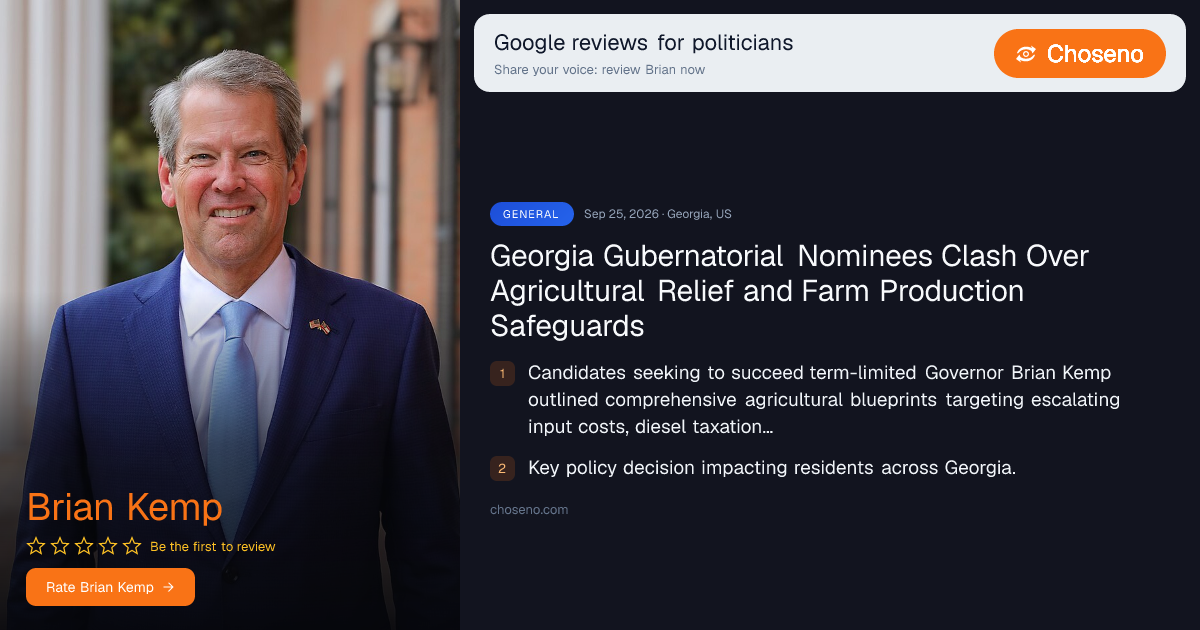
Georgia Gubernatorial Nominees Clash Over Agricultural Relief and Farm Production Safeguards
Candidates seeking to succeed term-limited Governor Brian Kemp outlined comprehensive agricultural blueprints targeting escalating input costs, diesel taxation relief, water allocations, and family farm preservation.
Read full article
General
US Sep 25, 2026
Oregon Gubernatorial Candidates Kotek and Drazan Present Contrasting Economic Platforms in Rematch Forum
Oregon Governor Tina Kotek and Republican challenger Christine Drazan outlined starkly different economic blueprints regarding commercial regulations, tax structures, and industrial competitiveness at a Portland business forum.
Read full article
General
US Sep 25, 2026
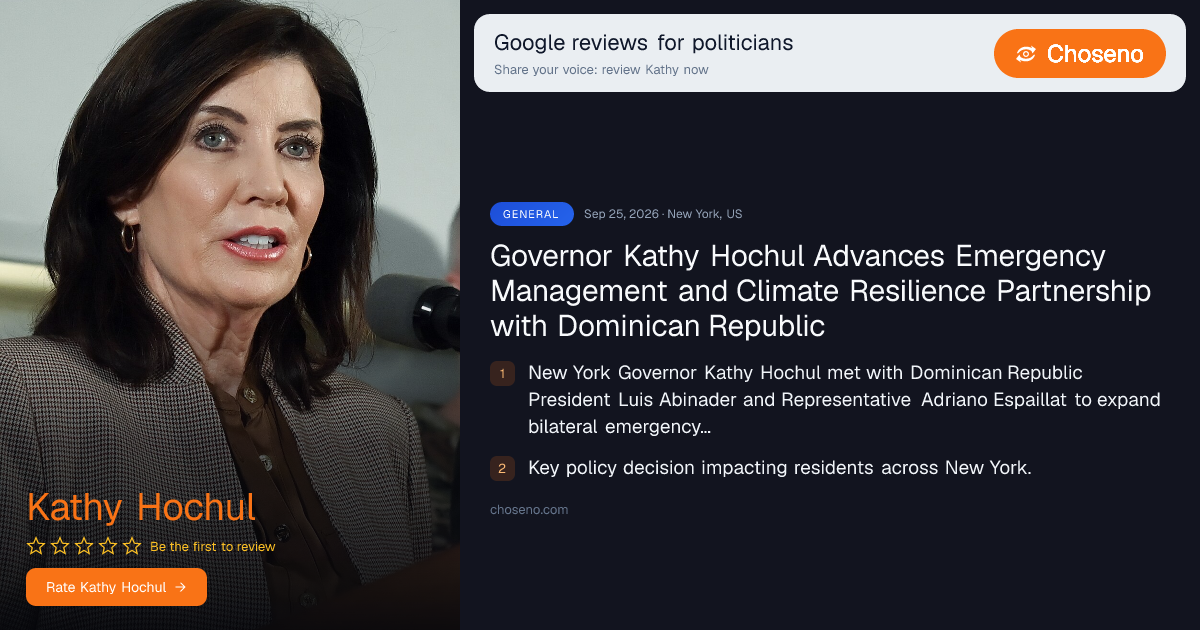
Governor Kathy Hochul Advances Emergency Management and Climate Resilience Partnership with Dominican Republic
New York Governor Kathy Hochul met with Dominican Republic President Luis Abinader and Representative Adriano Espaillat to expand bilateral emergency management cooperation, training exchanges, and environmental resilience.
Read full article