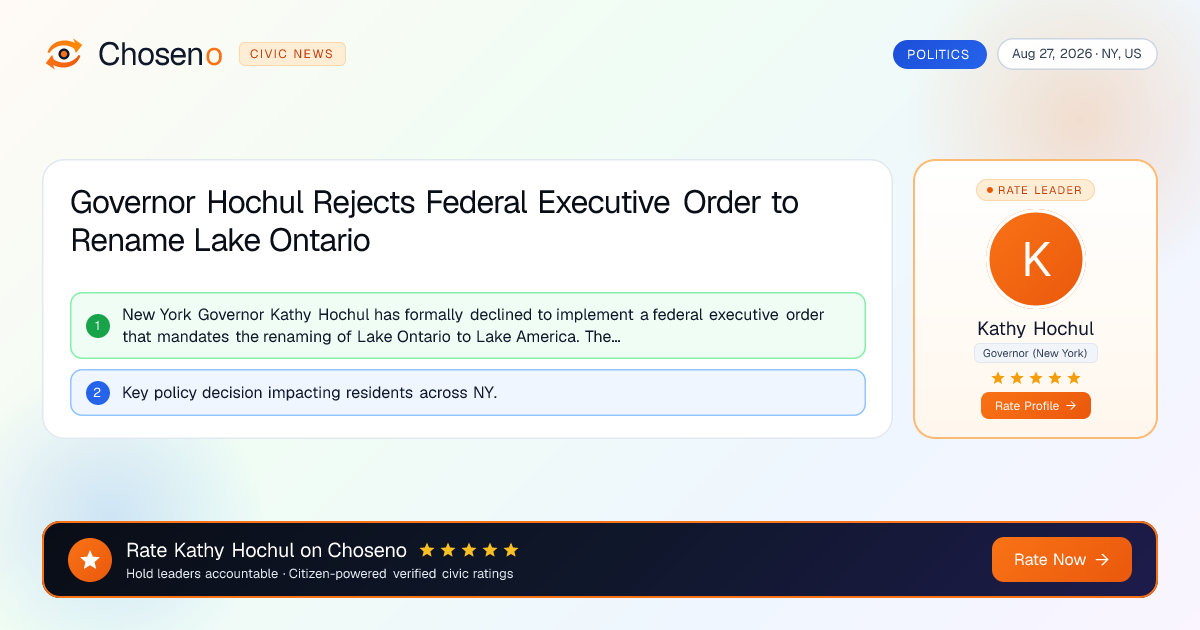
Pennsylvania Gubernatorial Candidates Trade Attacks Over Data Center Development
Pennsylvania's gubernatorial candidates are utilizing attack advertisements to link one another to data center development interests. This political maneuvering occurs as incumbent Governor Josh Shapiro maintains a significant polling lead over challenger Stacy Garrity.
Choseno Civic News Desk August 27, 2026 2 min read PA, US
Dateline: Harrisburg, PA
As the Pennsylvania gubernatorial race intensifies, both Democratic incumbent Governor Josh Shapiro and Republican challenger Treasurer Stacy Garrity have launched campaign advertisements accusing the other of being too closely aligned with data center developers.
Policy & Taxpayer Impact
The central point of contention involves the expansion of data center infrastructure within the state. While the specific fiscal implications for taxpayers remain a subject of campaign rhetoric, the debate highlights the tension between industrial development, energy consumption, and land use policies that directly affect state economic planning.
Political & Legal Stakes
According to reporting by The Hill Politics, the political environment is currently defined by a significant polling gap. A recent survey conducted by The New York Times, The Philadelphia Inquirer, and Siena College indicates that Treasurer Garrity is trailing Governor Shapiro by 15 percentage points. The use of data center development as a wedge issue appears to be a strategic attempt by both campaigns to define their opponent's policy priorities to the electorate.
The Debate
Proponents of data center development often argue that such facilities serve as critical infrastructure for the modern digital economy, potentially bringing tax revenue and high-tech jobs to the region. Conversely, critics and opposition voices frequently raise concerns regarding the high energy demands of these facilities, their impact on local power grids, and the potential for environmental or community disruption. Both candidates are currently framing their opponent's perceived support for these projects as a liability to the state.
Public Accountability Context
As the election approaches, voters are tasked with evaluating these claims against the candidates' actual policy records. The focus on data centers underscores the increasing importance of energy and infrastructure policy in state-level executive races, as Pennsylvania continues to navigate the balance between industrial growth and public interest.
Rate the people mentioned in this article
Related Coverage in Politics
See all Politics newsPolitics
US Aug 27, 2026
Trump Visit to Texas Underscores GOP Strategy to Secure Senate Majority
President Trump is traveling to Texas to support Attorney General Ken Paxton’s Senate campaign as Republicans work to defend their legislative majority. This effort reflects growing concerns regarding the potential for a Democratic shift in a traditionally reliable state.
Read full article
Politics
US Aug 27, 2026
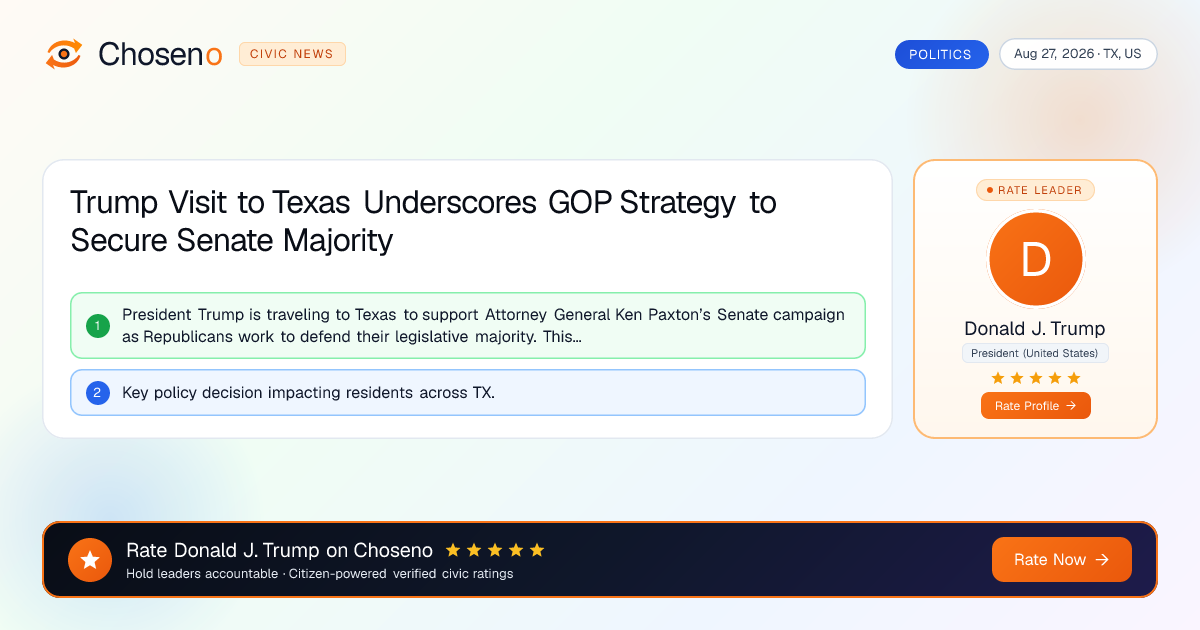
Dozens of U.S. Citizens Missing Following Catastrophic Nepal Flooding
A major flash flood in Nepal has resulted in hundreds of fatalities and thousands of missing persons, including dozens of American citizens. The disaster has caused extensive damage to infrastructure, raising questions regarding international emergency response and consular support for affected U.S. nationals.
Read full article
Politics
US Aug 27, 2026
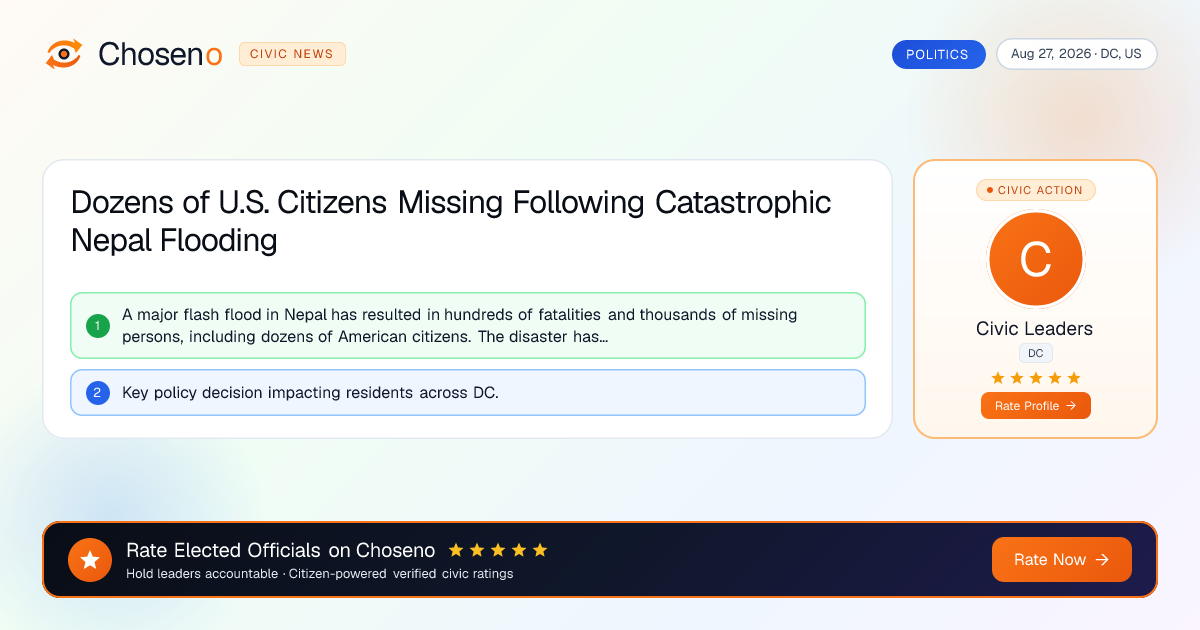
Governor Hochul Rejects Federal Executive Order to Rename Lake Ontario
New York Governor Kathy Hochul has formally declined to implement a federal executive order that mandates the renaming of Lake Ontario to Lake America. The directive, issued by President Trump, stems from escalating trade tensions between the United States and Canada.
Read full article