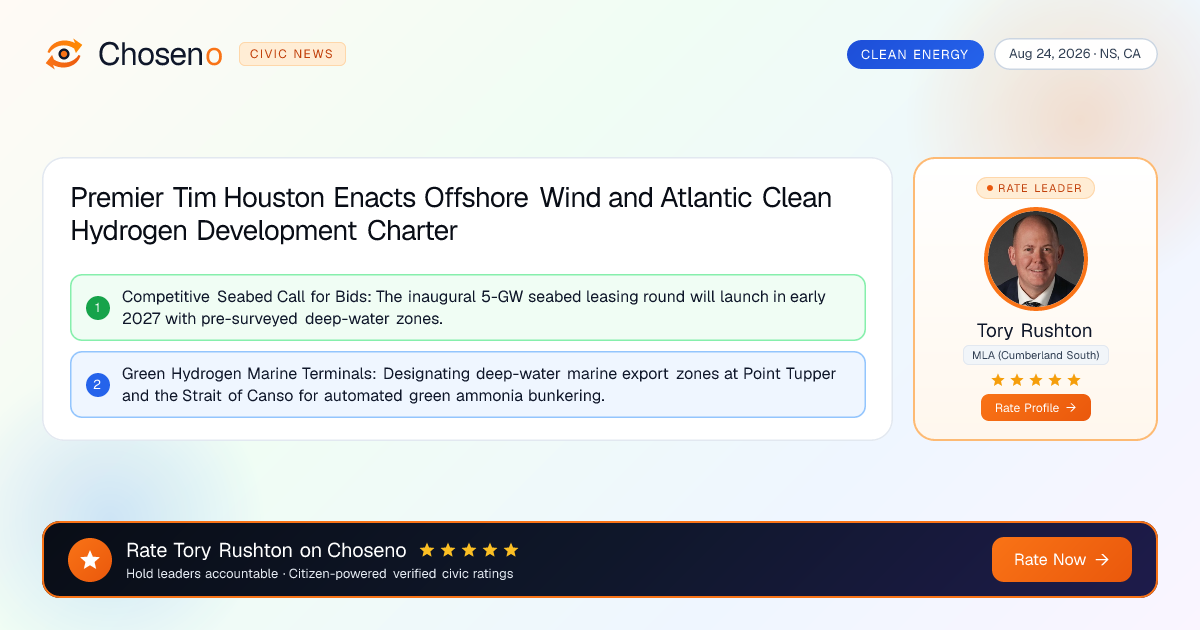
Premier Tim Houston Enacts Offshore Wind and Atlantic Clean Hydrogen Development Charter
Nova Scotia Premier Tim Houston and Energy Minister Tory Rushton pass legislation establishing seabed leasing frameworks and environmental review standards for 5 gigawatts of offshore wind and export-ready green hydrogen production.
Choseno Atlantic Canada Bureau August 24, 2026 2 min read NS, CA
★ Choseno Civic Briefing
Key Leaders
HALIFAX, N.S. — Premier Tim Houston and Minister of Natural Resources and Renewables Tory Rushton announced on Monday the proclamation of the Offshore Renewable Energy Act, establishing Nova Scotia's comprehensive statutory framework for competitive seabed leasing, environmental assessments, and commercial deployment of up to 5 gigawatts of offshore wind generation by 2030.
The landmark statute, developed in coordination with the Canada-Nova Scotia Offshore Petroleum Board (transitioning to the Offshore Energy Regulator), positions Atlantic Canada as a global clean energy export gateway, utilizing offshore wind electricity to produce zero-carbon green hydrogen and ammonia for transatlantic export to European industrial markets.
Unlocking Atlantic Canada's World-Class Offshore Wind Resources The Scotian Shelf possesses some of the world's most consistent offshore wind speeds and shallow water depths, providing ideal conditions for fixed-bottom and floating marine turbine foundations.
"Nova Scotia is positioned to become a green energy powerhouse for North America and the world," Premier Tim Houston said at the Port of Halifax. "Our offshore winds are among the strongest in the world. By putting this clear, robust regulatory system in place, we are unlocking tens of billions in private clean energy capital, creating thousands of skilled union construction careers, and positioning Nova Scotia to export clean green hydrogen directly to European partners while meeting our own clean grid mandates."
Regulatory Leases and Indigenous Benefit Pacts Key pillars of the Offshore Renewable Energy Act include:
- Competitive Seabed Call for Bids: The inaugural 5-GW seabed leasing round will launch in early 2027 with pre-surveyed deep-water zones.
- Mi'kmaq Shared Resource Partnership: Enshrining mandatory Indigenous consultation, equity participation frameworks, and long-term royalty revenue sharing with Mi'kmaq First Nations communities.
- Green Hydrogen Marine Terminals: Designating deep-water marine export zones at Point Tupper and the Strait of Canso for automated green ammonia bunkering.
Energy industry leaders, marine engineering contractors, and European trade delegations welcomed the statutory milestone, highlighting that Nova Scotia's geographic proximity to Europe makes Atlantic Canadian green hydrogen highly competitive.
Rate the people mentioned in this article

Related Coverage in Clean Energy
See all Clean Energy newsClean Energy
CA Aug 24, 2026
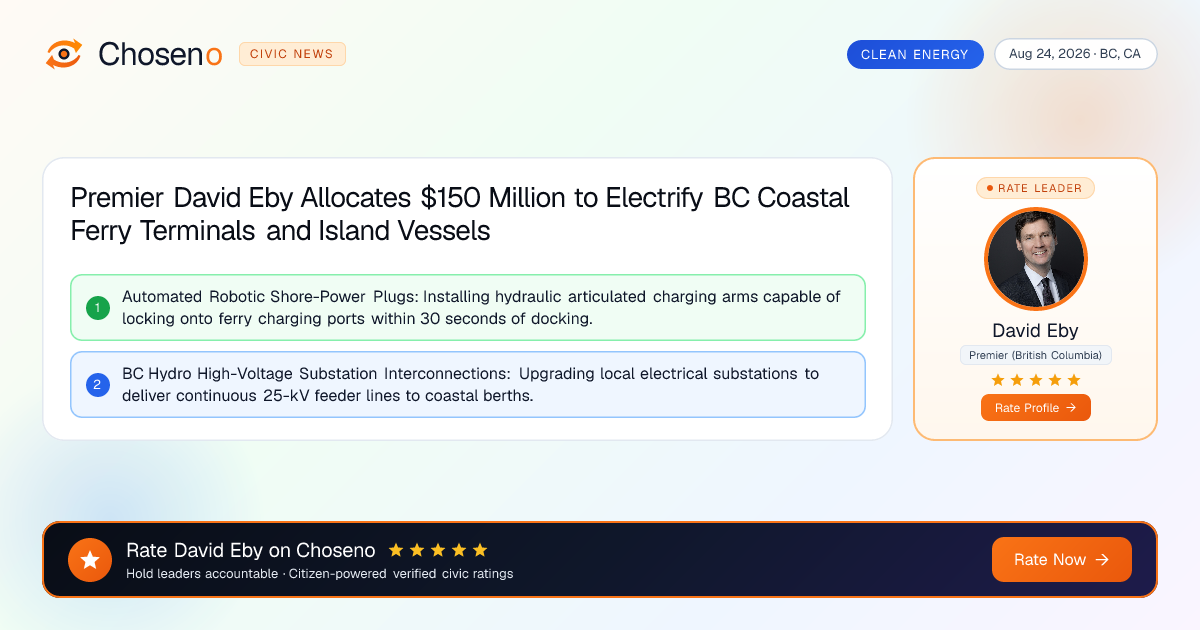
Premier David Eby Allocates $150 Million to Electrify BC Coastal Ferry Terminals and Island Vessels
British Columbia Premier David Eby and Transportation Minister Rob Fleming announce $150 million to install 10-megawatt rapid charging systems at five major BC Ferries terminals, enabling zero-emission hybrid-electric ferry sailings.
Read full article
Clean Energy
CA Aug 24, 2026
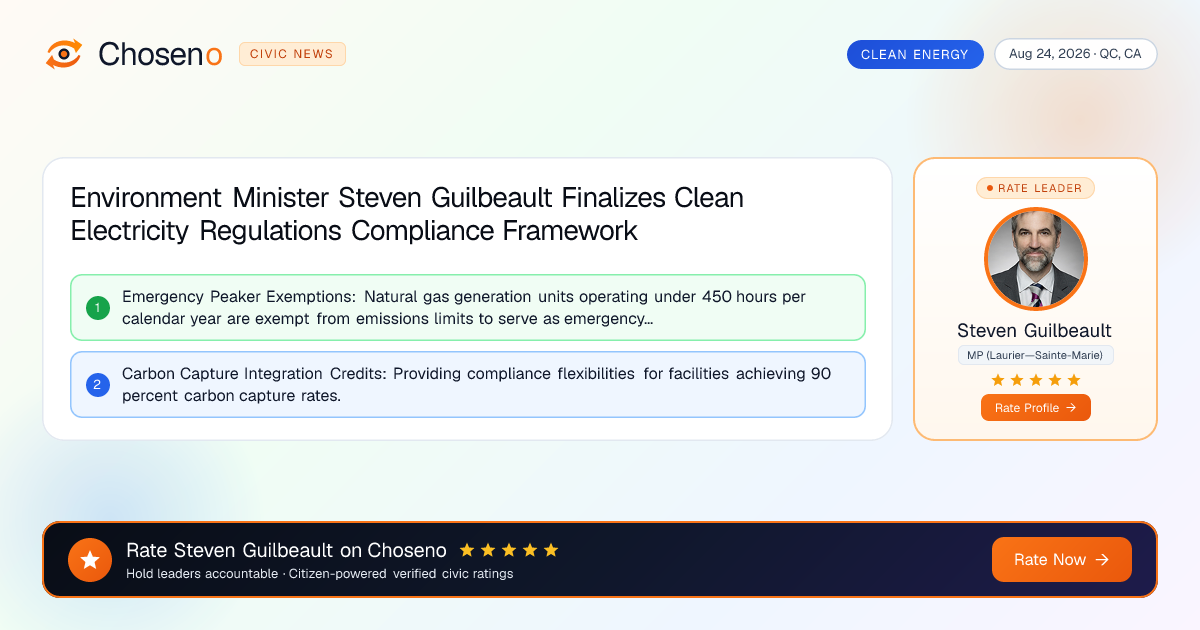
Environment Minister Steven Guilbeault Finalizes Clean Electricity Regulations Compliance Framework
Environment and Climate Change Minister Steven Guilbeault issues finalized Clean Electricity Regulations (CER), establishing emissions-intensity standards for thermal power plants while granting extended reliability flexibilities for provincial grids.
Read full article
Clean Energy
US Aug 24, 2026
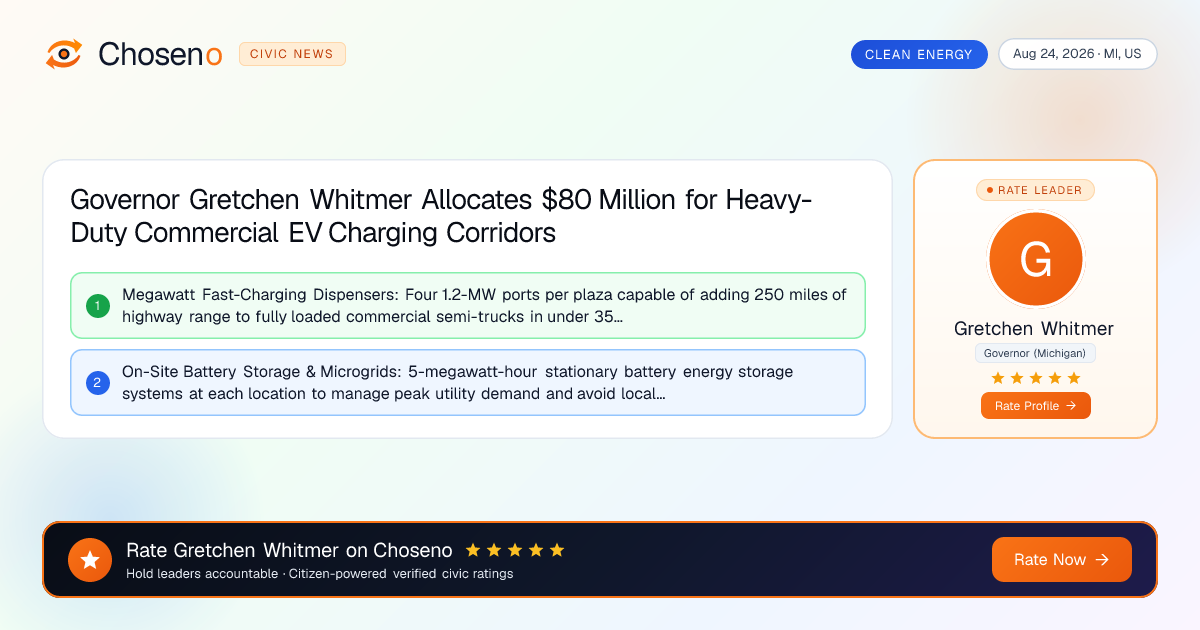
Governor Gretchen Whitmer Allocates $80 Million for Heavy-Duty Commercial EV Charging Corridors
Michigan Governor Gretchen Whitmer announces $80 million in Michigan Mobility Future grants to construct six heavy-duty electric commercial truck charging plazas along Interstate 94 and Interstate 75.
Read full article