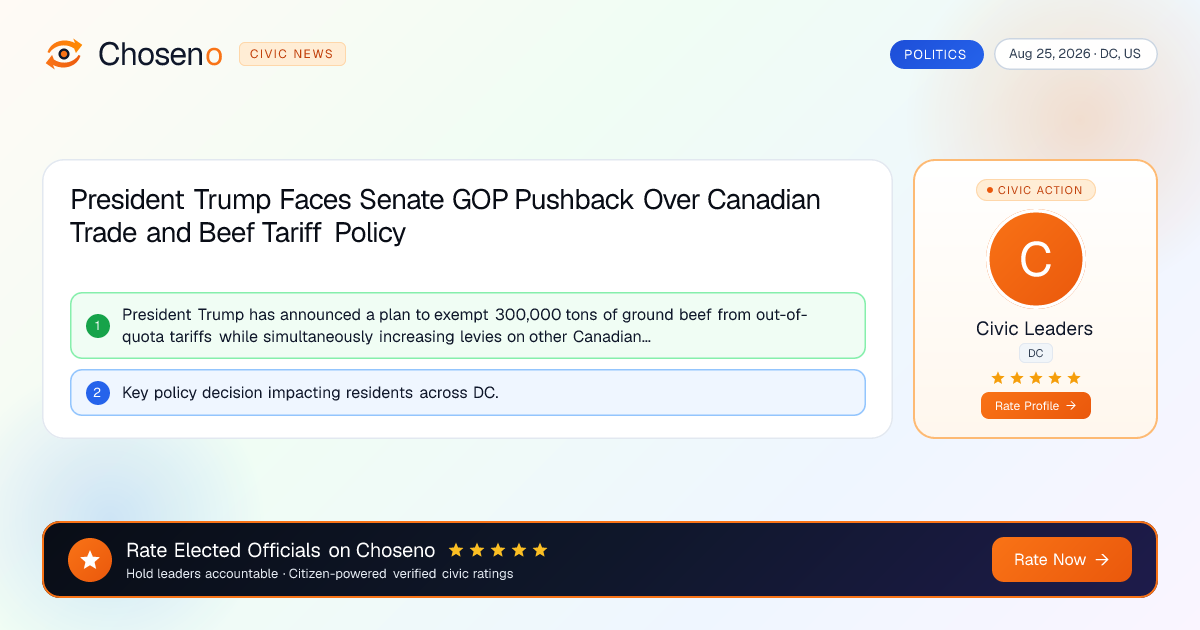
President Trump Faces Senate GOP Pushback Over Canadian Trade and Beef Tariff Policy
President Trump has announced a plan to exempt 300,000 tons of ground beef from out-of-quota tariffs while simultaneously increasing levies on other Canadian goods. This shift in trade policy aims to lower domestic food prices but has triggered significant friction with Republican senators.
Choseno Civic News Desk August 25, 2026 2 min read DC, US
★ Choseno Civic Briefing
Key Leaders
Dateline: Washington, D.C.
President Trump is currently navigating a deepening conflict with members of his own party in the U.S. Senate regarding the administration's latest trade maneuvers. The dispute centers on a bifurcated approach to international commerce that seeks to manage domestic inflation while exerting pressure on Canadian trade partners.
Policy & Taxpayer Impact
The administration has moved to exempt 300,000 tons of ground beef from out-of-quota tariffs. According to reporting by The Hill Politics, this specific policy mechanism is intended to mitigate the financial burden on American consumers currently facing elevated food prices. However, this relief is being paired with a simultaneous increase in tariffs on other key Canadian goods, creating a complex economic landscape for importers and taxpayers alike.
Political & Legal Stakes
The tension highlights a growing divide between the executive branch and Senate Republicans. While the administration views these trade actions as necessary tools for economic leverage and domestic price control, the legislative branch is signaling significant concern over the potential for retaliatory measures and the long-term stability of trade relations with Canada. The disagreement underscores the ongoing struggle to define the party's trade platform.
The Debate: Proponent vs. Critic
Proponents of the administration's strategy argue that the beef tariff exemption is a direct and necessary response to the cost-of-living crisis affecting American households. By prioritizing the affordability of essential food items, the White House maintains it is fulfilling a key campaign promise. Conversely, critics within the Senate GOP argue that the broader tariff increases on Canadian goods risk damaging a vital economic partnership and could lead to trade volatility that ultimately harms American industries reliant on cross-border supply chains.
Public Accountability Context
As this conflict intensifies, citizens are encouraged to monitor how these trade decisions influence local market prices and regional economic health. The administration’s ability to balance these competing trade interests will likely remain a focal point of legislative oversight in the coming weeks. Taxpayers should observe whether the promised relief at the grocery store materializes and how the Senate responds to the administration's continued use of tariff authority.
Related Coverage in Politics
See all Politics newsPolitics
US Aug 25, 2026
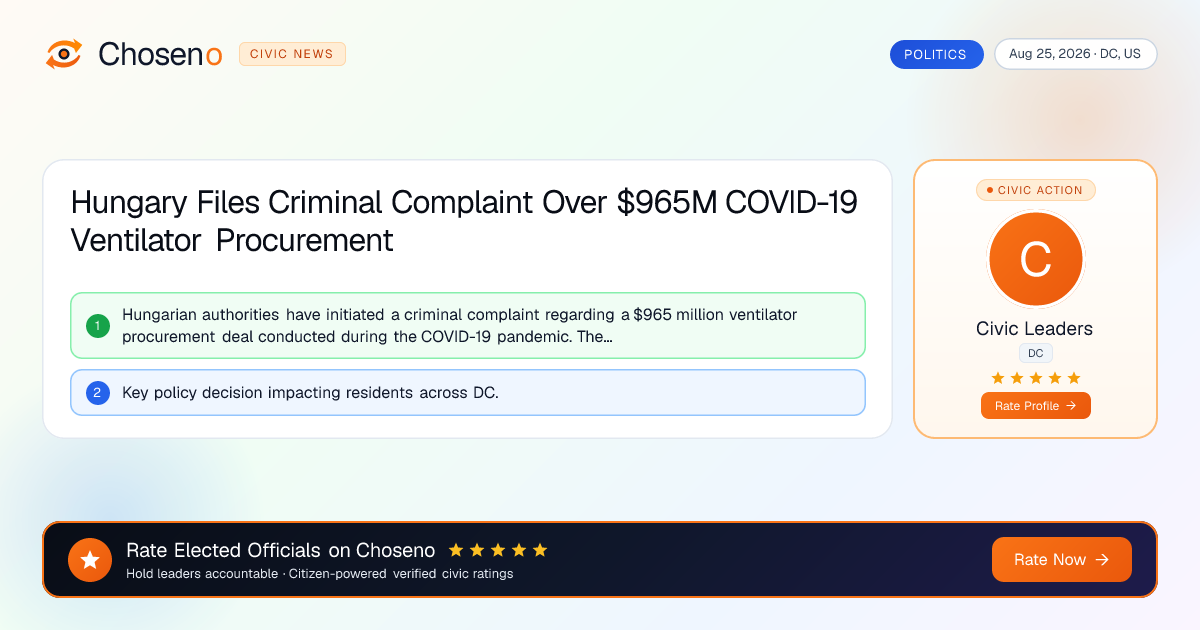
Hungary Files Criminal Complaint Over $965M COVID-19 Ventilator Procurement
Hungarian authorities have initiated a criminal complaint regarding a $965 million ventilator procurement deal conducted during the COVID-19 pandemic. The legal action centers on allegations of potential fraud involving the massive expenditure of public funds.
Read full article
Politics
US Aug 25, 2026
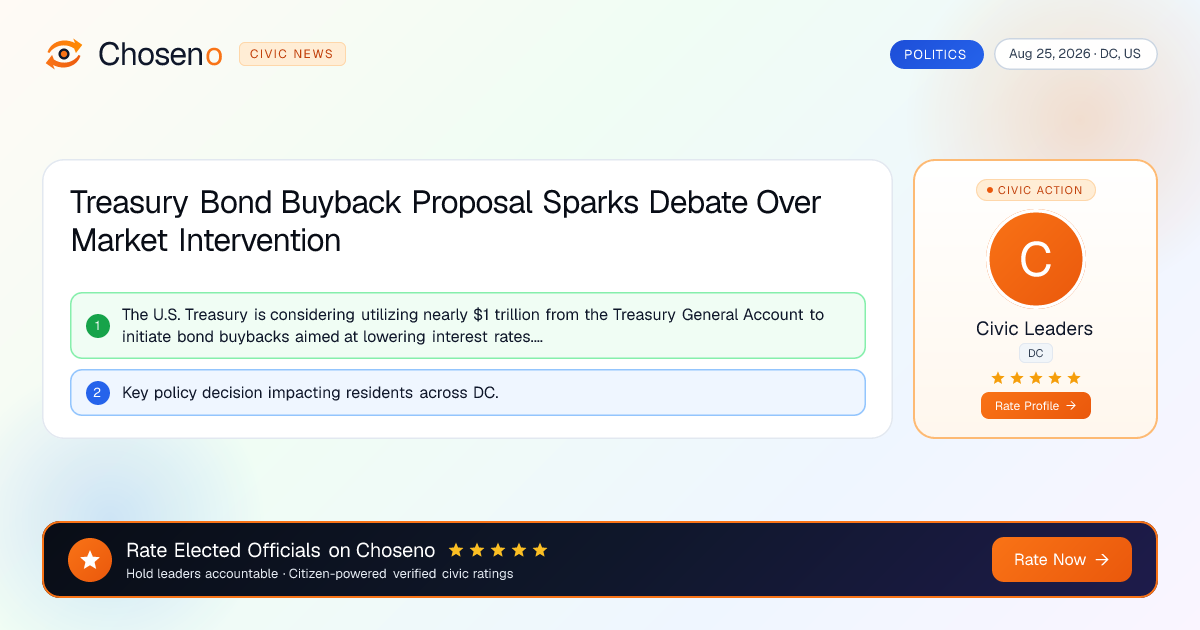
Treasury Bond Buyback Proposal Sparks Debate Over Market Intervention
The U.S. Treasury is considering utilizing nearly $1 trillion from the Treasury General Account to initiate bond buybacks aimed at lowering interest rates. This strategy has drawn sharp criticism from market experts who warn that such interventions may be ineffective.
Read full article
Politics
US Aug 25, 2026
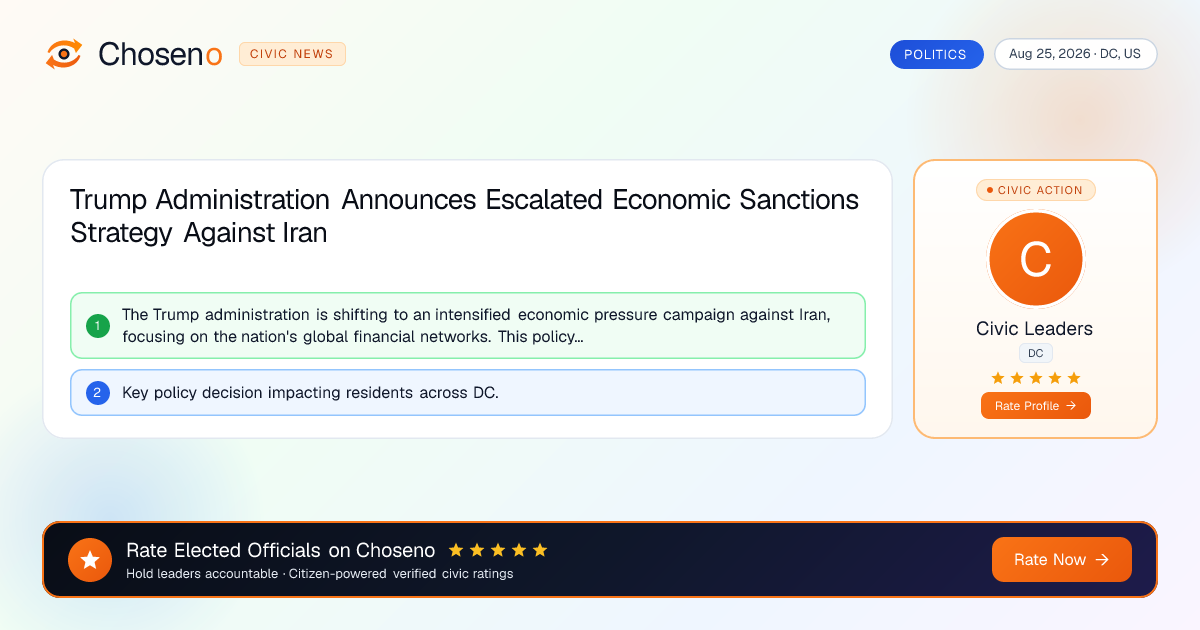
Trump Administration Announces Escalated Economic Sanctions Strategy Against Iran
The Trump administration is shifting to an intensified economic pressure campaign against Iran, focusing on the nation's global financial networks. This policy pivot aims to exert influence as military and diplomatic alternatives have reportedly yielded insufficient results.
Read full article