Proposed Ohio Income Tax Elimination Risks Significant Revenue Shortfalls for Local Governments
A proposal to eliminate the state income tax in Ohio has raised concerns regarding the potential loss of funding for local municipalities and public services. The plan faces scrutiny over how local governments would compensate for the resulting budgetary gaps.
Choseno Civic News Desk August 28, 2026 2 min read OH, US
The ongoing campaign for the Ohio governorship has brought a significant fiscal proposal to the forefront of state policy discussions. A plan to roll back the state income tax, championed by candidate Vivek Ramaswamy, is currently facing intense scrutiny regarding its long-term impact on the financial stability of local jurisdictions across the state.
According to reporting by the Dayton Daily News, the primary concern centers on the potential for substantial revenue shortfalls. While the proposal aims to reduce the tax burden on individual residents, critics and local government advocates are highlighting the interconnected nature of state and local funding streams. The core of the debate rests on whether the state can effectively offset the loss of income tax revenue without forcing local municipalities to either raise other forms of taxation or significantly reduce the scope of public services provided to their constituents.
Local government officials are currently evaluating how such a shift would affect their ability to fund essential infrastructure, public safety, and community programs. Because many local budgets in Ohio rely on a complex mix of state-distributed funds and local levies, any major alteration to the state's primary revenue source creates a ripple effect. Proponents of the tax rollback argue that the move would stimulate economic growth and increase the overall competitiveness of the state, potentially creating new revenue streams in the long run. However, those skeptical of the plan emphasize that the immediate fiscal consequences for cities, townships, and counties could be severe, particularly in areas that are already operating under tight budgetary constraints.
As the gubernatorial race continues, the discussion highlights a fundamental tension in state governance: the balance between reducing the tax burden on citizens and ensuring that local governments have the necessary resources to function. Voters are now tasked with weighing the promise of tax relief against the potential for diminished local services, as the campaign moves toward a more detailed examination of the state's fiscal future.
Related Coverage in Politics
See all Politics newsPolitics
CA Aug 28, 2026
Chloé Boscagli Named Cabinet Adviser to Prince Albert
Prince Albert has officially appointed Chloé Boscagli to serve as a Cabinet adviser. The appointment marks a change in the administrative structure of the Prince's office.
Read full article
Politics
US Aug 28, 2026
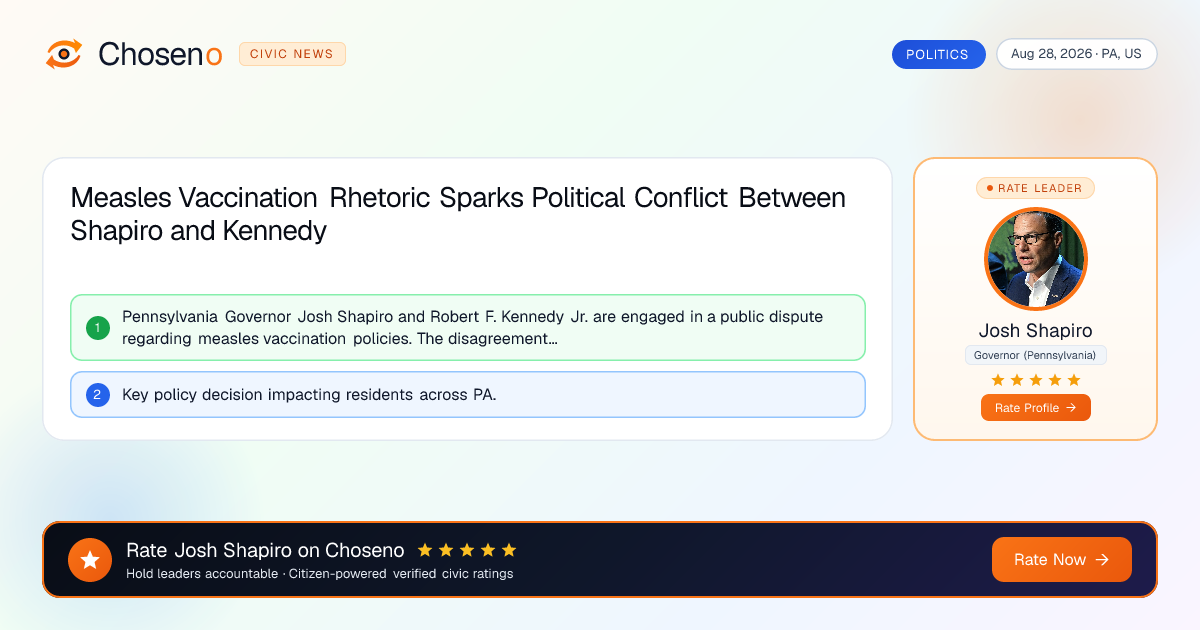
Measles Vaccination Rhetoric Sparks Political Conflict Between Shapiro and Kennedy
Pennsylvania Governor Josh Shapiro and Robert F. Kennedy Jr. are engaged in a public dispute regarding measles vaccination policies. The disagreement highlights broader tensions over public health messaging and political discourse.
Read full article
Politics
US Aug 28, 2026
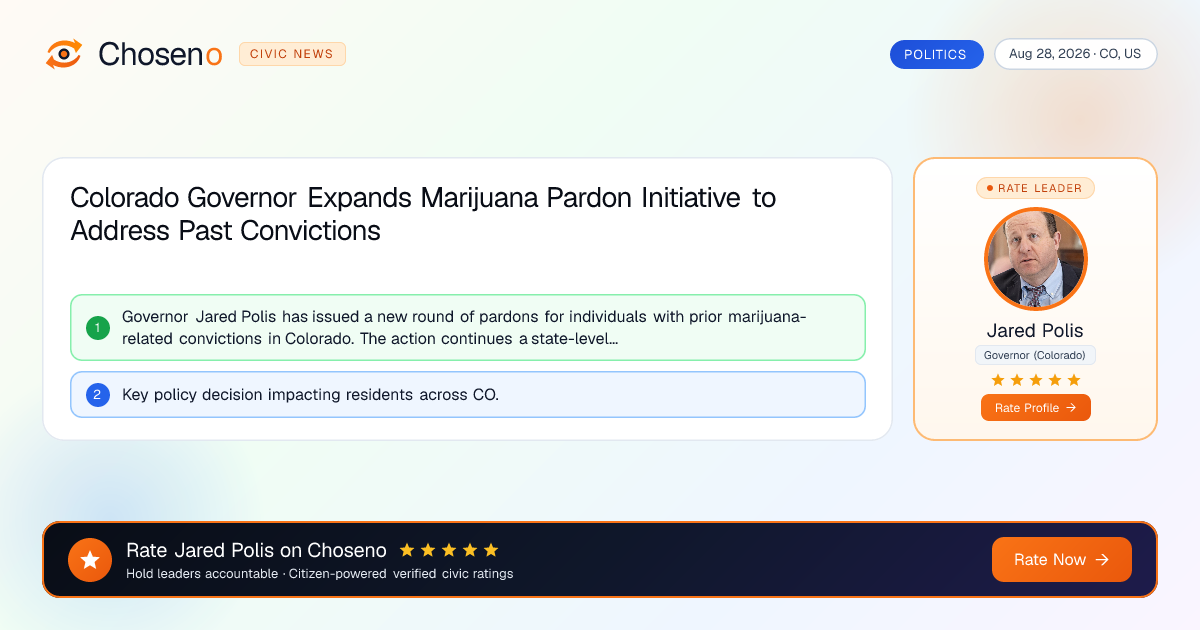
Colorado Governor Expands Marijuana Pardon Initiative to Address Past Convictions
Governor Jared Polis has issued a new round of pardons for individuals with prior marijuana-related convictions in Colorado. The action continues a state-level effort to mitigate the long-term legal consequences of past cannabis possession offenses.
Read full article