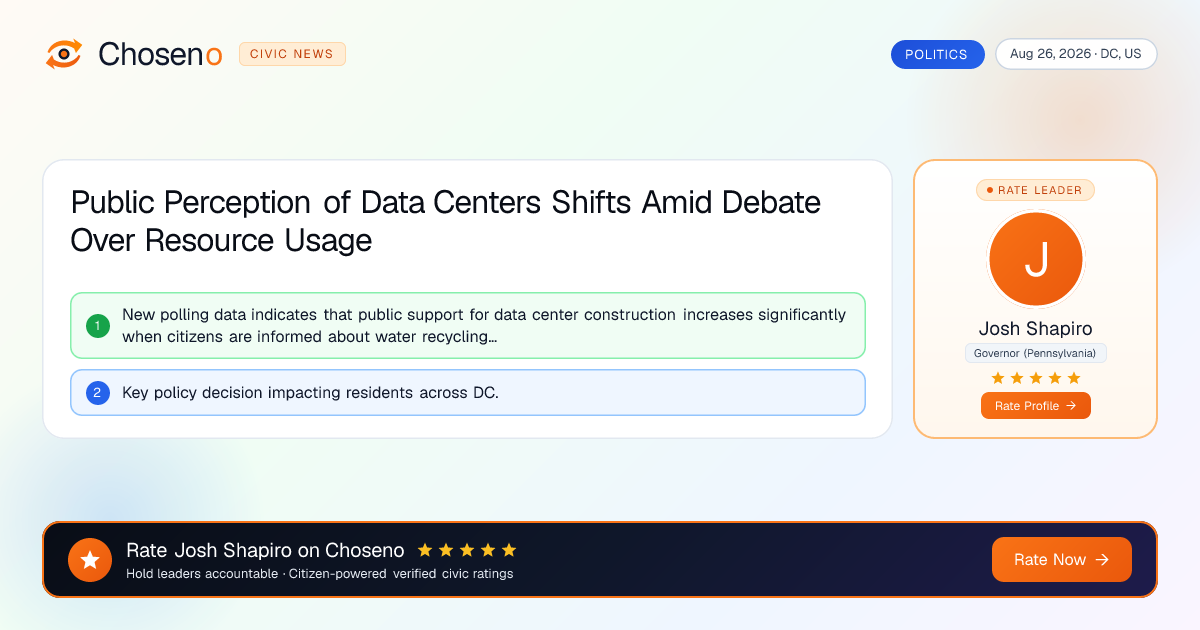
Public Perception of Data Centers Shifts Amid Debate Over Resource Usage
New polling data indicates that public support for data center construction increases significantly when citizens are informed about water recycling capabilities. The infrastructure projects are being positioned as a key component of domestic industrial policy and local tax base revitalization.
Choseno Civic News Desk August 26, 2026 2 min read DC, US
★ Choseno Civic Briefing
Key Leaders
Dateline: Washington, D.C. – August 26, 2026
Recent polling data has brought the national debate over data center construction to the forefront of American infrastructure discussions. As local communities express concerns regarding resource consumption, new findings suggest that public sentiment is highly sensitive to information regarding water usage and recycling technology.
Policy & Taxpayer Impact
Data centers are increasingly viewed by proponents as essential infrastructure for the modern economy. Beyond their role in supporting AI and digital technology, these facilities are cited as a mechanism for local economic development. Proponents argue that the presence of these centers can allow local governments to lower property taxes, providing a tangible financial benefit to residents in the surrounding areas.
Political & Legal Stakes
Federal policy remains a key driver of this issue, with the Trump administration maintaining support for the expansion of data center infrastructure. The debate has become a litmus test for domestic industrial policy, with some observers questioning how the U.S. can successfully bring manufacturing back if it cannot support the construction of large-scale digital infrastructure. Conversely, some state-level officials, such as Pennsylvania Governor Josh Shapiro, have moved to restrict new data center construction, highlighting the regional friction surrounding these projects.
The Debate: Proponent vs. Critic
Proponents of data center expansion argue that concerns regarding water depletion and grid strain are often exaggerated or based on misinformation. They contend that the water used by these facilities is minimal compared to other industries like agriculture and is frequently recycled. Critics, however, remain skeptical. John Daniel Davidson of The Federalist has compared the introduction of data centers to dying towns to the arrival of casinos or race tracks, suggesting that such developments may not provide the long-term stability or community value that proponents claim.
Public Accountability Context
Data from Echelon Insights suggests that within the Republican coalition, support for data centers is highest among those who identify as more conservative and MAGA-aligned. As the discourse continues, the divide remains between those who view data centers as vital for national competitiveness and those who prioritize local environmental and quality-of-life concerns. Citizens are encouraged to monitor local zoning board meetings and state legislative sessions where these infrastructure decisions are finalized.
Rate the people mentioned in this article
Related Coverage in Politics
See all Politics newsPolitics
US Aug 26, 2026
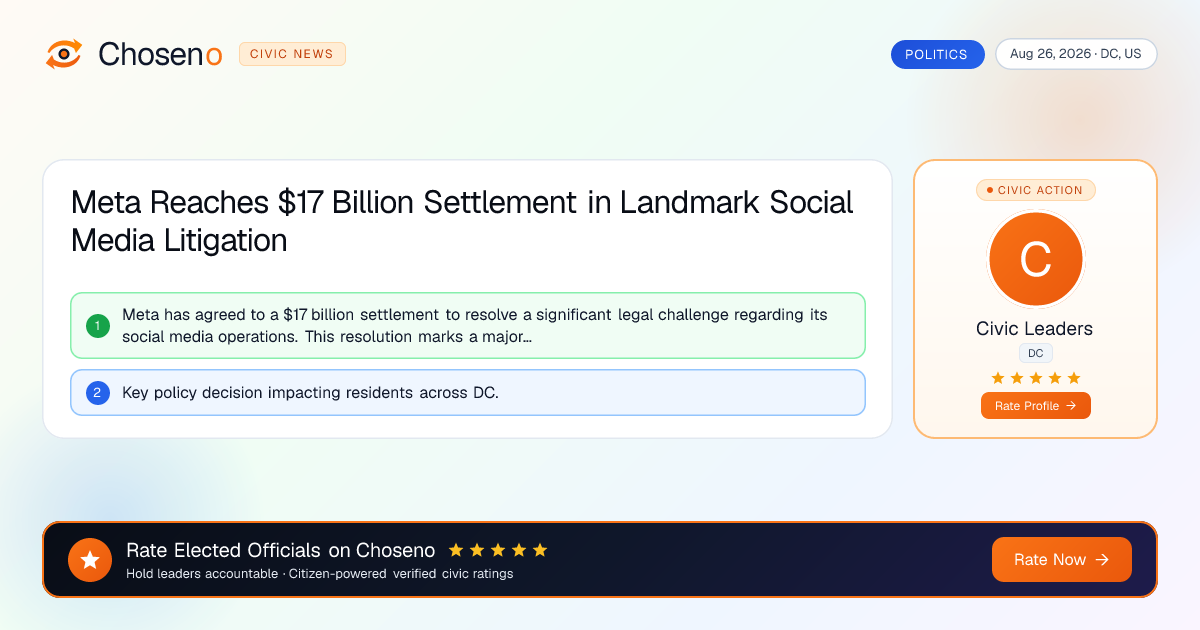
Meta Reaches $17 Billion Settlement in Landmark Social Media Litigation
Meta has agreed to a $17 billion settlement to resolve a significant legal challenge regarding its social media operations. This resolution marks a major financial development in the ongoing regulatory scrutiny of large-scale technology platforms.
Read full article
Politics
US Aug 26, 2026
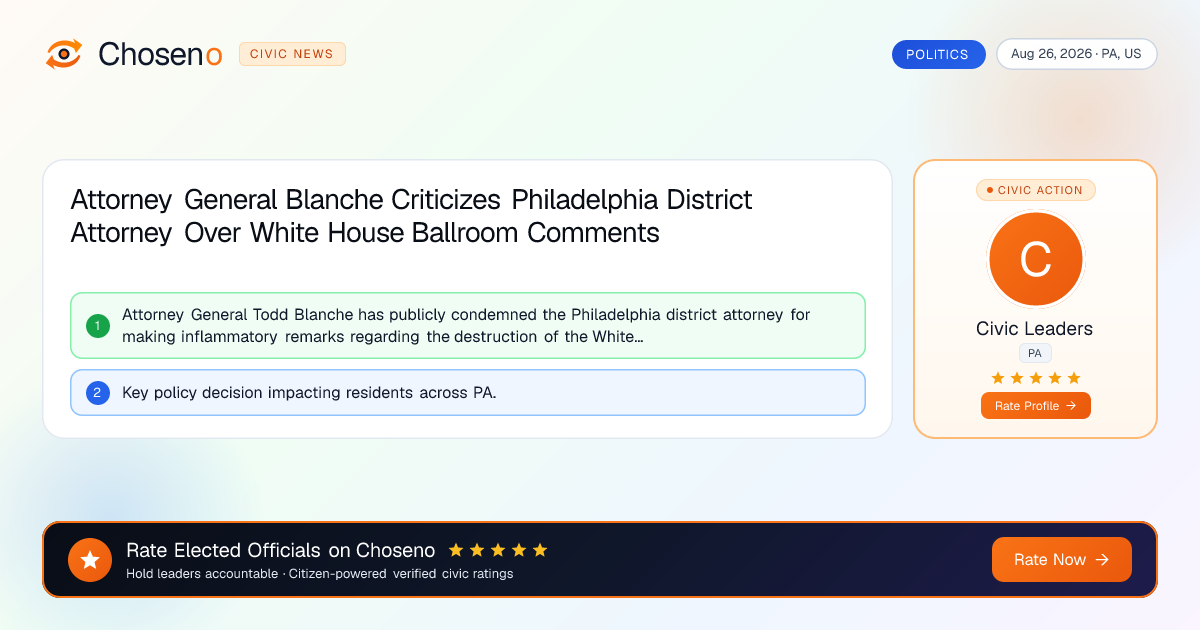
Attorney General Blanche Criticizes Philadelphia District Attorney Over White House Ballroom Comments
Attorney General Todd Blanche has publicly condemned the Philadelphia district attorney for making inflammatory remarks regarding the destruction of the White House ballroom. The exchange highlights rising tensions between federal administration officials and local law enforcement leadership.
Read full article
Politics
US Aug 26, 2026
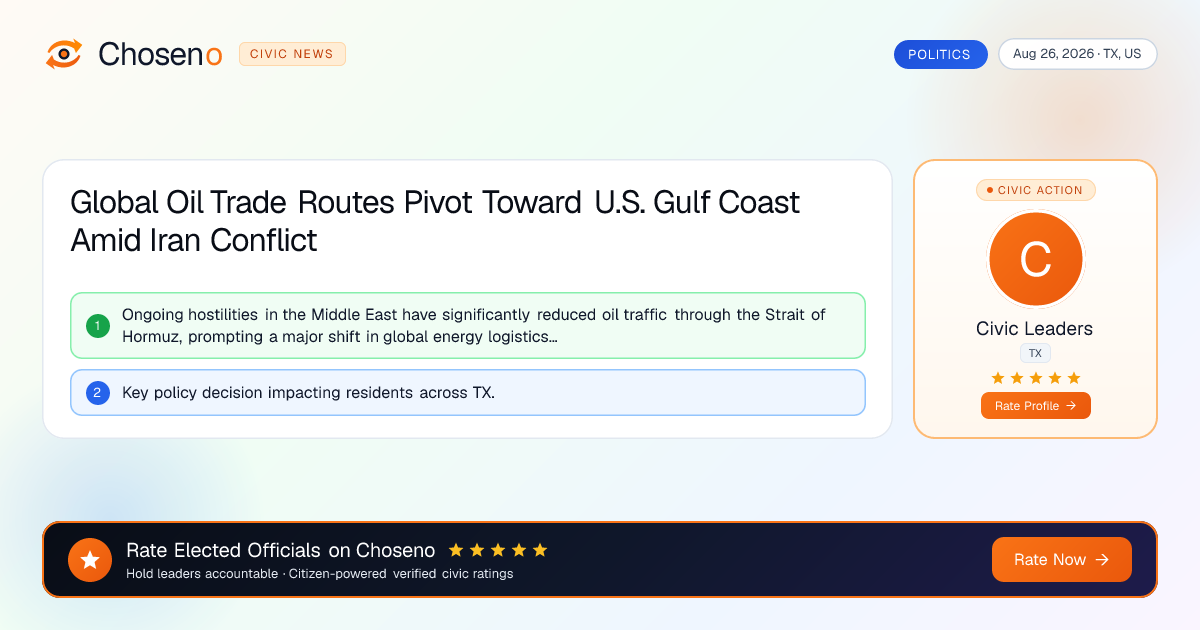
Global Oil Trade Routes Pivot Toward U.S. Gulf Coast Amid Iran Conflict
Ongoing hostilities in the Middle East have significantly reduced oil traffic through the Strait of Hormuz, prompting a major shift in global energy logistics toward U.S. exports. While this transition offers the U.S. increased geopolitical leverage, taxpayers remain exposed to global price volatility inherent in the interconnected oil market.
Read full article