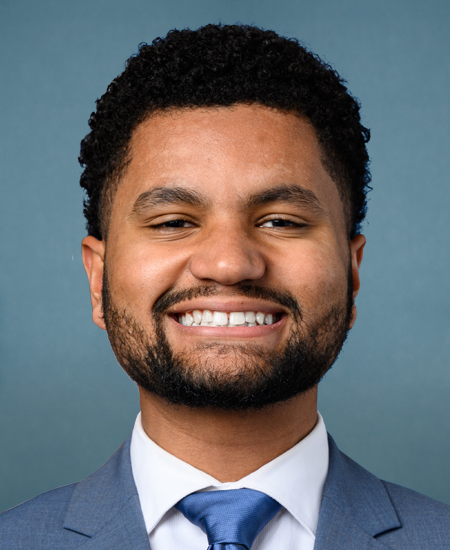
Representative Maxwell Frost Introduces Federal Legislation to Ban Remote Detention Camps for the Unhoused
U.S. Representative Maxwell Frost introduced the No Homeless Detention Centers Act, seeking a federal ban on public funds being used to construct or operate isolated encampments to detain individuals experiencing homelessness.
Choseno Federal Legislative & Civil Rights Bureau September 3, 2026 2 min read FL, US
What do you think of the people in this story? Rate them anonymously — tap a face below.
MIAMI — United States Representative Maxwell Alejandro Frost introduced landmark federal legislation on Thursday aimed at preventing states and municipalities from establishing isolated encampments or remote detention facilities to involuntarily house unhoused populations. Titled the No Homeless Detention Centers Act, the measure establishes statutory prohibitions barring the expenditure of federal funds on detention compounds designed to criminalize or segregate people experiencing street homelessness.
Frost, an Orlando Democrat who previously spearheaded congressional oversight of the controversial state-run 'Alligator Alcatraz' emergency migrant detention compound in South Florida before its recent decommissioning, framed the proposed statute as an essential civil liberties safeguard. Speaking in Miami alongside civil rights advocates, legal scholars, and housing organizers, Frost warned that emerging municipal and state-level ordinances across the country increasingly seek to remove unhoused individuals from public view through involuntary confinement rather than addressing systemic housing shortages.
The legislative proposal directly confronts policy shifts following state statutes, including Florida's House Bill 1365, which enacted strict statewide prohibitions against unauthorized public sleeping and encouraged municipalities to designate centralized, monitored encampments on city outskirts. While proponents of mandatory encampments maintain that centralized facilities enhance neighborhood sanitation and ensure concentrated access to emergency medical services, Frost argued that confining individuals based on housing status establishes dangerous constitutional precedents and disproportionately targets vulnerable veterans, youth, and minority populations.
Under Frost's legislation, federal housing and community development grant programs would be shielded from being diverted into carceral sheltering models. The bill establishes clear statutory criteria distinguishing legitimate, trauma-informed emergency shelters—which offer unrestricted voluntary ingress, on-site wraparound clinical services, and individualized pathways to permanent housing—from involuntary, perimeter-controlled detention camps situated in remote or hazardous industrial zones.
National housing advocacy organizations, including the National Alliance to End Homelessness, endorsed the congressional measure. Housing policy researchers presented empirical data demonstrating that involuntary encampment sweeps and criminalization initiatives fail to reduce chronic homelessness, frequently disrupting medical regimens, scattering social support networks, and inflating municipal court and correctional expenditures without creating a single unit of permanent housing.
Congressional sponsors plan to build a broad bipartisan coalition around the legislation, emphasizing fiscal responsibility and constitutional protections against unlawful seizure. Frost concluded that resolving homelessness requires dedicated federal capital subsidies for permanent supportive housing, expanded mental healthcare infrastructure, and tenant protection vouchers, asserting that incarcerating impoverished citizens in isolated compounds betrays American constitutional principles.