Rhode Island Senate Race Polling Data Emerges as 2026 Election Cycle Intensifies
New polling data for the 2026 Rhode Island U.S. Senate election provides insight into voter sentiment as the campaign cycle progresses. The release of these figures offers citizens a baseline for evaluating candidate viability and potential shifts in federal representation.
Choseno Civic News Desk August 28, 2026 1 min read RI, US
Dateline Lead
PROVIDENCE, RI — As the 2026 election cycle approaches, new polling data regarding the Rhode Island U.S. Senate race has been released by The New York Times. This data serves as a primary indicator of voter preference and candidate standing within the state.
Policy & Taxpayer Impact
While polling data does not directly alter current tax rates or government spending, it informs the public on the potential direction of federal policy. The outcome of this Senate election will determine which representatives influence future federal budget allocations and legislative priorities that directly affect Rhode Island taxpayers.
Political & Legal Stakes
The stakes of this election involve the balance of power within the U.S. Senate. Voters are tasked with assessing how candidates align with their interests regarding national security, economic policy, and social legislation. The polling figures provide a snapshot of the current political environment, which may influence campaign strategies and resource allocation by political parties.
The Debate
Proponents of frequent polling argue that such data is essential for a transparent democracy, allowing citizens to track the pulse of the electorate and hold candidates accountable to public opinion. Conversely, critics often caution that polling can be subject to sampling errors and may inadvertently influence voter behavior through the bandwagon effect, potentially distracting from substantive policy discussions.
Public Accountability Context
Citizens are encouraged to view these polls as one of many tools for civic engagement. According to reporting by The New York Times, "Rhode Island U.S. Senate Election 2026: Latest Polls" provides the raw data necessary for voters to conduct their own analysis of the race. Maintaining awareness of these trends is a component of informed participation in the democratic process.
Related Coverage in Federal
See all Federal newsFederal
US Aug 28, 2026
U.S. Federal Government Increases Deportation Flights to Haiti Amid Active Travel Advisories
The United States government is intensifying deportation efforts to Haiti, continuing removal flights despite official warnings advising against travel to the nation. This policy shift impacts federal immigration enforcement resources and raises significant questions regarding the safety of returnees.
Read full article
Federal
US Aug 28, 2026
Rhode Island Senate Race Polling Data Emerges Ahead of 2026 Election Cycle
New polling data provides insight into the competitive landscape of the 2026 Rhode Island U.S. Senate race. This information serves as a primary indicator for voters assessing the potential shift in federal representation.
Read full article
Federal
US Aug 28, 2026
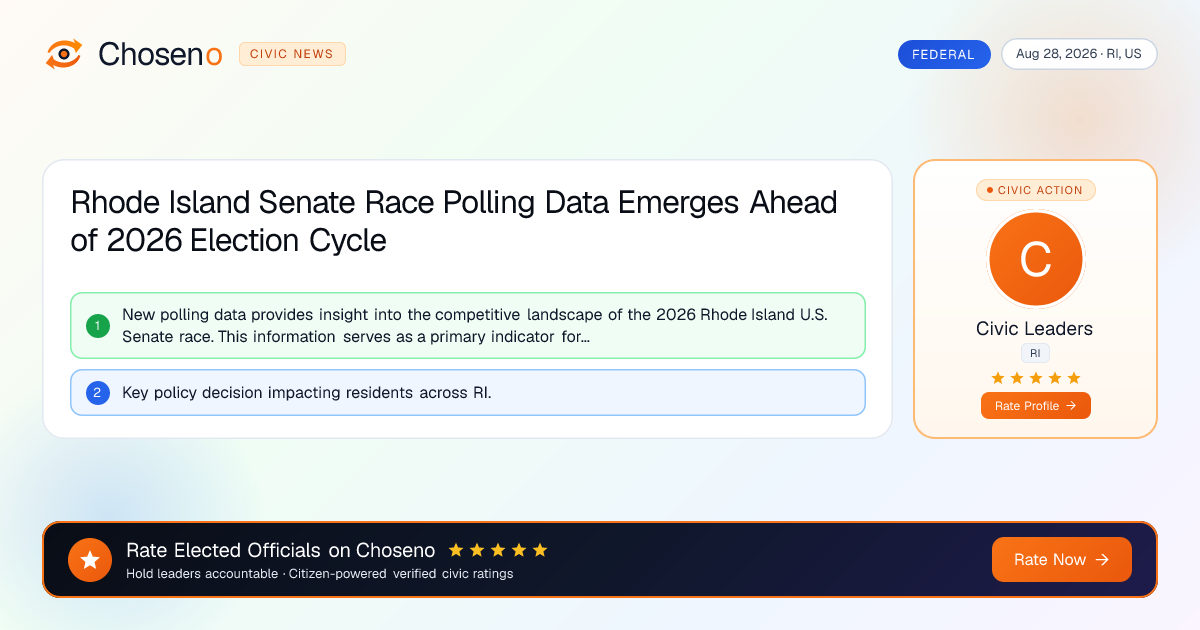
Lake Ontario Officially Renamed 'Lake America' by Presidential Directive
President Trump has issued a formal directive to rename Lake Ontario to 'Lake America.' The administrative change impacts a major binational waterway shared by the United States and Canada.
Read full article