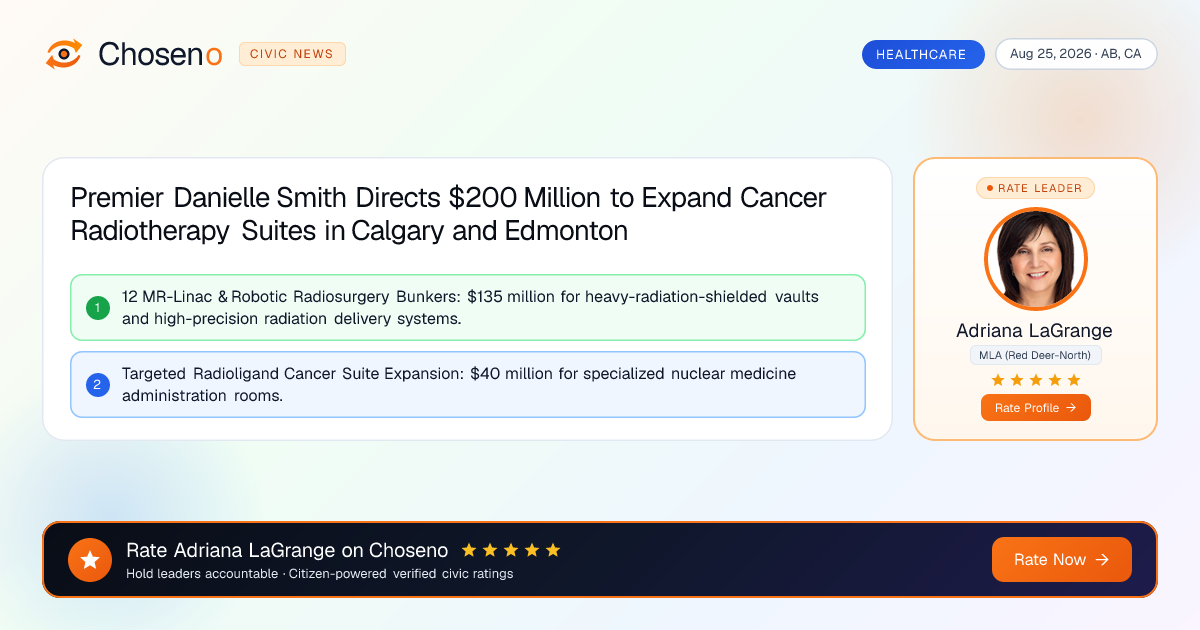
HHS Allocates $260 Million for 24/7 Mobile Mental Health Crisis Teams and 988 Telehealth Vans
Health and Human Services Secretary Xavier Becerra and SAMHSA announce $260 million in federal behavioral health grants to deploy 250 mobile crisis response vans staffed with mental health clinicians and peer specialists nationwide.
Choseno Behavioral Health Bureau August 25, 2026 2 min read DC, US
★ Choseno Civic Briefing
Key Leaders
WASHINGTON — U.S. Health and Human Services (HHS) Secretary Xavier Becerra and the Substance Abuse and Mental Health Services Administration (SAMHSA) announced on Monday the distribution of $260 million in federal behavioral health grants to establish, equip, and staff 250 specialized Mobile Crisis Intervention Teams (MCITs) and expand telehealth-enabled crisis dispatch networks connected to the 988 Suicide & Crisis Lifeline.
The funding equips municipal and county behavioral health authorities with custom-built crisis response vans staffed by licensed mental health clinicians, psychiatric social workers, and certified peer recovery specialists, providing rapid on-scene de-escalation for individuals experiencing acute mental health or substance use crises without requiring armed law enforcement dispatch.
Providing Compassionate Care and Diverting Patients from Emergency Rooms Behavioral health studies demonstrate that mobile crisis intervention teams successfully resolve over 85 percent of mental health emergencies in the community without requiring emergency department visits or psychiatric hospitalizations, while drastically reducing dangerous interactions with the criminal justice system.
"When someone is suffering an acute mental health crisis, they need a healthcare provider, not handcuffs," HHS Secretary Xavier Becerra said in Washington. "By investing $260 million into mobile crisis response teams and connected 988 telehealth, we are ensuring that anyone experiencing psychiatric distress can receive rapid, compassionate care from trained clinicians directly in their community, 24 hours a day, 7 days a week."
Program Elements and Dispatch Telemetry The grant package finances:
- 250 Custom Mobile Crisis Intervention Vans: Equipped with private clinical consultation rooms, telehealth diagnostic tablets, and medical stabilization supplies.
- 988 Integrated CAD Dispatch Integration: Enabling 911 and 988 emergency operators to route psychiatric distress calls directly to mobile clinician teams within 90 seconds.
- Peer Specialist Workforce Training: $40 million dedicated to recruiting and training 1,500 certified peer support specialists with lived recovery experience.
Police chiefs' associations, emergency room physicians, and mental health advocacy organizations commended the federal funding, highlighting that mobile crisis teams alleviate burdens on overcrowded emergency departments.
Related Coverage in Healthcare
See all Healthcare newsHealthcare
US Aug 25, 2026
Governor Brian Kemp Directs $160 Million for Georgia Rural Hospital Stabilization and ER Upgrades
Georgia Governor Brian Kemp and the Georgia Department of Community Health award $160 million in Rural Hospital Stabilization grants to modernize emergency departments and recruit diagnostic specialists in twenty rural Georgia counties.
Read full article
Healthcare
US Aug 25, 2026
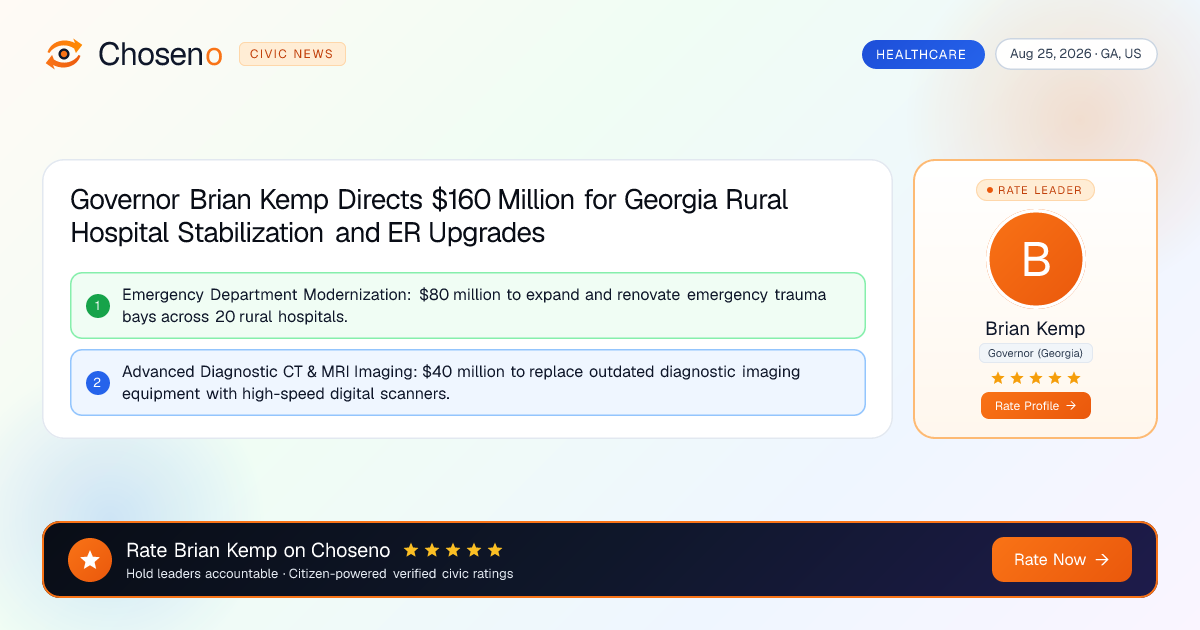
Governor Gavin Newsom Directs $350 Million for California Senior Care Hubs and In-Home Support
California Governor Gavin Newsom signs Assembly Bill 1820, appropriating $350 million from the Master Plan for Aging to construct forty community-based geriatric health hubs and increase wages for 100,000 in-home supportive care workers.
Read full article
Healthcare
CA Aug 25, 2026
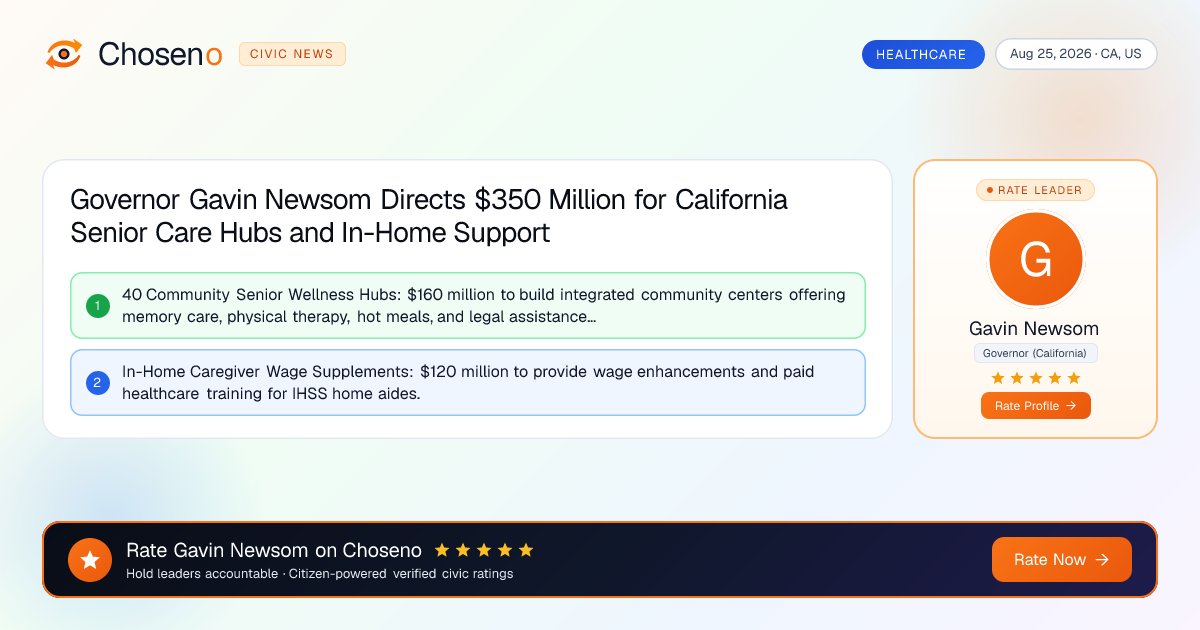
Premier Danielle Smith Directs $200 Million to Expand Cancer Radiotherapy Suites in Calgary and Edmonton
Alberta Premier Danielle Smith and Health Minister Adriana LaGrange allocate $200 million to install twelve high-precision MR-Linac linear accelerators and expand robotic radiosurgery suites at the Arthur J.E. Child and Cross Cancer Institutes.
Read full article