Pennsylvania Governor Josh Shapiro and Challenger Stacy Garrity Agree to October 7 Televised Debate
Democratic Governor Josh Shapiro and Republican challenger State Treasurer Stacy Garrity have agreed to participate in an October 7 televised debate in Harrisburg, marking the state’s first gubernatorial debate since 2018.
Choseno Civic News Desk September 5, 2026 2 min read US
HARRISBURG, Pa. — Democratic Governor Josh Shapiro and Republican challenger State Treasurer Stacy Garrity have reached an agreement to participate in a live, statewide televised debate on October 7, setting up the first direct general election debate between Pennsylvania gubernatorial nominees in eight years.
The debate, hosted by Nexstar Media Group’s ABC27 studios in Harrisburg, will be broadcast across all major television markets in the Commonwealth—including Philadelphia, Pittsburgh, Scranton-Wilkes-Barre, and Erie—as well as streamed live on digital platforms. The one-hour prime-time encounter will provide voters with a direct comparison between the incumbent chief executive seeking a second four-year term and the two-term state financial officer challenging his administration’s economic stewardship.
Pennsylvania voters did not have a general election gubernatorial debate during the 2022 campaign cycle, making the October forum the first direct gubernatorial face-off since 2018. Political analysts view the agreement as a critical opportunity for Garrity, who has sought to expand her statewide profile and close polling margins against an incumbent holding significant campaign cash advantages and broad bipartisan approval ratings.
Throughout the campaign, Governor Shapiro has highlighted his administration’s record of prompt state budget compromises, the rapid reconstruction of Interstate 95 following its catastrophic 2023 collapse in Philadelphia, substantial state investments in basic education funding formulas, and historic expansions of the property tax and rent rebate program for senior citizens. Shapiro’s campaign has also emphasized corporate tax reductions designed to attract advanced manufacturing and energy technology employers to the state.
"Governor Shapiro looks forward to sharing his vision for getting big things done for Pennsylvania families, protecting personal freedoms, and building an economy that works for everyone," Shapiro campaign officials said in a statement confirming debate participation. "This debate offers a clear contrast between proven executive leadership delivering results and extreme partisan agendas that would reverse our progress."
Garrity, an Army Reserve veteran who first won statewide office in 2020 by defeating an incumbent Democratic treasurer before winning reelection in 2024, has focused her campaign on state fiscal transparency, curbing government spending growth, and scrutinizing long-term state pension liabilities. She has criticized the growth of the state’s general fund appropriations under divided government and called for stricter regulatory relief for Pennsylvania’s traditional natural gas and manufacturing sectors.
"Pennsylvanians deserve real accountability and a candid discussion about the cost of living, energy independence, and the fiscal trajectory of our state," Garrity said in announcing the debate agreement. "I look forward to discussing the real kitchen-table issues impacting working families and presenting a clear conservative path forward for Pennsylvania."
Debate moderators from Nexstar affiliate newsrooms are expected to focus heavily on state economic growth, public education funding, transportation infrastructure maintenance, and energy extraction regulation ahead of the November 3 general election.
Rate the people mentioned in this article

Related Coverage in Electoral & Legislative
See all Electoral & Legislative newsElectoral & Legislative
US Sep 5, 2026
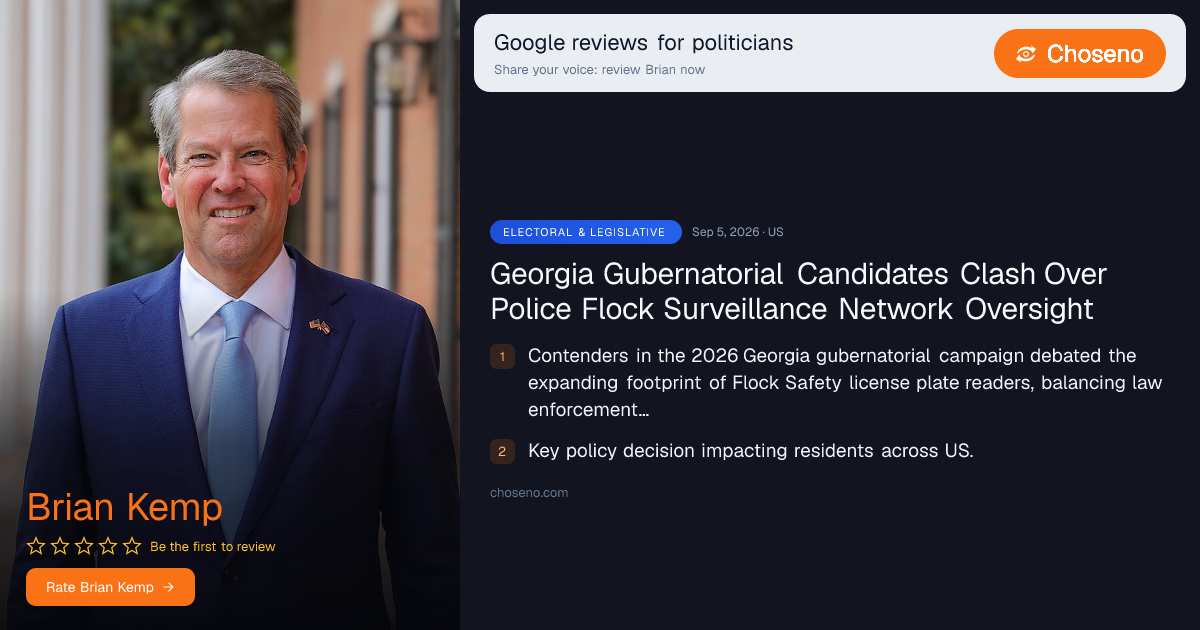
Georgia Gubernatorial Candidates Clash Over Police Flock Surveillance Network Oversight
Contenders in the 2026 Georgia gubernatorial campaign debated the expanding footprint of Flock Safety license plate readers, balancing law enforcement investigative successes against bipartisan calls for statutory privacy guardrails.
Read full article
Electoral & Legislative
US Sep 5, 2026
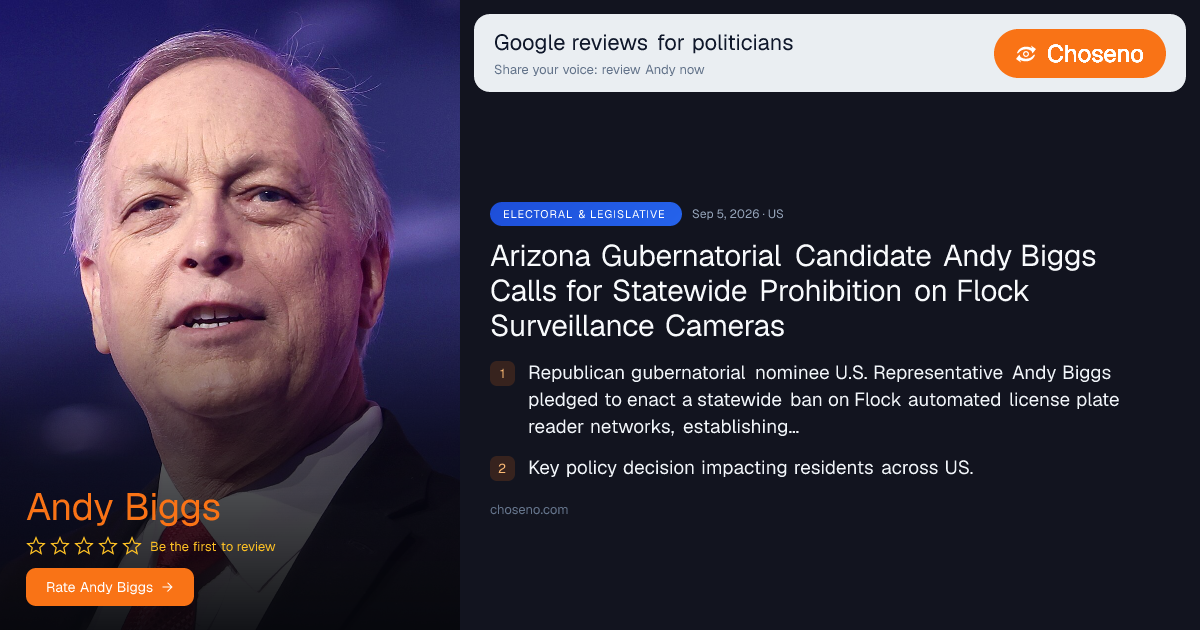
Arizona Gubernatorial Candidate Andy Biggs Calls for Statewide Prohibition on Flock Surveillance Cameras
Republican gubernatorial nominee U.S. Representative Andy Biggs pledged to enact a statewide ban on Flock automated license plate reader networks, establishing a sharp contrast with Governor Katie Hobbs over government surveillance and civil liberties.
Read full article
Electoral & Legislative
US Sep 5, 2026
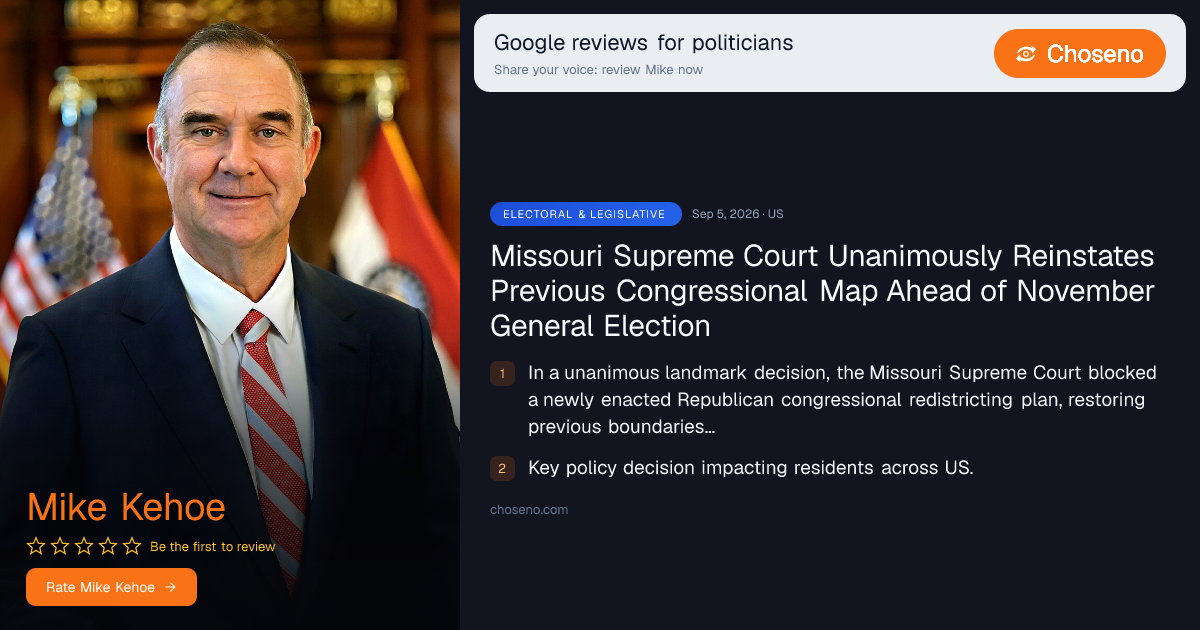
Missouri Supreme Court Unanimously Reinstates Previous Congressional Map Ahead of November General Election
In a unanimous landmark decision, the Missouri Supreme Court blocked a newly enacted Republican congressional redistricting plan, restoring previous boundaries for the November general election while placing a voter referendum on the ballot.
Read full article