South Carolina Attorney General Clarifies Municipal Authority Over Chapin Legal Appointments
The South Carolina Attorney General’s office has issued a formal opinion stating that the Chapin Town Council, rather than the mayor, holds the legal authority to hire the town attorney. This clarification resolves a governance dispute regarding the town's administrative appointment powers.
Choseno Civic News Desk August 28, 2026 1 min read SC, US
Dateline Lead
CHAPIN, SC — A formal legal opinion issued by the South Carolina Attorney General’s office has established that the authority to hire the town attorney rests with the Chapin Town Council, not the mayor. This determination provides a definitive interpretation of municipal governance statutes regarding administrative appointments.
Policy & Taxpayer Impact
The ruling clarifies the procedural requirements for legal staffing within the town government. By affirming that the council holds this power, the opinion ensures that the selection of legal counsel remains a collective legislative decision rather than an executive appointment, potentially impacting how taxpayer funds are allocated for legal services.
Political & Legal Stakes
The opinion serves as a binding interpretation of state law for the municipality. It addresses the separation of powers between the executive and legislative branches in Chapin, effectively limiting the mayor's unilateral influence over the town's legal representation.
The Debate
Proponents of the council-led appointment process argue that this structure provides necessary checks and balances, ensuring the town attorney remains accountable to the elected body as a whole. Conversely, those favoring mayoral control often cite the need for executive efficiency and the ability of the mayor to select legal counsel that aligns with their administrative agenda.
Public Accountability Context
This legal clarification follows a period of uncertainty regarding the town's hiring protocols. Residents and stakeholders can now look to this Attorney General opinion as the definitive standard for how future legal appointments must be conducted to remain in compliance with South Carolina law.
Related Coverage in Municipal
See all Municipal newsMunicipal
US Aug 28, 2026
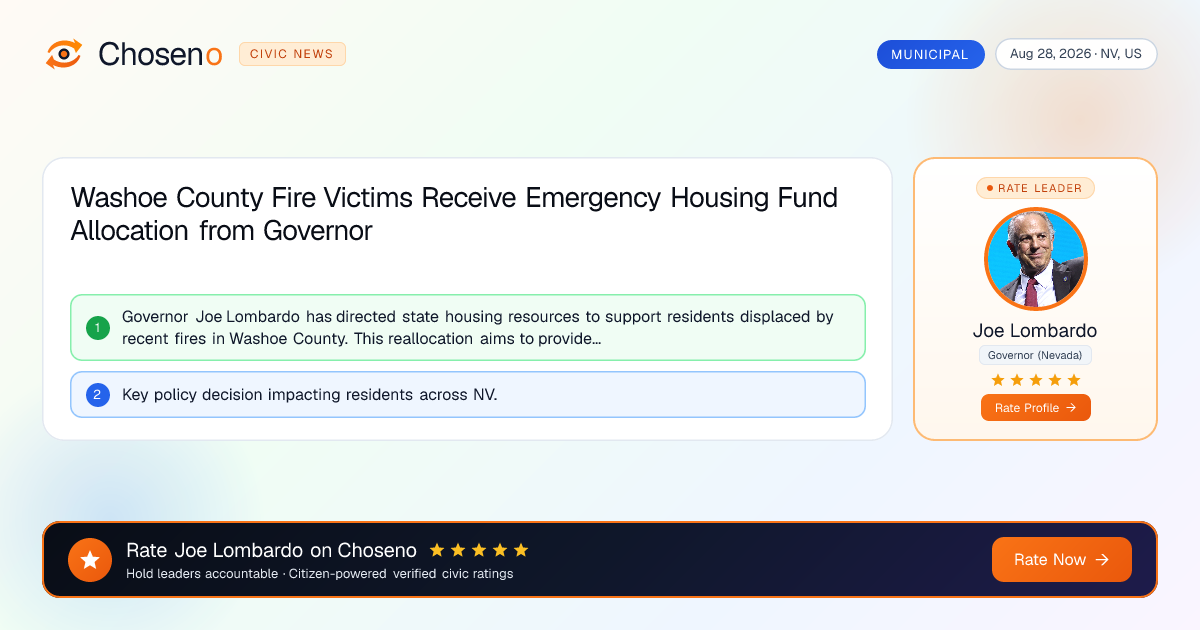
Washoe County Fire Victims Receive Emergency Housing Fund Allocation from Governor
Governor Joe Lombardo has directed state housing resources to support residents displaced by recent fires in Washoe County. This reallocation aims to provide immediate relief for those impacted by the disaster.
Read full article
Municipal
US Aug 28, 2026
Boston City Hall Hosts Private Elopement for Tricia Robredo and Partner
Tricia Robredo, daughter of Naga Mayor Leni Robredo, finalized a marriage ceremony at Boston City Hall. The event represents a private civil union with no reported impact on municipal tax expenditures.
Read full article
Municipal
US Aug 28, 2026
Assault Charge Against Balcones Heights Mayor Sparks Community Debate Over Resignation
The Balcones Heights community is divided regarding the potential resignation of the mayor following a formal assault charge. The situation leaves the municipal government's leadership status uncertain as residents weigh the legal implications against the mayor's continued service.
Read full article