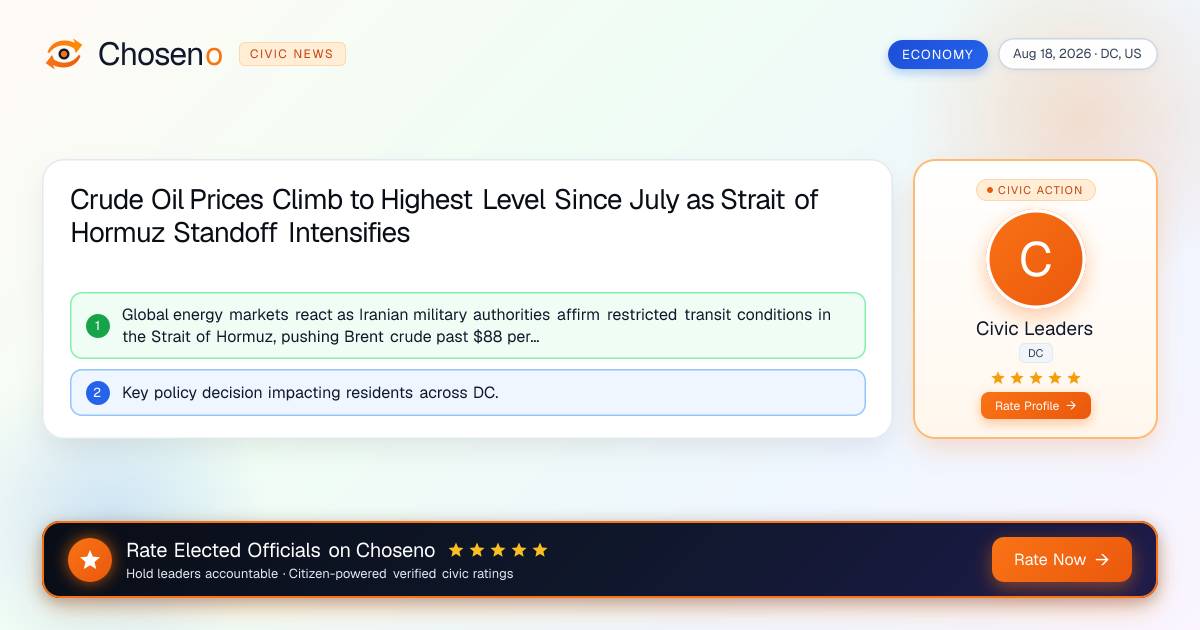
Crude Oil Prices Climb to Highest Level Since July as Strait of Hormuz Standoff Intensifies
Global energy markets react as Iranian military authorities affirm restricted transit conditions in the Strait of Hormuz, pushing Brent crude past $88 per barrel amid heightened commercial shipping risks.
Choseno Global Energy Bureau August 18, 2026 1 min read DC, US
★ Choseno Civic Briefing
WASHINGTON, D.C. & DUBAI — International benchmark crude oil prices surged to their highest levels in over six weeks on Tuesday as maritime authorities reported continued tanker diversions and heightened naval patrols across the Strait of Hormuz.
Maritime Transit Restrictions and Tanker Surcharges
Iranian military commanders reiterated that commercial cargo transit through the narrow strategic waterway remains conditioned on verified compliance with regional security protocols. Maritime insurance syndicates in London responded by elevating war-risk premiums for Persian Gulf tanker passages by more than 40%, prompting major international shipping carriers to reroute crude shipments around Africa's Cape of Good Hope.
Brent crude futures rose 3.4% to settle at $88.65 per barrel, while West Texas Intermediate (WTI) climbed to $84.20 per barrel in early New York mercantile trading.
U.S. Diplomatic Stance and Strategic Petroleum Reserves
President Donald Trump addressed the standoff during a White House briefing, stating that no direct negotiations are currently underway with Tehran while affirming that U.S. Naval forces in the Fifth Fleet area of operations remain prepared to escort commercial shipping if necessary.
Energy policy analysts cautioned that prolonged disruptions to the Hormuz corridor—which handles roughly 20% of global petroleum consumption—could elevate domestic gasoline pump prices and complicate global inflation reduction efforts.
Global Consumer and Industrial Fallout
European and Asian industrial economies announced emergency energy contingency reviews, with energy ministries monitoring strategic crude reserves to buffer regional utilities against prolonged supply disruptions.
Sources
Related Coverage in Economy
See all Economy news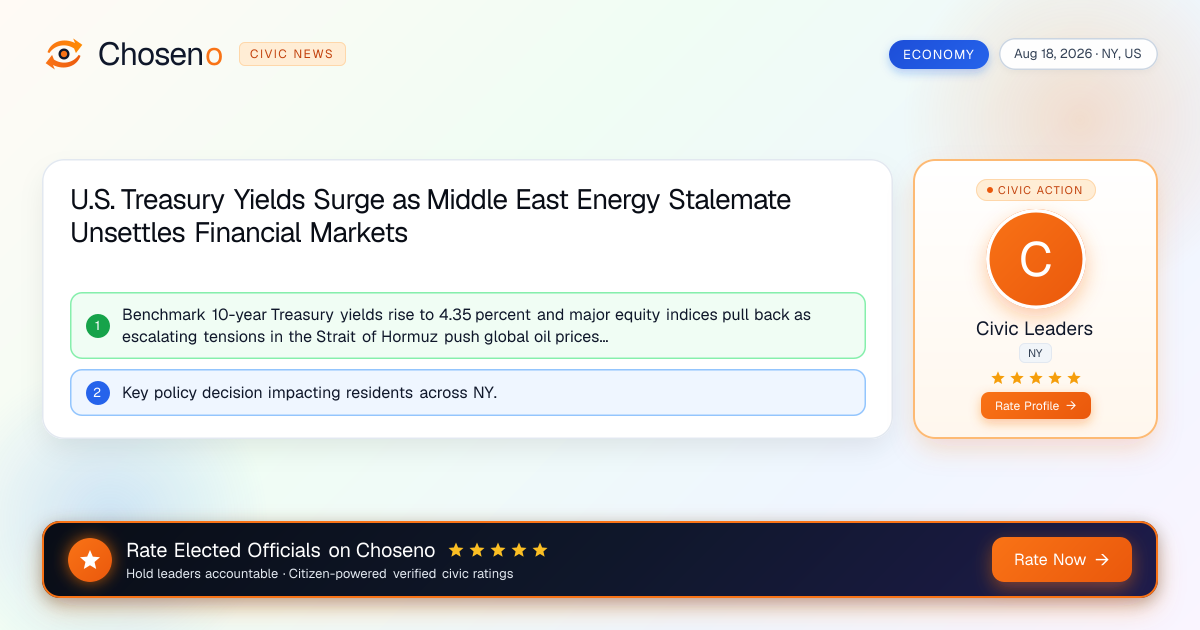
Economy
US Aug 18, 2026
U.S. Treasury Yields Surge as Middle East Energy Stalemate Unsettles Financial Markets
Benchmark 10-year Treasury yields rise to 4.35 percent and major equity indices pull back as escalating tensions in the Strait of Hormuz push global oil prices higher, complicating Federal Reserve interest rate cut expectations.
Read full article
Economy
CA Aug 18, 2026
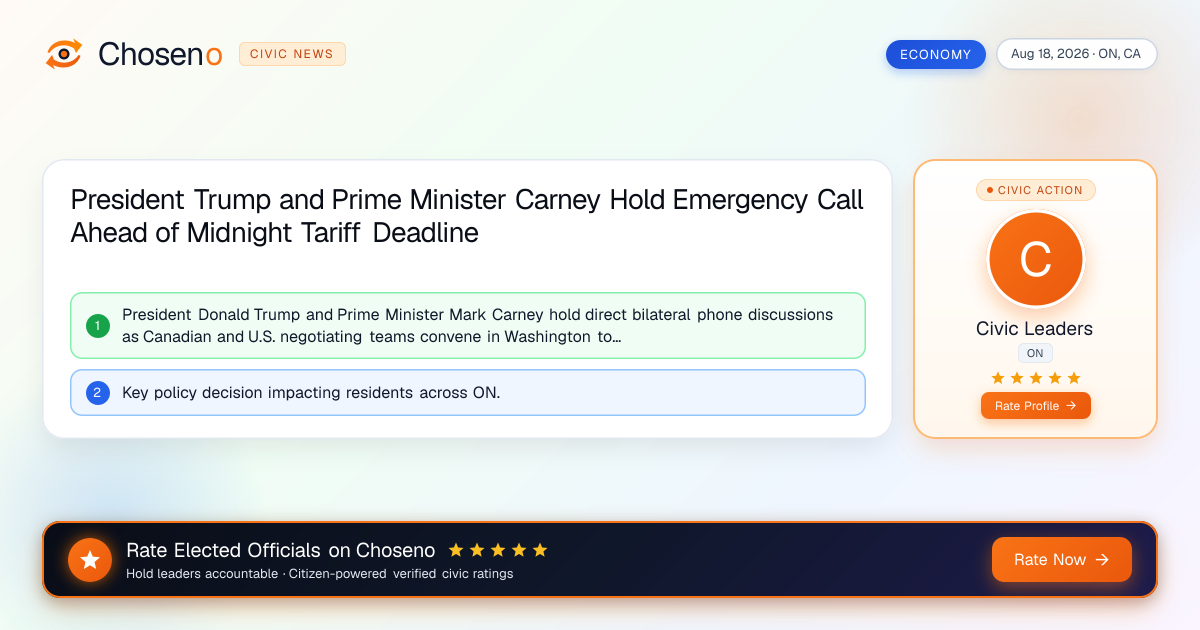
President Trump and Prime Minister Carney Hold Emergency Call Ahead of Midnight Tariff Deadline
President Donald Trump and Prime Minister Mark Carney hold direct bilateral phone discussions as Canadian and U.S. negotiating teams convene in Washington to finalize eleventh-hour trade compromises and prevent 50 percent tariffs.
Read full article

Economy
US Aug 18, 2026
Seattle City Council Passes Tax Incentive Package to Revitalize Vacant Downtown Commercial Spaces
Seattle City Council approves sweeping tax credits and streamlined permitting for small retailers, local artists, and food entrepreneurs to convert chronically vacant downtown commercial storefronts into active community enterprises.
Read full article