Strategic Shifts and Policy Priorities Define Mikie Sherrill’s Gubernatorial Campaign Launch in Newark
Representative Mikie Sherrill officially energized her gubernatorial campaign with a high-profile rally in Newark, emphasizing a platform centered on economic revitalization and regional infrastructure. The event marks a pivotal moment in the New Jersey race as candidates begin to solidify their policy agendas for the upcoming election cycle.
Choseno Civic News Desk September 25, 2026 3 min read New Jersey, US
The recent campaign rally held in Newark for Representative Mikie Sherrill serves as a significant indicator of the strategic direction the Democratic candidate intends to pursue in her bid for the New Jersey governorship. By choosing Newark as the backdrop for this mobilization effort, Sherrill signaled a commitment to urban centers that remain critical to the state’s economic and political health. The event brought together a diverse coalition of supporters and local stakeholders, reflecting the candidate's broader attempt to bridge the gap between suburban interests and the pressing needs of New Jersey’s largest municipalities. Throughout the proceedings, the campaign focused heavily on the necessity of addressing long-standing infrastructure challenges, which have historically hampered regional productivity and increased the cost of living for working-class families. The atmosphere was characterized by a focus on future governance, with the candidate outlining a vision that prioritizes the modernization of transit systems and the expansion of economic opportunities for residents across the state’s varied demographic landscape.
From a policy perspective, the rally underscored the candidate’s intent to leverage her experience in federal service to navigate the complex statutory and fiscal landscape of New Jersey. Sherrill articulated a platform that emphasizes the importance of fiscal responsibility while simultaneously advocating for targeted investments in education and public safety. By framing these issues through the lens of taxpayer accountability, the campaign aims to address the concerns of voters who are increasingly wary of the state’s high tax burden. The discourse centered on the idea that effective executive action requires a balance between maintaining essential public services and fostering an environment conducive to private sector growth. This approach suggests that the campaign will likely face rigorous scrutiny regarding how it plans to reconcile these competing priorities without placing additional strain on the state’s already complex budgetary framework, particularly as the administration looks to manage rising costs associated with public employee pensions and healthcare obligations.
Community debates surrounding the gubernatorial race have already begun to intensify, with various interest groups seeking clarity on how Sherrill intends to handle the state’s ongoing housing affordability crisis. During the rally, the candidate addressed the need for comprehensive zoning reform and the expansion of affordable housing initiatives, arguing that the current trajectory is unsustainable for the next generation of New Jerseyans. This focus on housing is not merely a social issue but a central economic pillar of her campaign, as the lack of accessible living spaces continues to drive talent away from the state. Critics and supporters alike are now evaluating the feasibility of these proposals, questioning how the candidate plans to coordinate with local municipal governments that often resist state-level mandates. The rally served as a platform to initiate this dialogue, positioning the candidate as a pragmatic leader capable of navigating the friction between state-wide mandates and local home rule traditions that have defined New Jersey politics for decades.
As the election cycle progresses, the stakes for the taxpayer remain exceptionally high, with the state’s economic competitiveness hanging in the balance. The campaign’s emphasis on regional cooperation and federal-state partnerships suggests that Sherrill intends to utilize her background in Washington to secure additional funding for major projects, such as the Gateway Tunnel and other critical transit improvements. By highlighting these projects, the campaign is attempting to demonstrate that the state can achieve significant progress through strategic federal engagement. However, the success of this strategy will depend on the candidate’s ability to maintain a broad coalition of support that transcends traditional party lines. The Newark rally was a clear attempt to solidify this base, demonstrating that the campaign is prepared to engage in a sustained, high-intensity effort to convince voters that a change in leadership is necessary to address the structural inefficiencies that have persisted throughout recent administrations.
Rate the people mentioned in this article
Related Coverage in Municipal
See all Municipal newsMunicipal
US Sep 27, 2026
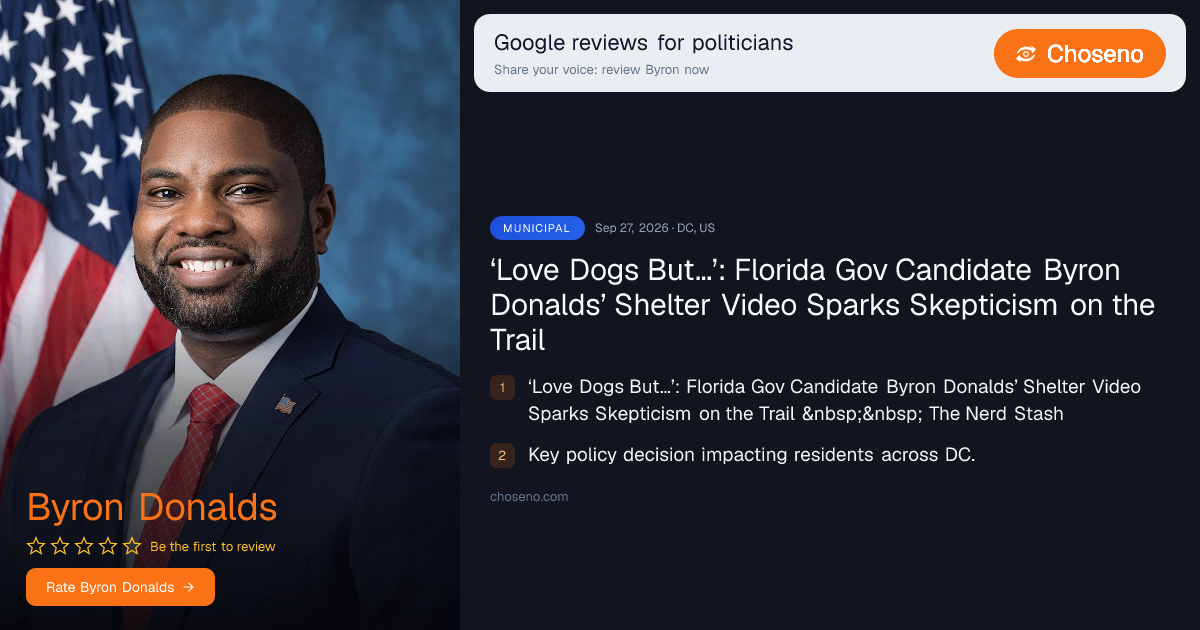
‘Love Dogs But…’: Florida Gov Candidate Byron Donalds’ Shelter Video Sparks Skepticism on the Trail
‘Love Dogs But…’: Florida Gov Candidate Byron Donalds’ Shelter Video Sparks Skepticism on the Trail The Nerd Stash
Read full article
Municipal
US Sep 27, 2026
Donald Trump booed at Tennessee-Texas game as midterms loom
Donald Trump booed at Tennessee-Texas game as midterms loom TheGrio
Read full article

Municipal
US Sep 27, 2026
President Donald Trump Attends Presidents Cup in Democratic Stronghold
President Donald Trump Attends Presidents Cup in Democratic Stronghold 조선일보
Read full article