Sturgeon County Council Approves Multi-Year Agricultural Drainage and Rural Bridge Capital Plan
Sturgeon County Council passes rural infrastructure plan, committing $8.5 million to reconstruct five timber agricultural bridges and upgrade 35 kilometers of regional drainage canals.
Choseno Rural Infrastructure Bureau August 24, 2026 1 min read AB, CA

★ Choseno Civic Briefing
Key Leaders
STURGEON COUNTY, AB — Sturgeon County Council voted to formally adopt the 2026–2029 Agricultural Drainage and Rural Infrastructure Master Plan, approving an immediate $8.5 million capital authorization to replace aging rural bridges and clear regional agricultural stormwater canals.
Protecting Farmland Productivity and Heavy Farm Equipment Corridors
The infrastructure plan replaces five weight-restricted timber bridges across the Sturgeon River basin with modern precast concrete structures capable of supporting modern combines, seeders, and grain freight haulers up to 63,500 kilograms. The capital allocation also dredges 35 kilometers of municipal drainage ditches to protect 15,000 acres of high-yield canola and wheat farmland from seasonal spring overland flooding.
Mayor Alanna Hnatiw affirmed that agricultural infrastructure is the backbone of the county’s economy, ensuring farming families can transport crops safely to regional grain elevators.
Farming Community and Drainage District Input
Sturgeon County Agricultural Service Board members strongly endorsed the bridge replacements for eliminating costly 20-kilometer farm transport detours.
County engineers will utilize vegetative rip-rap stabilization to prevent canal bank erosion.
Construction Milestones
Bridge demolition and precast abutment installation on Bridge File 74839 will begin in October 2026.
Related Coverage in Infrastructure
See all Infrastructure newsInfrastructure
US Aug 24, 2026
Alaska Enacts HB 195 Establishing Expedited State Right-of-Way Permitting for Arctic Broadband
Governor Mike Dunleavy signs House Bill 195, creating streamlined state right-of-way permitting across rural Alaska highways to accelerate 1,200 miles of fiber-optic broadband deployment.
Read full article

Infrastructure
US Aug 24, 2026
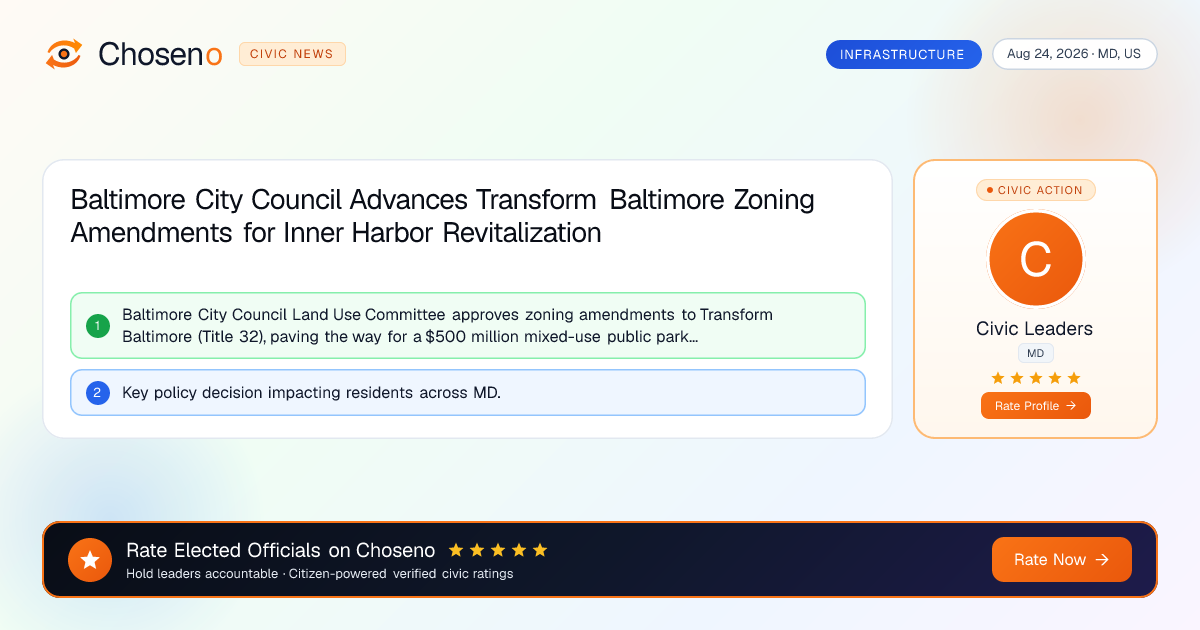
Baltimore City Council Advances Transform Baltimore Zoning Amendments for Inner Harbor Revitalization
Baltimore City Council Land Use Committee approves zoning amendments to Transform Baltimore (Title 32), paving the way for a $500 million mixed-use public park and residential waterfront redesign.
Read full article
Infrastructure
CA Aug 24, 2026
Canada and New Brunswick Allocate $18 Million for Edmundston Potable Water and Flood Defenses
Federal and New Brunswick governments deploy $18 million in joint infrastructure grants to upgrade the Edmundston Madawaska water filtration plant and construct Madawaska River flood dikes.
Read full article