Texas Gubernatorial Candidates Outline Policy Platforms on Data Center Expansion and Education Funding
Candidates for the Texas governorship have released their official positions regarding the rapid growth of data centers and the state's approach to education and affordability. These policy priorities will determine the future allocation of state resources and the regulatory landscape for emerging industrial infrastructure.
Choseno Civic News Desk August 28, 2026 1 min read TX, US
Dateline Lead
AUSTIN, TX — As the gubernatorial race intensifies, candidates for the highest office in Texas have provided clarity on their legislative priorities, specifically addressing the intersection of industrial growth, public education, and the cost of living for state residents.
Policy & Taxpayer Impact
The policy platforms center on the rapid proliferation of data centers across the state, which carries significant implications for energy consumption and local tax bases. Simultaneously, candidates are addressing how to manage education funding and state-wide affordability, both of which directly influence the tax burden and service delivery for Texas taxpayers.
Political & Legal Stakes
The stakes for this election involve the state's regulatory authority over utility infrastructure and the distribution of public funds. Candidates must balance the desire for economic development through tech infrastructure with the necessity of maintaining a stable, affordable environment for the growing population.
The Debate
Proponents of aggressive data center expansion argue that these facilities act as economic engines, bringing high-tech jobs and significant property tax revenue to local jurisdictions. Conversely, critics raise concerns regarding the strain these facilities place on the state's power grid and water resources, questioning whether the long-term infrastructure costs outweigh the immediate economic benefits.
Public Accountability Context
As reported by Community Impact, the candidates' responses serve as a foundational guide for voters to evaluate how each representative intends to manage the state's fiscal future. Citizens are encouraged to review these specific policy proposals to understand how each candidate plans to balance industrial growth with the essential needs of the public education system and the economic stability of Texas households.
Related Coverage in Politics
See all Politics newsPolitics
US Aug 28, 2026
Drone Strike Injures Four in Sevastopol as Regional Tensions Escalate
A drone attack in the Russian-held city of Sevastopol resulted in four injuries, according to local officials. The incident underscores the ongoing security instability in the region.
Read full article
Politics
CA Aug 28, 2026
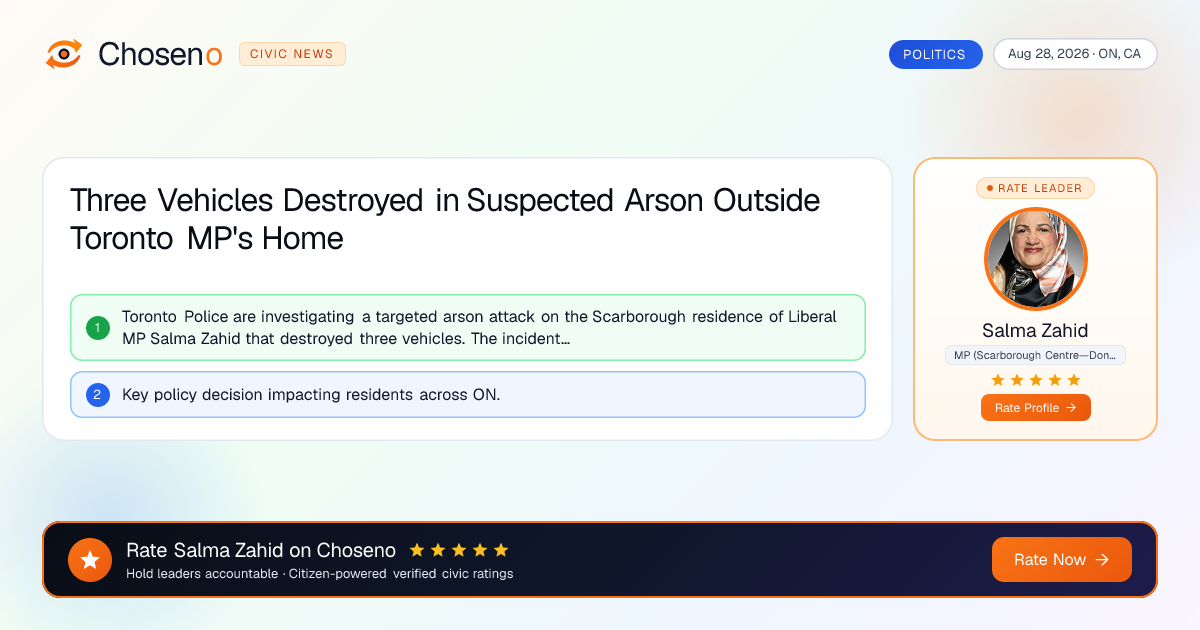
Three Vehicles Destroyed in Suspected Arson Outside Toronto MP's Home
Toronto Police are investigating a targeted arson attack on the Scarborough residence of Liberal MP Salma Zahid that destroyed three vehicles. The incident highlights the escalating security risks facing federal parliamentarians and the strain on national policing resources.
Read full article
Politics
US Aug 28, 2026
Queens Insurance Fraud Ring Sentenced Following Coordinated Staged Highway Crashes
Multiple individuals involved in a staged car crash conspiracy have received sentencing following a joint investigation by state and local authorities. The prosecution aims to curb insurance fraud that drives up premiums for New York motorists.
Read full article