Tom Tiffany Brings Wisconsin Gubernatorial Campaign Focus to Waukesha County
Representative Tom Tiffany traveled to Waukesha County as part of his ongoing campaign for the Republican gubernatorial nomination. The visit highlights the crucial political significance of the suburban Milwaukee region in shaping the state's upcoming executive race.
Choseno Civic News Desk September 24, 2026 3 min read Wisconsin, US
United States Representative Tom Tiffany made a high-profile campaign stop in Waukesha County as part of his vigorous push for the Republican nomination for Governor of Wisconsin, turning the spotlight toward a region universally recognized as an essential stronghold for conservative electoral victories in the state. Local media outlets, including Greater Milwaukee Today, reported extensively on the visit, noting that the federal lawmaker utilized the platform to connect directly with key regional stakeholders, grassroots organizers, and local voters who wield substantial influence over primary outcomes. During the various engagements throughout the county, the congressional representative addressed a wide spectrum of policy priorities, emphasizing economic development, the prudent management of state taxpayer resources, and the imperative to curb excessive regulatory overreach at both the state and federal levels. Observers of Wisconsin politics immediately noted the strategic positioning of the Waukesha itinerary, recognizing that securing robust margins in the WOW counties remains an indispensable mathematical requirement for any Republican candidate seeking to capture executive power in Madison.
Expanding upon his established legislative platform, the gubernatorial hopeful detailed his vision for restructuring various state executive functions to promote greater fiscal restraint and accountability. In addressing local civic leaders and assembled supporters, the candidate outlined proposals aimed at reforming the tax code to provide meaningful relief for working families and small business owners struggling against persistent inflationary pressures. The discussions consistently gravitated toward core conservative tenets, including strengthening public safety measures, empowering local law enforcement agencies, and enhancing educational freedom through expanded school choice initiatives. Supporters at the events expressed enthusiastic backing for his legislative record in Washington, noting that his experience in navigating complex governmental structures uniquely equips him to tackle state-level budgetary challenges. Analysts monitoring the evolving primary field observed that these policy emphases align closely with the traditional priorities of the suburban electorate, where economic stability and fiscal conservatism traditionally dominate the political discourse.
The visit also provided an opportunity for the campaign to address broader statewide governance issues, touching upon the constitutional separation of powers and the ongoing debates surrounding executive authority in Wisconsin. The candidate articulated a firm stance on reestablishing legislative oversight over administrative rulemaking, arguing that unelected bureaucrats have historically exercised too much unilateral power over key economic sectors. Local community debates surrounding infrastructure investments and workforce development also featured prominently in the dialogue, with the candidate listening to local business leaders describe the ongoing difficulties in recruiting and retaining skilled labor. By engaging directly with these economic drivers in Waukesha County, the campaign sought to solidify its reputation as a champion of free-market principles and decentralized governance. The stop underscored the intense competitive nature of the primary cycle, as contenders navigate the delicate balance between appealing to the energized base and building a broad coalition capable of succeeding in a fiercely contested general election.
As the gubernatorial primary race progresses toward its critical phases, appearances in influential population centers like Waukesha County serve as vital barometers of candidate viability and organizational strength. Political analysts note that the region's high voter turnout and active network of volunteers make it an indispensable battleground for establishing momentum before the primary ballots are cast. The candidate's interactions with local constituents and regional leaders highlighted the localized nature of modern campaigning, where statewide ambitions must be carefully tailored to address specific regional concerns regarding taxation, public administration, and economic growth. With the campaign trail continuing to wind through various corners of the state, this particular Waukesha engagement reinforced the central themes that will undoubtedly define the remainder of the Republican primary contest for the governorship, signaling to observers that economic stewardship and limited government will remain at the forefront of the political debate.
Rate the people mentioned in this article
Related Coverage in Municipal
See all Municipal newsMunicipal
US Sep 27, 2026
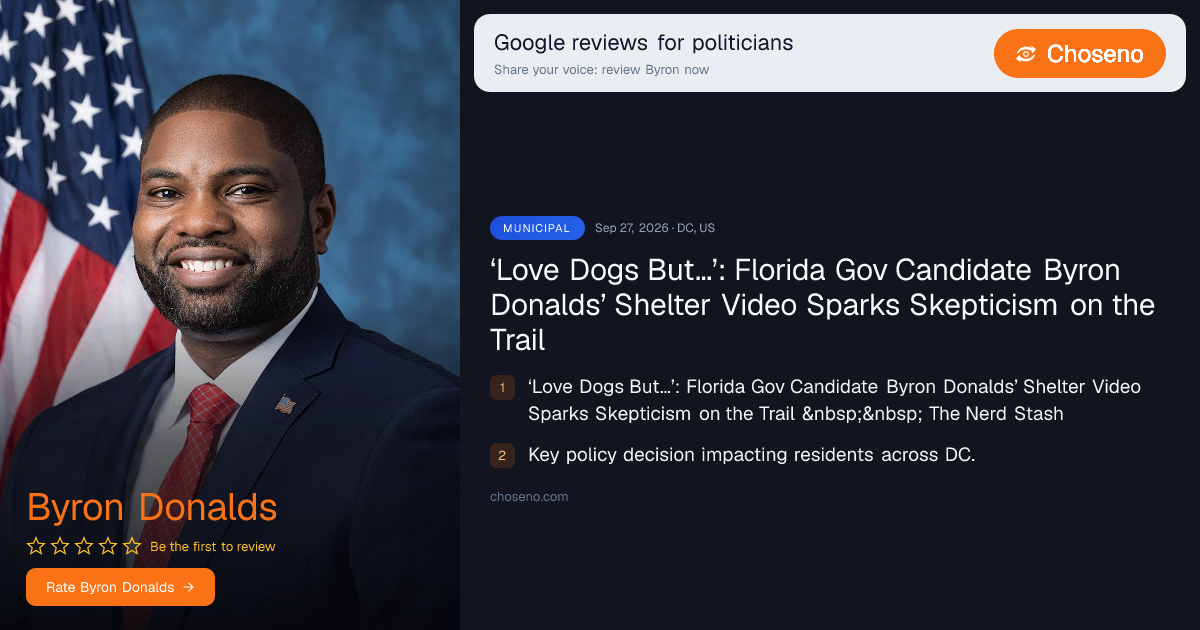
‘Love Dogs But…’: Florida Gov Candidate Byron Donalds’ Shelter Video Sparks Skepticism on the Trail
‘Love Dogs But…’: Florida Gov Candidate Byron Donalds’ Shelter Video Sparks Skepticism on the Trail The Nerd Stash
Read full article
Municipal
US Sep 27, 2026
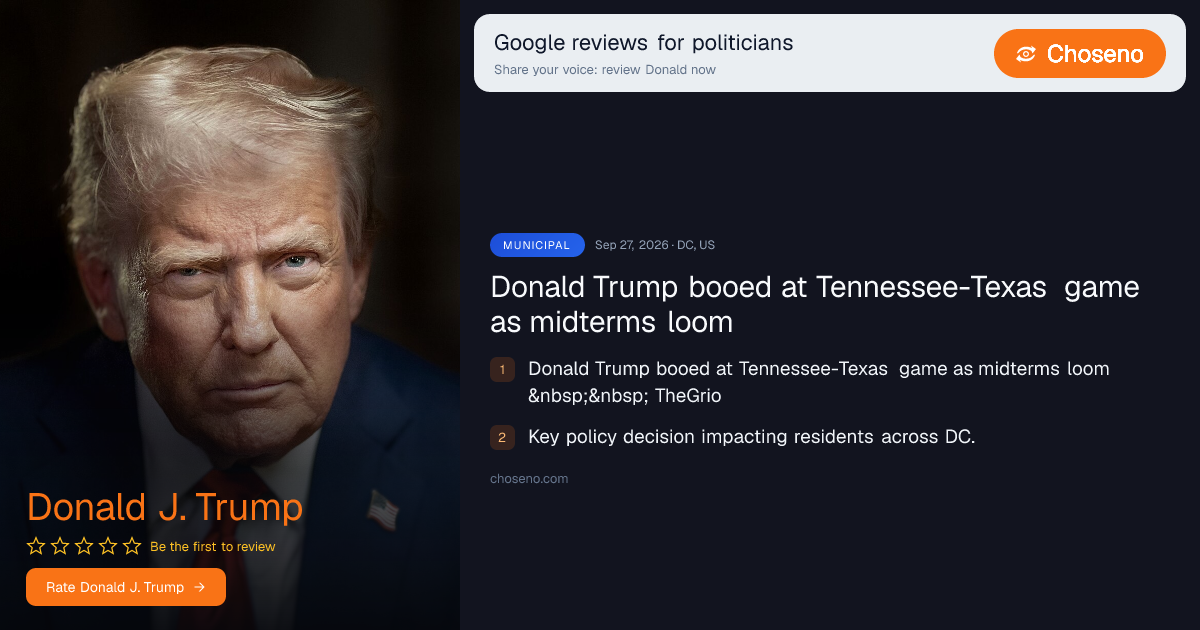
Donald Trump booed at Tennessee-Texas game as midterms loom
Donald Trump booed at Tennessee-Texas game as midterms loom TheGrio
Read full article
Municipal
US Sep 27, 2026
President Donald Trump Attends Presidents Cup in Democratic Stronghold
President Donald Trump Attends Presidents Cup in Democratic Stronghold 조선일보
Read full article